
Key takeaways
-
A contingency reserve helps project managers proactively plan for inevitable roadblocks so that they don’t derail the entire project.
-
Visual tools like risk matrices and SWOT analysis help align stakeholders on which risks require the most financial safeguarding.
-
A well-calculated contingency reserve protects your project against market volatility, delays, logistical issues, and rework.
The Greek philosopher Heraclitus once said, “The only constant in life is change.” For project managers, you know all too well that change is a daily reality. From unexpected scope creep to team absences, many variables can cause delays. Without a buffer, these obstacles can derail an entire roadmap. That’s where contingency reserves come in, acting as a project’s fail-safe. Contingency reserves provide a resource buffer, such as extra time, budget, or equipment, allowing teams to get back on track more efficiently.
This article explains how to calculate your contingency reserve, its importance in project management, and why it’s the key to consistent project success.
Management reserve vs. contingency reserve
There are two types of reserves for project managers: management reserve and contingency reserve. While contingency reserve proactively covers calculated resources, management reserve covers unidentified risks.
Here are the key differences between the two:
Contingency reserve:
-
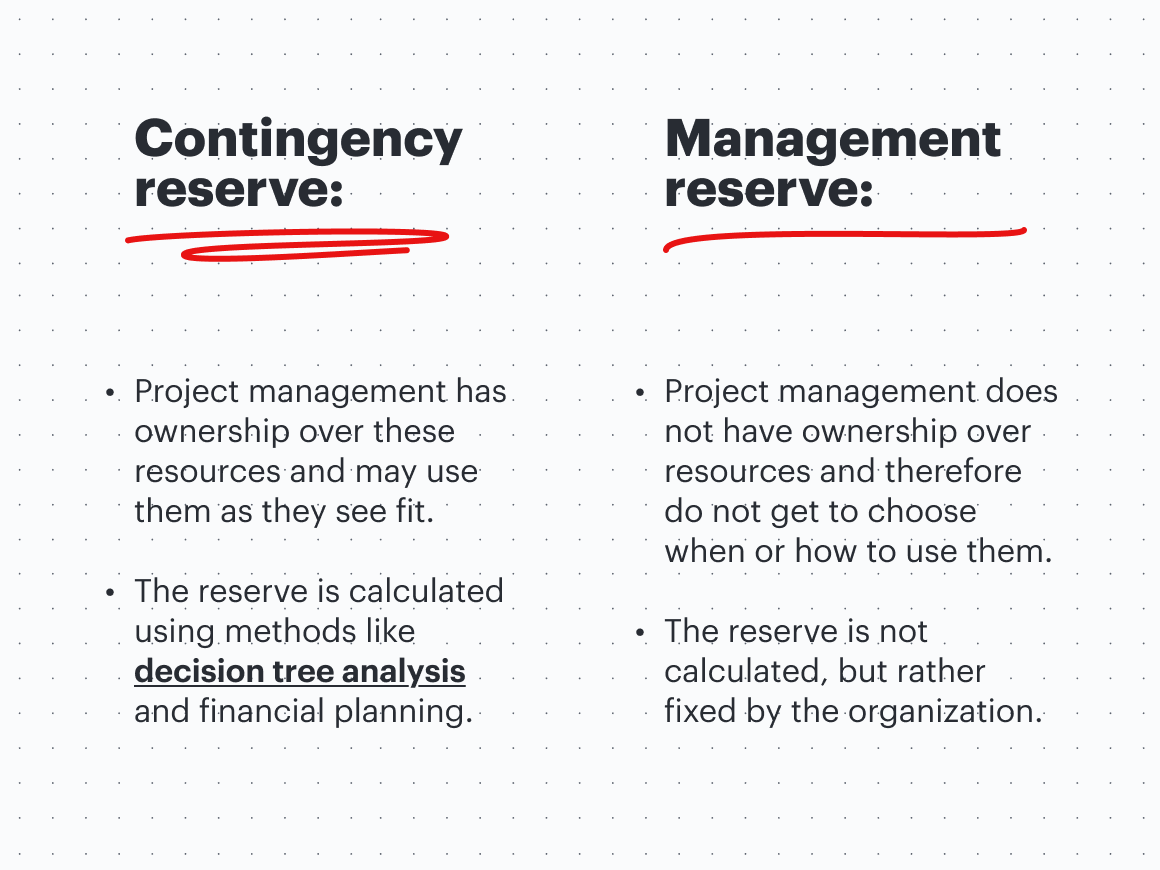
Project management has ownership over these resources and may utilize them as needed. For example, one resource could be extra funds to outsource tasks to help complete a project on time.
-
The reserve is calculated using methods like decision tree analysis and financial planning.
Management reserve:
-
Project management does not have ownership over resources and therefore does not get to choose when or how to use them. An example of this could be a time buffer of one week on a project that would account for minor changes or edits.
-
The reserve is not calculated; it is fixed by the organization.
The importance of a contingency reserve in a project budget
Even the most thoroughly planned projects aren’t immune to the reality of work. Adding a contingency reserve in your project budget is what turns a rigid document into a reliable roadmap.
While you can’t predict every project hurdle, you can prepare for its impact. Adding a well-planned contingency reserve will:
-
Buffer the known-unknowns: For the delays you can’t quantify, such as late shipments or tasks taking longer than expected.
-
Guard profit margins: Without a reserve, unexpected expenses are pulled directly from your project’s budget. A dedicated fund ensures that a minor setback doesn’t turn a profitable project into a deficit.
-
Prevent reactive decision-making: By embedding a safety net within your budget, you replace hasty pivots with informed decision-making.
Risks covered by a contingency reserve
Contingency reserves are designed to withstand risks that you might anticipate happening. These are the known-unknowns. Even if you don’t know exactly how much they will cost, a reserve built on data will provide significant help.
Market and price volatility: Even the most solid budgets can be affected by economic shifts. Your reserve acts as a price stabilizer against spikes in the market for costs like materials, licensing fees, or specialized labor. As a result, projects can move forward without having to pause for renegotiation.
Timeline disruptions and delays: In project management, time is money. Many situations can cause delays, like inclement weather, delayed shipments, team members on PTO, waiting on approvals, and more. The contingency reserve covers the costs of keeping the team active during these waiting periods.
Logistical and operational hurdles: These are the challenges that can occur in day-to-day execution. A team member gets sick, equipment breaks down, or a software bug slows productivity. The reserve can cover expedited shipping, hiring a contractor while your team members are out, or any other necessary expenses to keep things running smoothly.
Quality control and rework: Fixing defects and making edits can eat away at a project timeline, but it is necessary for delivering stellar work. Rather than sending the team into a panic with extra rework, the reserve provides resources for the extra time.
How to calculate contingency reserve
Calculating contingency reserve is a collaborative effort. While project managers typically lead this initiative, the involvement of other stakeholders is critical. Input from risk management, finance, and specialized technical teams helps ensure accuracy and reliability. A contingency reserve should be tailored to the project's specific needs and goals, but generally speaking, here are the steps involved:
-
Identify project risks: Frameworks like SWOT analysis or a risk breakdown structure can help you clearly categorize potential risks.
-
Qualify and rank risks: Use a risk matrix or a visual activity to rank identified risks. The high-probability and high-impact risks should be the primary priority for funding.
-
Develop a response strategy: Strategize with stakeholders on how you will overcome the risks. Will you mitigate them proactively, outsource the work, or accept the risk and cover the costs as needed? The strategy you choose will determine how much capital you need to have in your reserves.
-
Estimate cost: Assign a monetary value to each risk. Keep in mind that some risks are more plausible than others.
Here are a few customizable Lucid templates that can help you jump-start calculating your risk contingency.
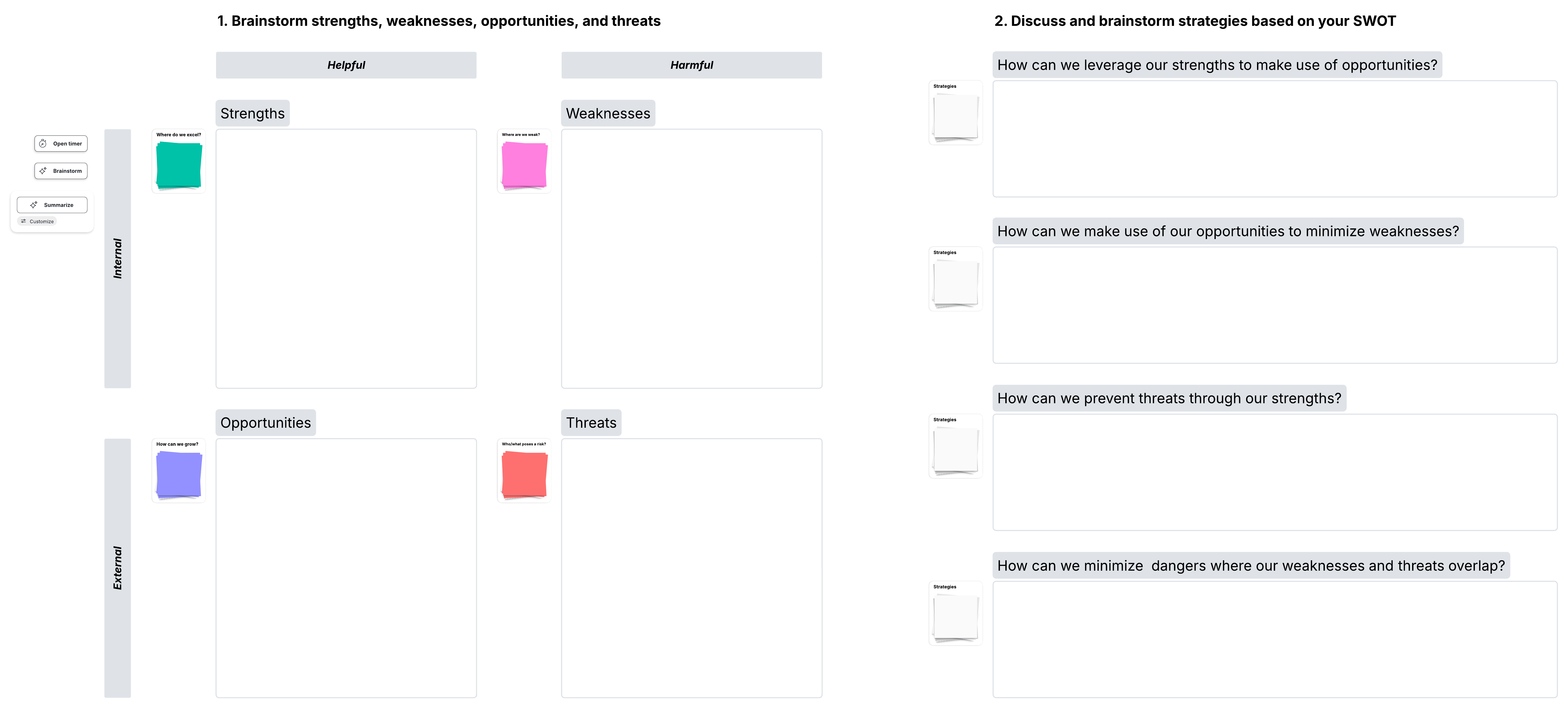
SWOT analysis
Identify a project’s strengths, opportunities, weaknesses, and threats using this collaborative SWOT analysis template.
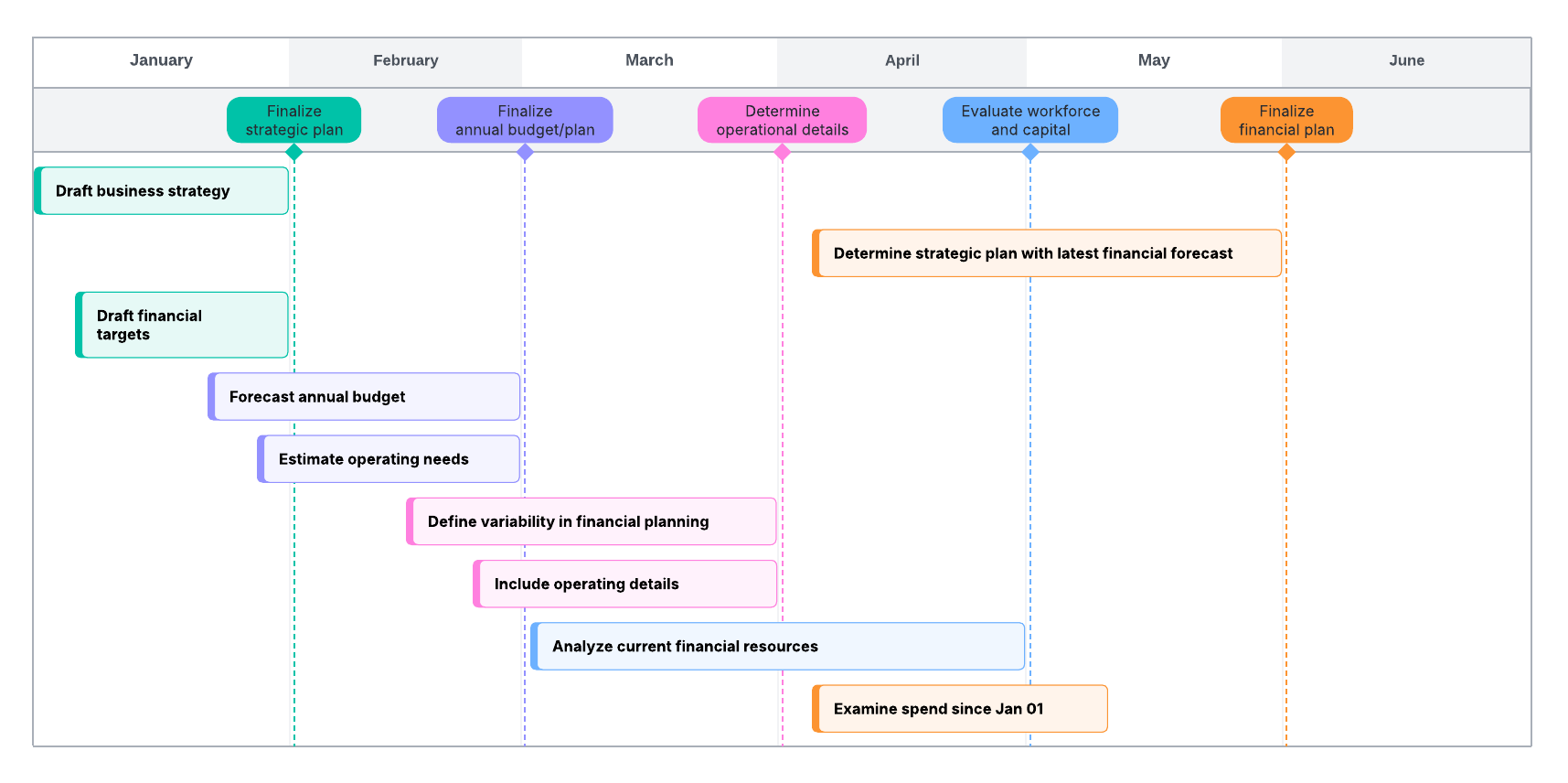
Annual financial planning
The annual financial planning timeline will help you visualize your upcoming spending for the year, so you and your team can be prepared and make informed financial decisions.
Pro tip: Transfer the information from Lucid Cards into platforms like airfocus, Jira, Azure DevOps, Smartsheet, or Asana.
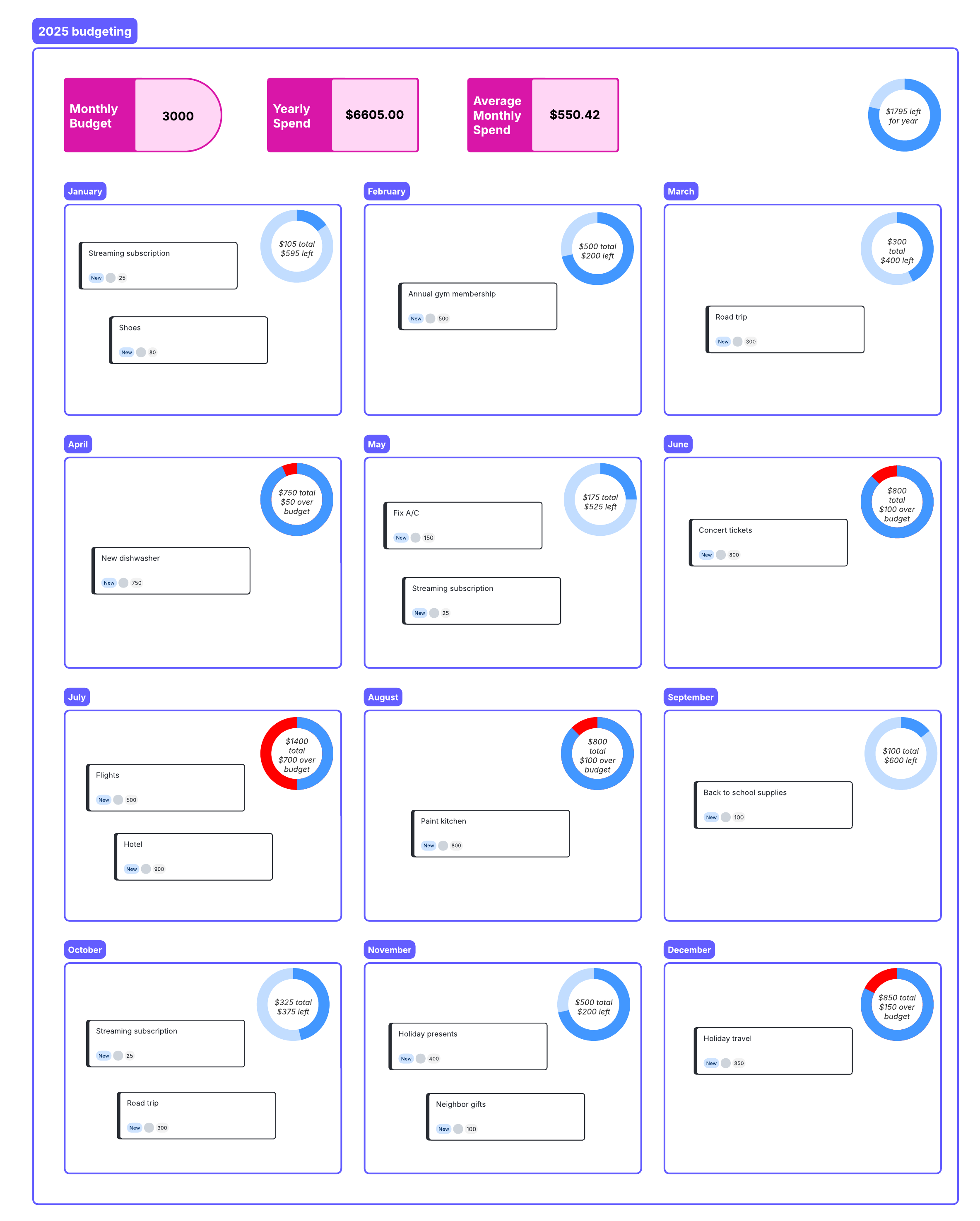
Smart annual monthly budget
Get an accurate snapshot of each month’s spending, along with other details, using this annual monthly budget template.
Risk analysis activity
Turn individual hunches into strategic decision-making. This risk analysis activity enables your team to collaboratively rank project risks in real time.
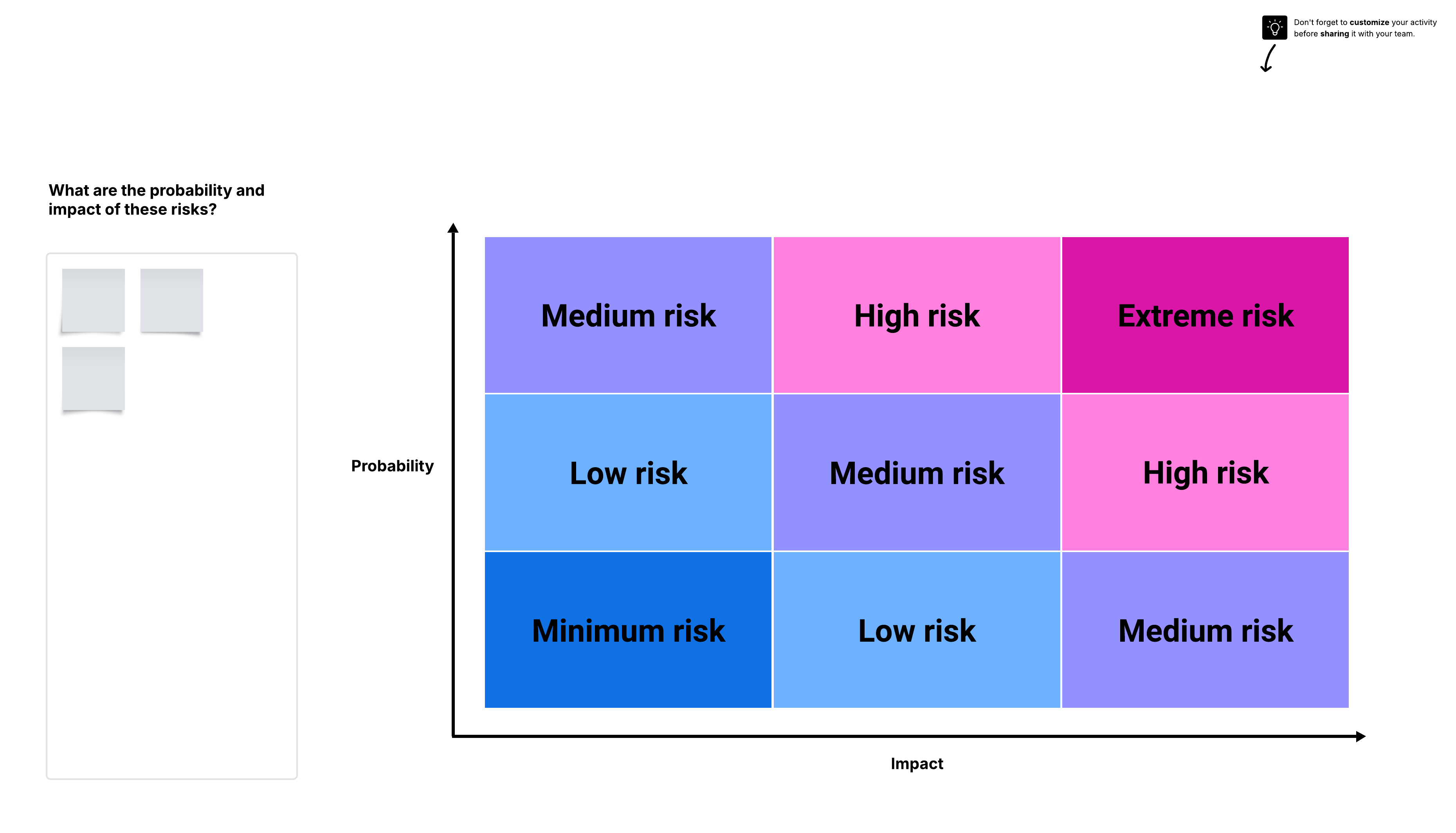
Risk matrix
Evaluate the risks associated with your next project using this risk assessment matrix. Plan resources, set realistic expectations, and be ready to adapt if anything derails your project.

Project management isn’t about avoiding change; it’s about navigating it. A robust contingency reserve transforms your budget into a resilient roadmap that safeguards your team’s momentum. Start building your reserve today by visualizing potential risks and aligning stakeholders on a clear path forward.

Don’t leave your budget to chance. Build a contingency reserve in Lucid and stay ahead of project risks.
Learn more