If you walked into each top creative agency in the world to determine how they’re able to create incredible work, you’ll find one common thing: they all use creative briefs.
Creative briefs are absolutely critical for making both internal and external clients happy. Without a creative brief, you lack a clear vision for who you're targeting, what your project is hoping to achieve, and how you will define success for each project.
Here’s how to write a creative brief and easily replicate the process over and over again using Lucidspark.
What is a creative brief and who should make them?
Simply put, a creative brief provides the details of a project. It describes your end goal, key deliverables, and target audience. Strong creative briefs provide background and context about a product (including details on the competitive landscape) and establish deadlines. If the brief is for an external client, it may also provide an overview of the client’s brand and purpose.
A project manager is usually in charge of writing the creative brief after gathering details from stakeholders and from clients.
Why you should use a creative brief
Not using a creative brief is like throwing a party without sending out invitations. Creative briefs are essential for keeping everyone on the same page. You’ll find that putting the time into a solid creative brief saves time and energy down the line.
Creative briefs accomplish three very important things:
1. Define scope and help avoid scope creep: This prevents people from tacking on additional requirements or deliverables as the project progresses.
2. Clarify project timeline: A creative brief in writing is a great way to keep everyone aligned. There won’t be any confusion about what’s due when.
3. Mitigate confusion and answer questions: The creative brief anticipates the questions your team will have going into a project and provides as many answers as possible. The goal is to make sure your team isn’t assuming anything and is instead consulting the creative brief throughout the project so that there is a single source of truth instead of a dozen sources of assumptions.
How to write a creative brief
Creative briefs look different from agency to agency. If you’re running an in-house team, you may opt to omit some of these sections. We recommend keeping a cloud-based template of your creative brief so that it can be accessed by anyone at any time.
Here are some suggestions to keep in mind as you build out your creative brief:
Provide brand info and background
This is crucial for developing collateral that feels like it was developed by the brand. A Haagen Daz ad wouldn’t sound like a Ben & Jerry’s ad. You don’t need to give a twenty-page history on the brand: a paragraph will do. The trick is to capture the most critical information so that your team can quickly understand and absorb it. That means a paragraph or two on what the company is doing and what their mission is.
Highlight challenges and objectives
Again, this doesn’t need to be too in-depth. Show how the challenges and objectives relate to the current project so that the team understands the larger scope of the deliverables.
Describe target audience
Talking to twelve-year-olds is much different from talking to 40-year-olds. The target audience should describe any demographics (age, location, etc) as well as psychographics (personalities and values). Include only the information that’s most relevant to the project. There’s no need to discuss what the target audience has for breakfast when you’re designing Facebook ads for computer desks.
Explain the competitive landscape
This is important so your team understands how to make the customer or project stand out from the crowd. It also helps articulate the current challenges your brand might be facing. You might consider addressing:
- Main competitors and their products
- How others are messaging their products
- The marketing strategies of competitors
- Competitor audiences
Offer a distribution plan and timeline for project
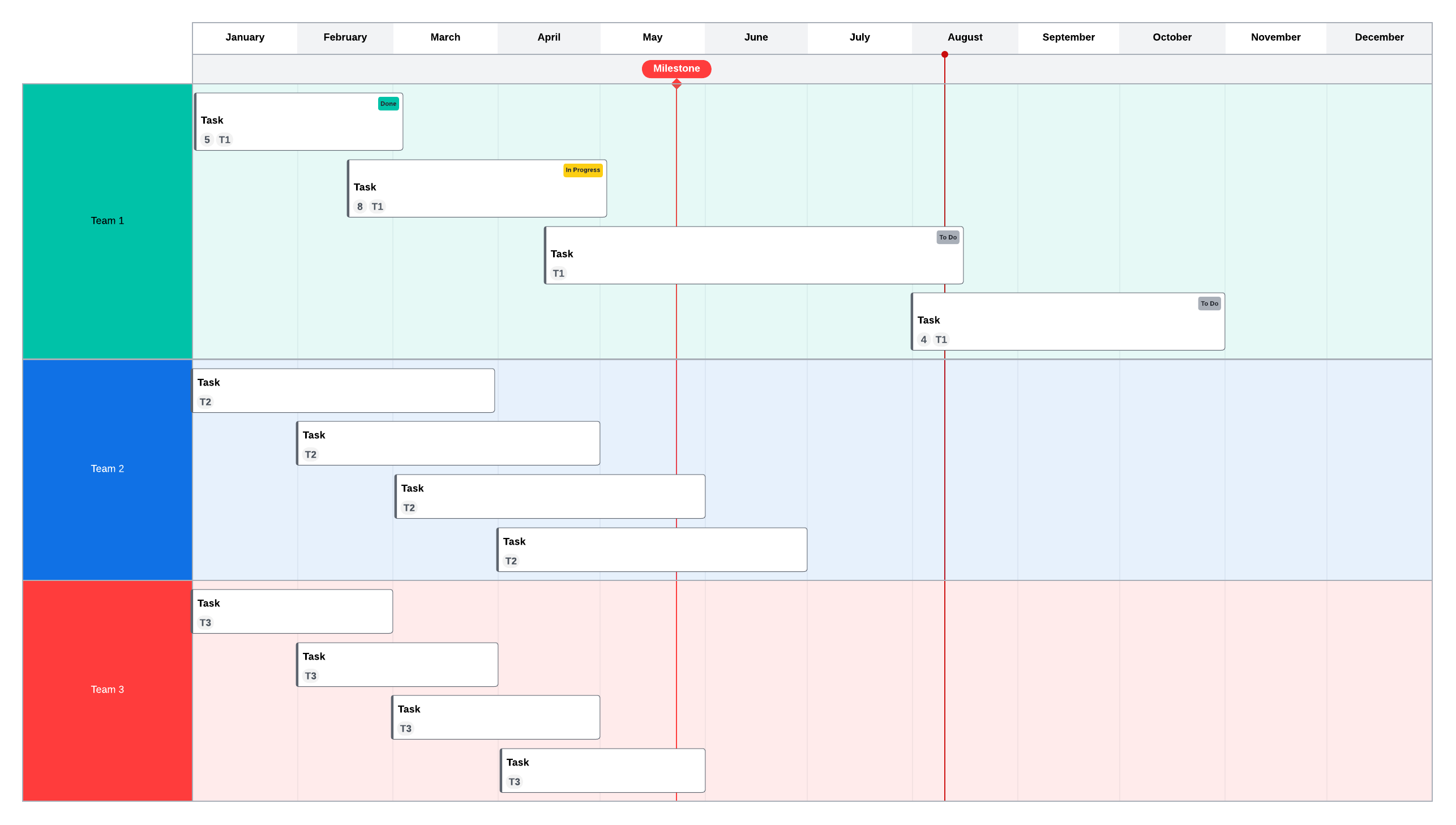
If your deliverables have multiple deadlines, break those down, as well. Consider using something like a product roadmap or Gantt chart to help your team visualize next steps.
Technical requirements
There’s a big difference between collateral developed for print and collateral developed only for digital. These technical requirements are important to articulate at the beginning of a project.
Tips and best practices for creative briefs
Believe it or not, much of the success of projects can be determined by how clear creative briefs are. (No pressure.) Here are some tips on how to make sure you’re creating the best creative brief possible:
Make it short and sweet
Given the sheer amount of information we encounter every day and how short our attention spans are, it should go without saying that the longer the creative brief is, the less chance you’ll have of people paying enough attention to it. Give the most important details. Remove fluff.
Every piece of information in the creative brief should have the goal of setting your team up for success. Use bullet points, graphs, and any other easily absorbable formats. If there’s something especially important, consider bolding it. And if there are any updates to the creative brief, be sure they’re communicated early on in the project.
Make it quantifiable
Your creative brief should have quantifiable goals and KPIs so that you can measure your success. And it’s important that those goals are concrete. So, for instance, if your client asks you to “increase awareness” of their new skincare line, that’s not a measurable goal. But if your client says they want to improve Instagram engagement by 45% based on a single campaign, that’s a quantified, measurable goal. And now your team knows what the client needs to be happy.
Make it a two-way street
It’s tempting to give your team a creative brief as an instructive process instead of a collaborative process. And so often, teams are given the creative brief in a meeting, asked if they have any questions, an awkward silence ensues, and the meeting is over. Your team needs time to digest information, briefly brainstorm ideas, and be given the time to think of questions they want to be answered.
Consider sending out the creative brief before having a meeting on it so your team can consider the information. And pay careful attention to any issues that arise during that first project because they may be related to a lack of information given in the creative brief. If, for instance, you find that your team didn’t realize they were supposed to create an app for both Apple and Androids, you’ll know to articulate platforms in the briefs going forward.
Here’s the key: once you’ve created a successful creative brief, it’s a matter of replicating the same process for every project after that. Getting that first creative brief dialed in is key.

Brainstorm your next best idea and bring it to life.
Learn how