
Two years ago, businesses around the world had to adapt to remote and hybrid working models at the height of the COVID pandemic. For Lucid, this meant moving to 100% remote work virtually overnight.
This transition to remote work revealed an urgent market need for technology solutions that could replicate and improve in-person collaboration and creativity in a virtual setting. Lucid saw an opportunity to build an innovative solution that could better enable our customers with distributed teams to brainstorm together and seamlessly move from ideation to planning.
But remote product development is difficult to accomplish. From working cross-functionally to aligning on a shared vision, remote work presents unique challenges to the traditional development model.
Despite these challenges, the team at Lucid set and met the ambitious goal to develop and launch Lucidspark—a virtual whiteboard and infinite collaborative canvas—in less than six months.
So, how did we do it?
Here are three takeaways our team had during our remote product development on Lucidspark.
3 takeaways for remote product development teams
1. Lean into and celebrate wins.
Building Lucidspark remotely on a tight deadline was an ambitious undertaking. Getting the product over the finish line required a massive shift in priorities and collective support across the company.
“Many existing teams across the organization had to push back other projects to support these efforts, and a new product meant major changes to existing areas like licensing and subscriptions, new domains, admin settings, and more,” said Margaret Kamerath, senior software engineer at Lucid. “It was really a team effort to adapt to this new priority on our roadmaps.”
Celebrating team wins and connecting the product to the real-world impact it had for customers was key to sustaining innovation and team motivation month over month.
Here are three ways to lean into team successes:
Connect the work to customer feedback.
What insights did you gain from a customer feedback cycle? What worked well for them?
Keeping the work closely tied to customer feedback not only improves the final product but helps motivate the team when they see the benefits their work is having for real people who will use it.
Show appreciation for teams who innovate and work hard to bring a feature or product to market quickly.
Recognition was critical for the Lucidspark development team. With such a tight timeline, engineers were working longer hours under pressure—a recipe for burnout.
“We rewarded people with additional incentives and tried to recognize the effort and sacrifices they were making in other places,” said Lindsey Martin, director of user experience at Lucid.
“For example, we had a design review that went from 10 am to noon on Fridays, and then everyone was expected to take the rest of the afternoon off. So you might have put in extra hours during the week, but we tried to offset that with a Friday afternoon that was free.”
Do a retrospective after launch to showcase what worked really well, including any lessons learned for next time.
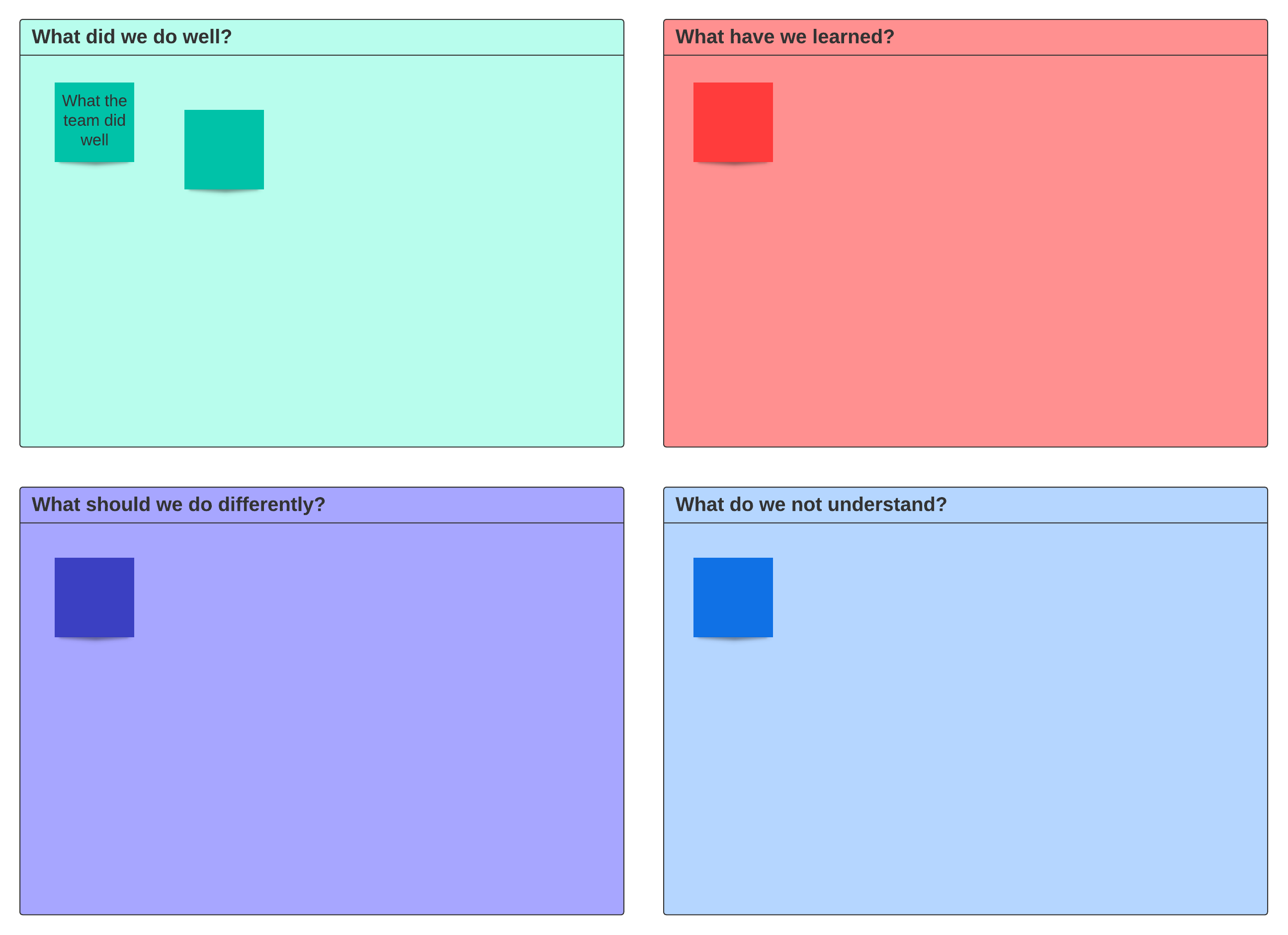
A retrospective is a valuable tool for highlighting team wins and showcasing great work individually and collectively.
”You can ideate right in Lucidspark. It's perfect for pretty much every step of our process,” said Kamerath. “Our retrospective template makes it easy to facilitate a brainstorming session with the team and come out of it with real action items.”
2. Over-communicate. And then do it again.
Remote work requires conscious effort to communicate clearly and often. Throughout the Lucidspark development process, learning how to communicate effectively was a game-changer. This included relying on shared visuals in the Lucid workspace, regular team check-ins, and streamlining processes to reduce friction and miscommunication.
- Use visuals to better convey ideas and action items. Lucid is built on the power of visual communication. During development, the team relied on visuals to plan, brainstorm, and communicate.
“Visuals are hugely critical for cross-functional teams when people in different roles are using different vocabulary to talk about the same things, often from the perspective of each discipline,” said Kamerath. “And so having a visual component to that collaboration can help us know that we are talking about the same thing and make that communication faster and more effective.”
- Check in every day, maybe a couple of times a day, to share what has been accomplished, any blockers, and what needs to be done. Frequent check-ins through team stand-ups ensures everyone is on the same page and has the support they need to succeed. This is especially important on a fully remote team that has fewer organic opportunities to collaborate and share notes.
Building check-ins into your communication strategy keeps projects moving quickly with less disruption and fewer missteps.
- Streamline processes to reduce friction and promote communication.
“One thing we learned early on is that too much process can function as red tape—even if it's not formally red tape. As a result, people become less engaged in the work,” said Kamerath.
One way to combat this is to lean into self-documenting processes. For example, rather than writing or drawing on a physical whiteboard together in a meeting and then afterwards doing a write-up of the meeting, start with the virtual whiteboard. By using a virtual whiteboard as your collaborative “home base,” you then have that shared visual artifact after the meeting is over.
Reducing the number of steps involved in the collaboration process improves communication and minimizes friction across the team.
3. Align on mission
Building alignment from the start was essential to launching a successful initiative and bringing the project over the finish line on time. For Lucid, this meant creating and rallying around a customer-centric culture.
And this customer-driven mission isn’t just a feel-good ethic—it helped boost morale during grueling hours of development, built buy-in from leaders and stakeholders, and meant the final product better meets customer needs.
“Customer centricity is at the heart of everything we do at Lucid. With every decision that we made, we would ask ourselves, ‘Does this fit into our vision? Does this serve our customer?’” said Martin.
The Lucidspark product vision was a combination of two principles:
- How does this particular offering build on our mission to help teams see and build the future?
- How does this benefit our customers?
For example, UX designers and product managers spoke to at least one customer per week—often more—using the customer insights to validate ideas and align the product offerings with what users actually needed.
“This vision was key to helping people understand why we were shifting priorities, why we were taking resources from one part of the organization and putting them toward this initiative,” said Martin. “Casting a strong vision helped boost morale because our teams understood the impact they were making.”
Building business agility moving forward
Product development has changed immensely since teams have been dispersed, and it will continue to evolve even more. Remote or in-house, creating agile teams that understand the customer and their needs will help keep product development moving quickly and smoothly from start to finish.

Watch the on-demand webinar for more actionable strategies to increase delivery agility.
Watch the webinar
