With an average of 4.4 million new businesses launching every year, it’s no wonder that it can be a struggle to stay ahead of the competition. To increase your odds of succeeding, you need to:
-
Differentiate yourself from the competition.
-
Be able to adapt to rapidly changing market trends.
-
Be innovative and provide value to customers.
-
Effectively use available resources.
Performing an internal analysis of a company can help you to see what your organization does well and what needs improvement.
In this post, we’ll discuss what an internal analysis is, why it’s important, what the different types of internal analyses are, and how to perform an internal analysis.
What is internal analysis?
An internal analysis is a powerful tool that can give you a comprehensive view of your company’s internal workings. It gives you insight into the resources you have, resource capabilities, organizational structure, company culture, current processes, and so on. The idea is to identify your company’s strengths and weaknesses.
When you understand your strengths, you can turn them into advantages that can help you to stand out from the competition. And knowing what your weaknesses are helps you to address them so they don’t hinder your success.
Why is an internal analysis important?
An internal analysis is an important part of strategic management and the decision-making process. It can help guide your company to develop strategies and make decisions that align with your corporate vision and goals. In addition, an internal analysis is important for the reasons outlined below:
-
Identifying strengths: Your company’s strengths might be your talent pool, the quality of your products, brand recognition, customer loyalty, etc. Recognizing your company’s strengths can help you to optimize resources and increase overall performance.
-
Mitigating weaknesses: An internal analysis helps you to see areas that need improvement. Weaknesses might be things like lack of training, poor communication, outdated equipment or technology, inefficient processes, and so on. Identifying and mitigating weaknesses helps you to improve processes and be more competitive.
-
Making informed decisions: Making informed decisions is crucial to strategic management. What you learn from an internal analysis gives you the data and insights you need to make the right decisions that align with your company’s strengths and strategic goals.
-
Optimizing resource allocation: No company has unlimited resources. An internal analysis helps you to determine how to optimally allocate resources where they will have the most positive impact. Efficient resource allocation increases efficiency and can help you maximize your return on investment.
-
Being adaptable: To be successful, you must be able to adapt to today’s constantly changing business environment. An internal analysis can help you to see where you might need to respond to shifts in consumer behavior, adapt to new technologies, or comply with updated regulatory standards. When you understand how your organization works, it makes it easier to effectively adapt to changes.
Internal analysis tools
There are several different types of internal analyses you can use to gain insight into your organization’s internal landscape. The type of analysis you choose to use will depend on your goals, the type of industry you work in, and your company’s unique challenges.
The following organizational analysis templates will help you to perform any type of internal analysis that aligns with your needs.
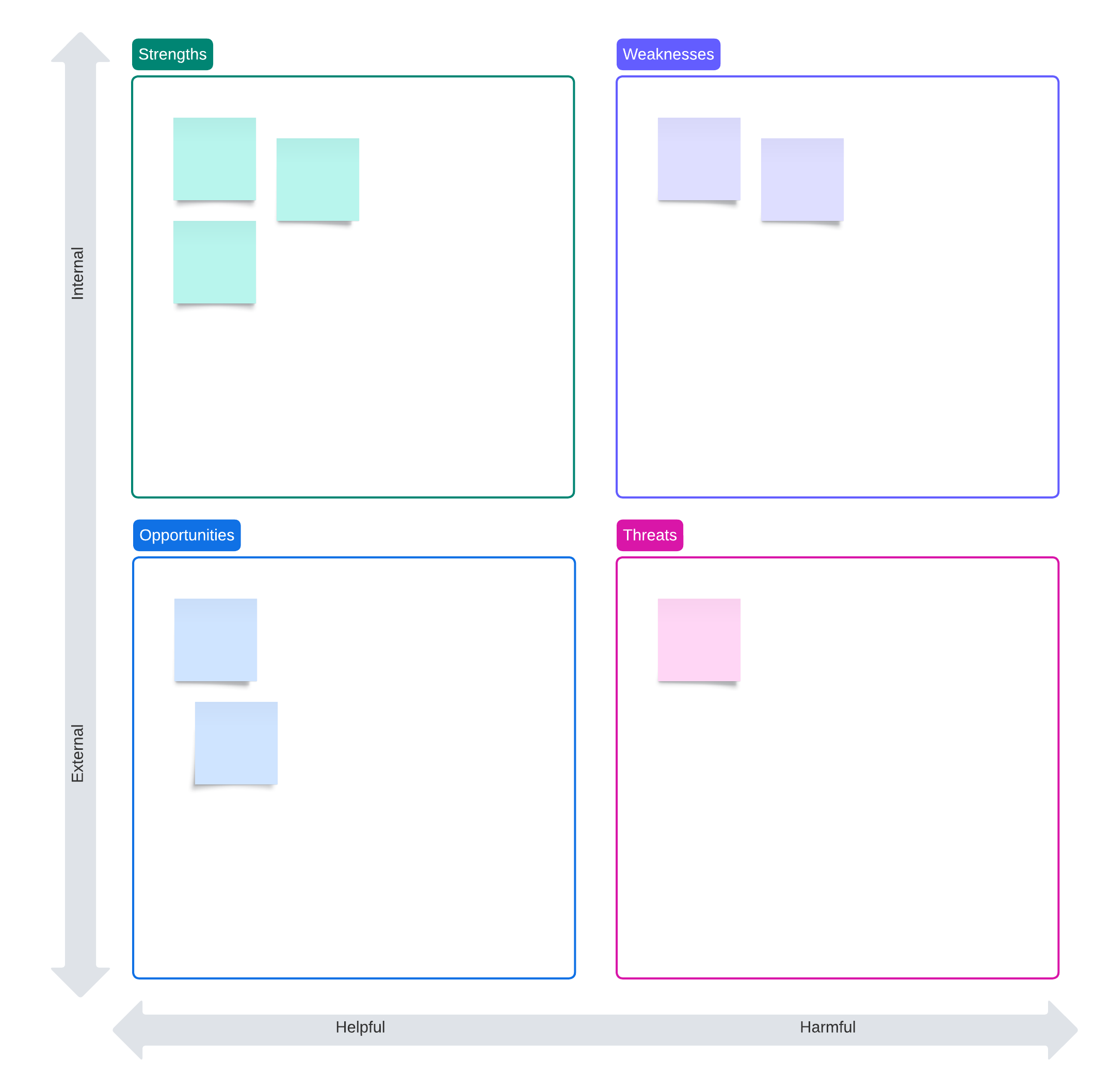
SWOT analysis
A SWOT analysis helps you to identify your company’s:
-
Strengths: Characteristics that give your company an advantage over the competition
-
Weaknesses: Characteristics that are disadvantageous in relation to the competition
-
Opportunities: Trends or technologies that you can use to gain an advantage over the competition
-
Threats: Obstacles that can impede company growth
This holistic view of your organization’s inner workings helps you to strategically plan for the direction you want your company to go.
Gap analysis
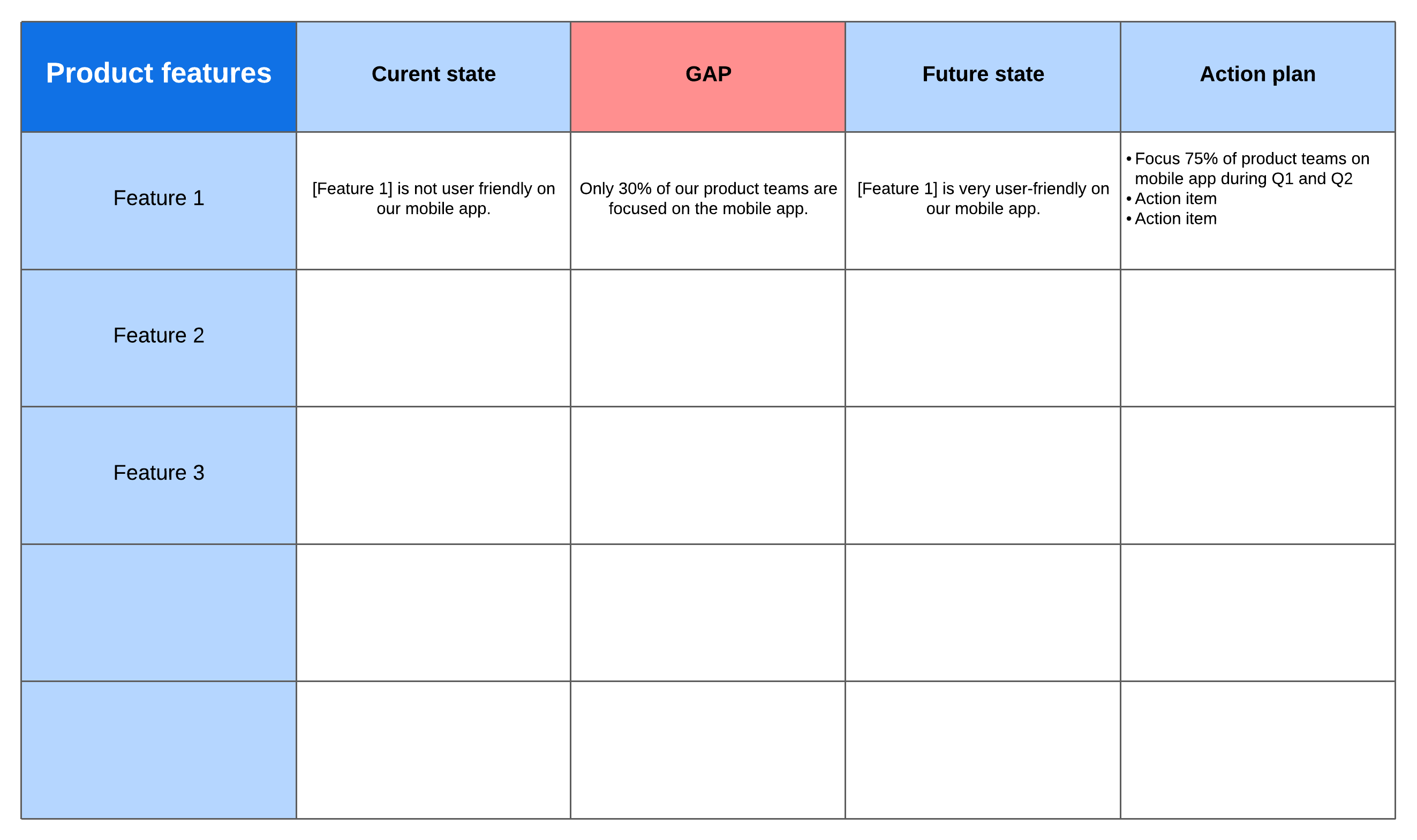
A gap analysis is used to identify the differences—or gaps—between your organization’s current state and your desired future state. The gap analysis process involves:
-
Assessing your organization’s current state.
-
Identifying your organization’s ideal future state.
-
Finding the gap and evaluating solutions to bridge the gap.
A gap analysis is useful when you are looking for ways to improve performance and strengthen your organizational structure.
McKinsey 7S model
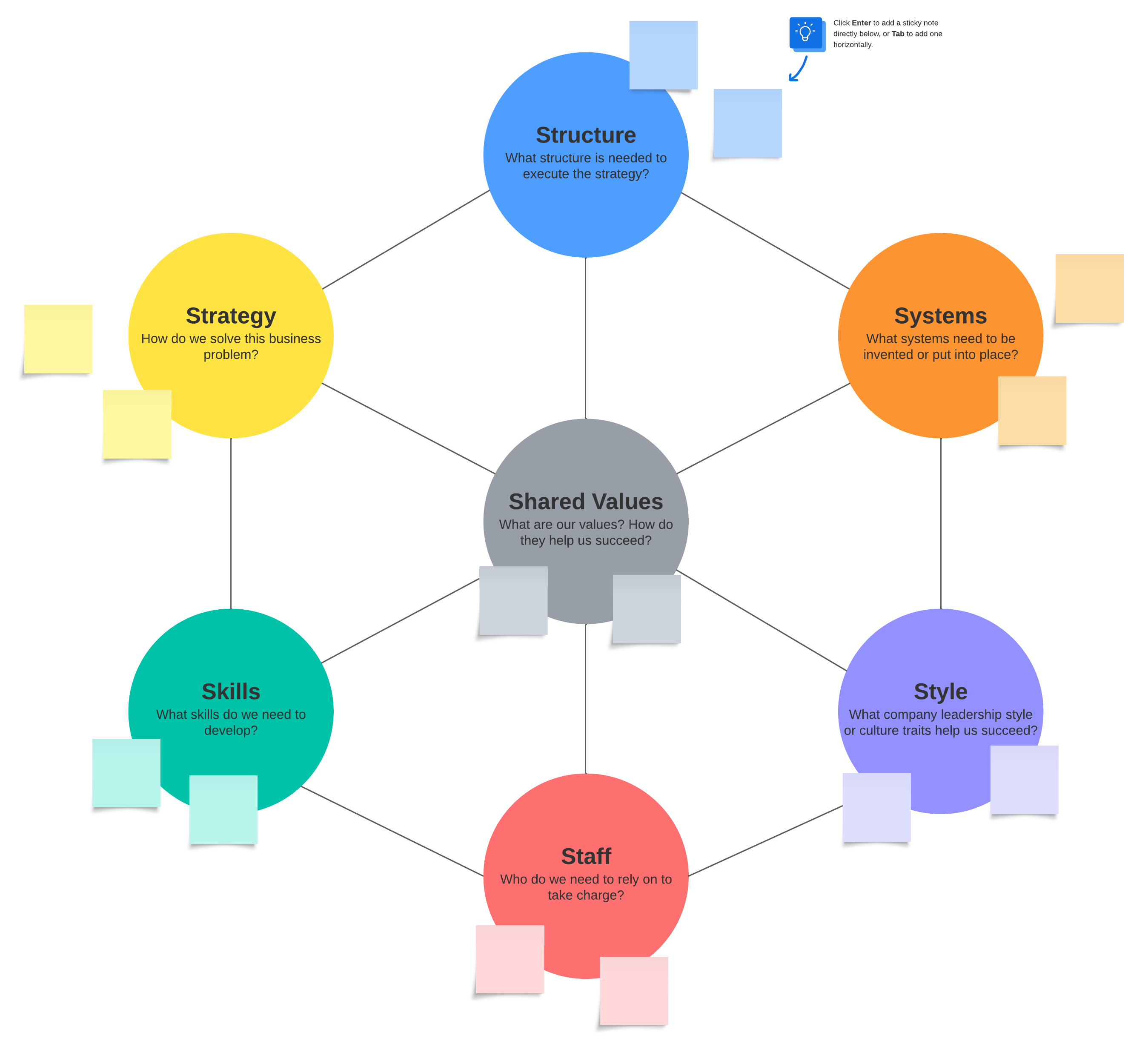
The McKinsey 7S model is a strategic planning tool developed by McKinsey & Company in the 1980s. It can help you assess and align seven interrelated internal elements so they work together in harmony toward your company’s objectives and goals. The seven elements are categorized as “hard” or “soft.”
Hard elements
The hard elements are tangible like corporate plans, strategy statements, org charts, and other documents.
-
Strategy: Your company’s plan to enhance competitive advantage.
-
Structure: Describes how your company is organized and who reports to whom.
-
Systems: Outlines the procedures, processes, and routines of staff that characterize how the job is done.
Soft elements
These are things like the capabilities of your employees, corporate values, and workplace culture.
-
Shared values: These are the core values that are reflected in the corporate culture and individual work ethic.
-
Style: This includes the typical behavior patterns of groups such as managers and other professionals.
-
Staff: This refers to the general capabilities of your employees.
Skills: This includes the organization’s core competencies and distinctive capabilities.
VRIO analysis
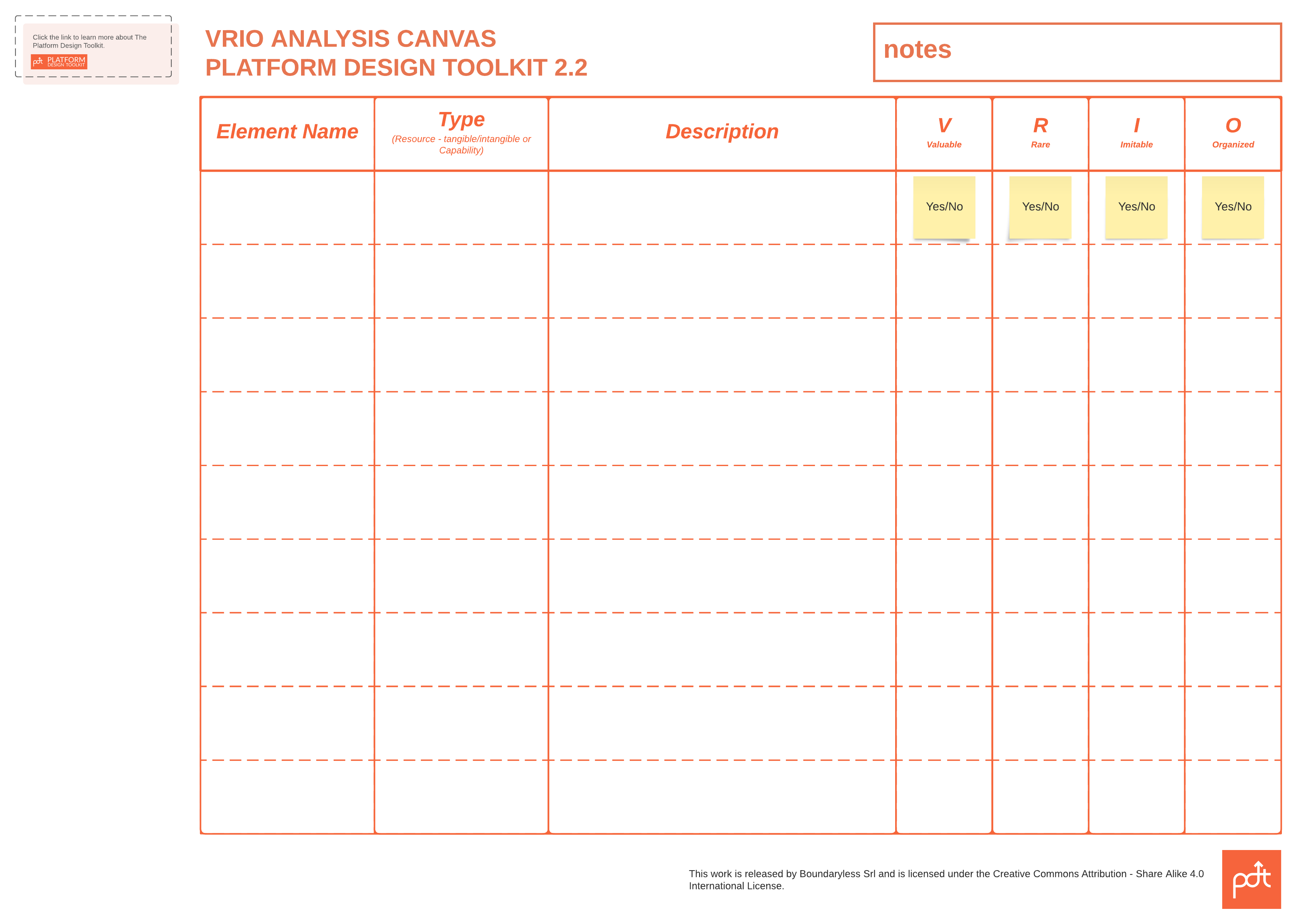
A VRIO analysis lets you evaluate the competitive potential of your company’s resources and capabilities by looking at their value, rarity, imitability, and organization.
-
Value: Does the resource or capability add value to your company’s products or services?
-
Rarity: How rare or uncommon is the resource or capability within your market or industry?
-
Imitability: Can your competition easily imitate a particular resource or capability?
-
Organization: Is your organizational structure set up to take advantage of the resource or capability’s full potential?
Skills and competency analysis
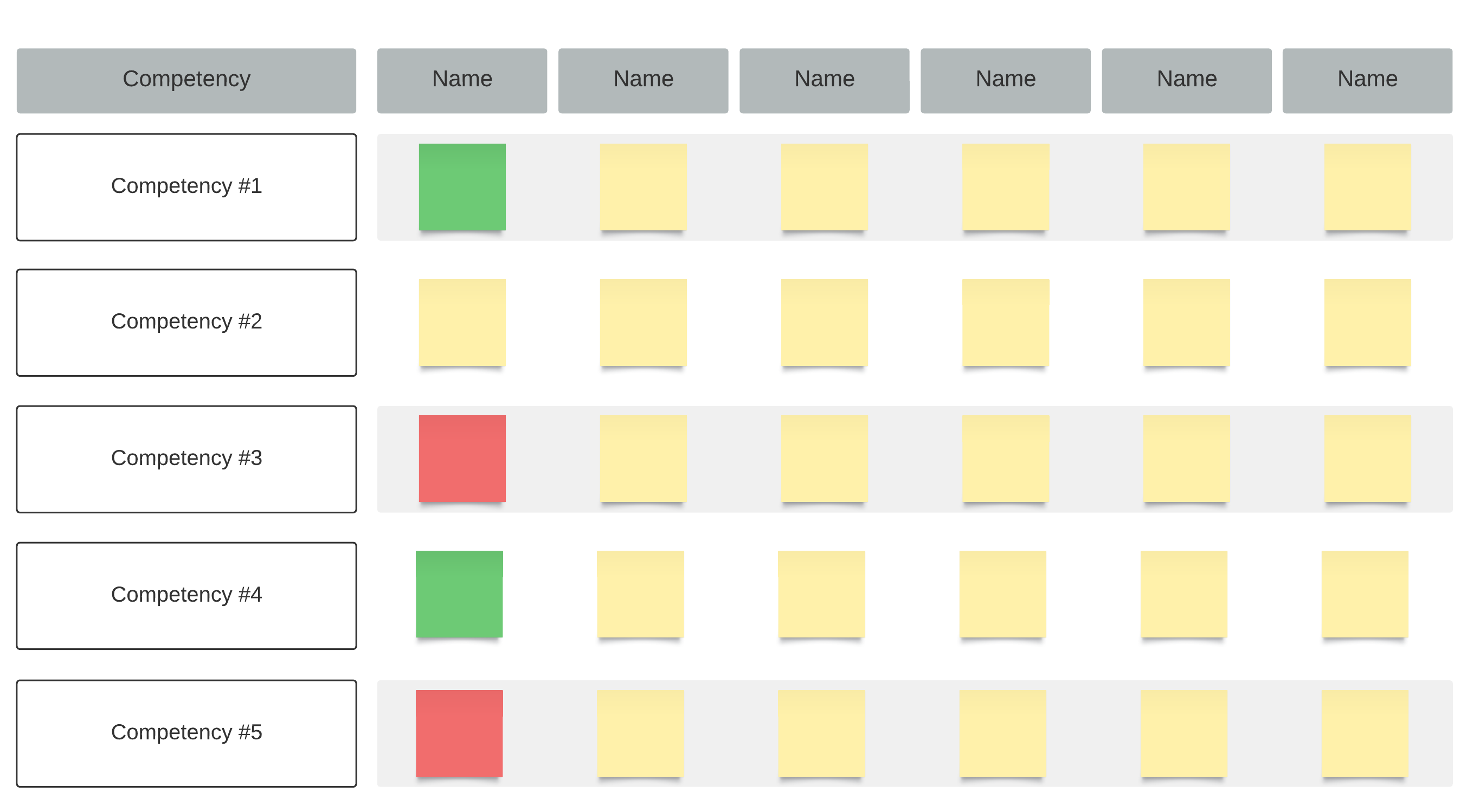
An analysis of your workforce’s skills and competencies helps you to understand the status of your capital. This can help you to identify areas where more training is needed and where you might need to hire talent with the skills you need. This team competency matrix template can help you get started.
How to perform an internal analysis
The following steps can help you to perform a comprehensive internal analysis.
Step 1: Set your goals
Define what you want to accomplish with your internal analysis. Establish why the internal analysis needs to be done and identify which specific areas of your organization will be examined. This will help you to focus on the relevant data so you can make informed decisions that align with your goals.
Step 2: Gather data and information
Collect data and information that is relevant to your company’s internal dynamics. Gather this data from multiple internal sources such as finance, operations, manufacturing, HR, etc.
Step 3: Do a SWOT analysis
Perform a SWOT analysis to find your strengths and weaknesses (which are internal factors), and its opportunities and threats. The goal is to list what you believe your company is doing well and what needs to be improved, and to understand your current position and potential in the market.
Step 4: Evaluate company resources and capabilities
Explore your company’s tangible and intangible assets, skills, knowledge, core competencies, and capabilities. Identify those that contribute to your company’s success or give you a competitive advantage. This analysis will also show you areas that need more development and investment.
Step 5: Analyze processes and operations
Determine how efficient and effective your internal processes and operations are. This can include the management of your supply chain, production and manufacturing processes, quality control, administration activities, customer service, etc. An analysis will give you an overview of these operations and processes so you can more easily identify bottlenecks and inefficiencies that can be improved.
Step 6: Review your financial performance
Analyze financial statements, balance sheets, and cash flow reports to identify trends and get insight into your organization’s financial health.
Step 7: Develop and implement a strategic plan
What you’ve learned from the analysis of your data should be integrated into a strategic plan. The plan will be used to leverage your strengths, mitigate weaknesses, and seize opportunities. Make sure that your plan and implementation are aligned with your company’s mission, vision, and long-term goals.
Step 8: Monitor and revise
Part of being adaptable and agile includes a continual strategic management process. Monitor your internal factors on a regular basis and make strategic changes as needed. Your understanding of your company’s internal workings and your ability to adapt will help you to stay competitive in a continuously evolving business landscape.
An internal analysis is an important component of an ongoing strategic planning process. A thorough analysis helps your organization to navigate the complexities associated with a constantly changing business environment. The insights you gain from performing an internal analysis can help you make good decisions, create effective strategic plans, exploit strengths, mitigate weaknesses, and optimize your resources.

Want to browse more free strategic analysis templates? Check out the Lucidspark template gallery!
Learn More