Key takeaways
-
Design thinking is a problem-solving philosophy rooted in empathy that focuses on understanding users' real-world experiences, emotions, and needs to drive business innovation and competitive advantage.
-
Design thinking consists of five stages: empathize, define, ideate, prototype, and test. These are non-linear. Teams can work on them in parallel or repeat stages as needed.
-
To successfully implement design thinking and reap its benefits, teams must overcome challenges such as securing team buy-in, conducting thorough user research, and maintaining a flexible, iterative mindset.
How many times have you been tasked with thinking “outside of the box?” This common idiom gets tossed around to encourage originality and creativity, but there’s very little direction ever given about how to think outside the box.
But we have good news: Many don’t realize that this is just another way to describe design thinking, a very real philosophy that can be learned and perfected. In this article, we’ll dive into the specifics of what it is, how it benefits businesses, and how to implement it.
Let’s get started!
What is the design thinking methodology?
The design thinking process is a non-linear, creative, and iterative process for understanding users, challenging assumptions, and developing innovative solutions to prototype and test. The primary difference between it and other problem solving methoodoliges is its focus on user experience and needs. Rather than prioritizing cost reduction or technology use, design thinking principles seek to improve the lives of real people by solving problems and creating better experiences. Design thinking principles can be applied across industries and to nearly every problem.
The evolution of the design thinking framework
Empathy-based problem-solving has always existed, but modern design thinking began with John Dewey’s 1935 work, which blended aesthetics and engineering. This practice was later codified by David Kelley, founder of the design firm IDEO. Kelley revolutionized the field by shifting from service design, which relies on indirect customer data, to human-centered design, which demands direct, empathetic engagement.
The 5 design thinking process steps
The design thinking process has five main parts:
-
Empathize: Understand your users and research their needs.
-
Define: Identify users’ needs and problems.
-
Ideate: Challenge assumptions and start brainstorming and generating solutions.
-
Prototype: Build out your best ideas.
-
Test: Test your prototypes, identify issues, and refine your solution.
The design thinking stages are not necessarily sequential. Teams can work through multiple stages in parallel as they move toward a solution. Let’s explore each stage more deeply.
Stage 1: Empathize
Design thinking puts people at the center of the design process, and that requires leading with empathy. The empathy design thinking stage requires getting into your end users’ heads to truly understand their experiences. By shelving your preconceptions, you can identify what people actually need, which helps you understand the problem better and develop more effective solutions.
There are four phases of empathy in design thinking:
-
Discovery: Identify and approach users to start uncovering their behaviors and the reasons for them.
-
Immersion: Put yourself into the users’ shoes. This phase involves fieldwork, or entering your users’ environments to conduct research, perform the same activities, and learn first-hand what problems and needs exist.
-
Connection: Connect with your users’ experiences through observations and research.
-
Detachment: Reflect on your experience and learnings to determine key insights and generate ideas.
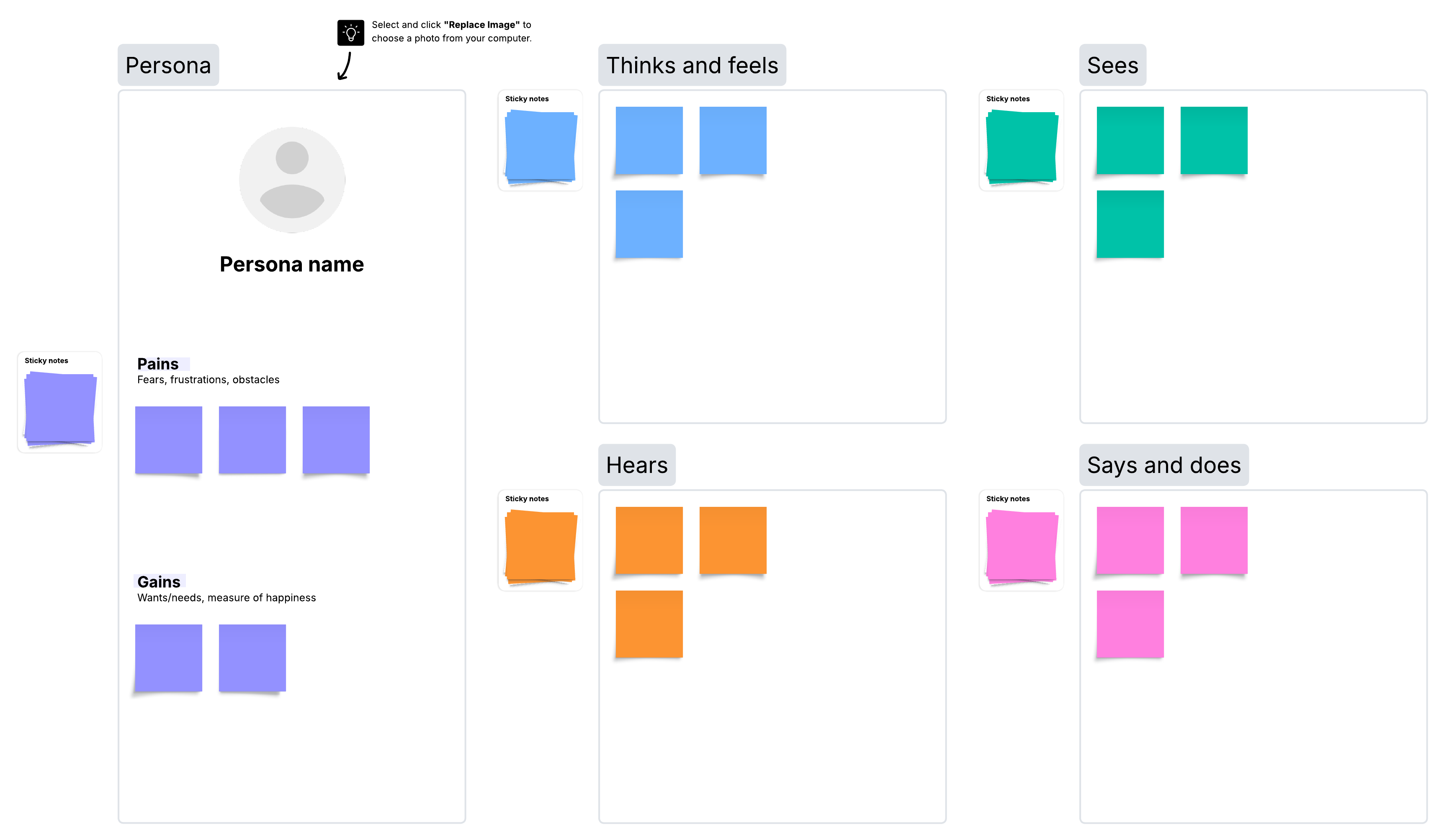
Pro tip: An empathy map can help you stay organized during this step as you synthesize observations and uncover key insights.
Stage 2: Define
The define design thinking stage identifies the problem designers are trying to solve. This process keeps everyone oriented to the same solution. The problem should be narrow but not too limiting. It’s best if you can distill your problem into a single statement.
By answering these four fundamental questions, you can formulate a better definition of your problem:
-
Who’s having the problem?
-
What problem is your user actually having?
-
Where is the issue?
-
Why solve the issue?
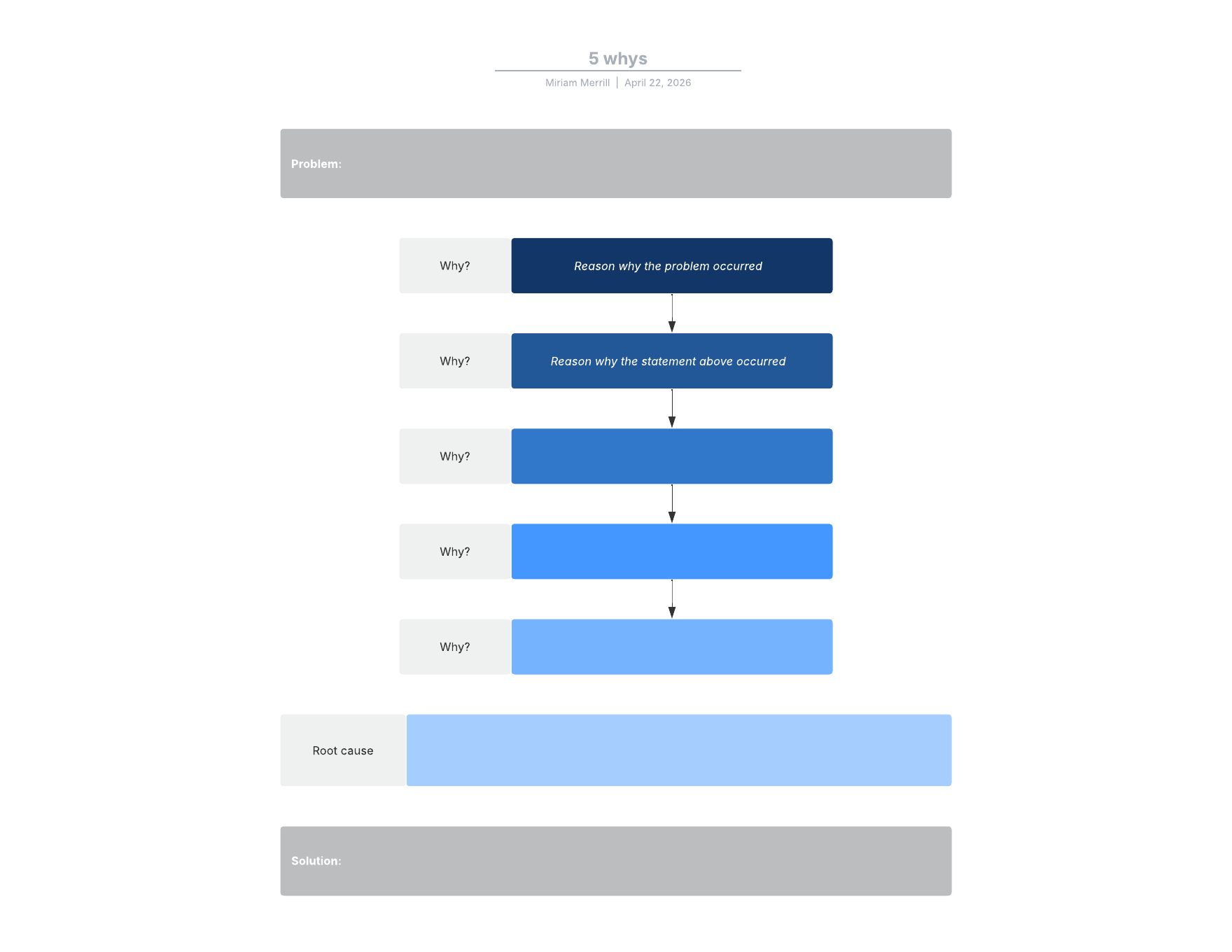
Pro tip: The 5 whys technique can help you during this stage as you try to better understand your users’ problems.
Stage 3: Ideate
Ideate in design thinking means proposing as many ideas as possible to solve the problem at hand, without evaluating or judging each idea's viability. No ideas are bad ideas. The only hard-and-fast rule is to keep the user top of mind. Lucid AI can help maximize the productivity of your ideation by expanding on your ideas to get more possible solutions than ever. Plus, in seconds, it can then summarize your ideas and sort them by category or theme to make connections and provide deeper insight.
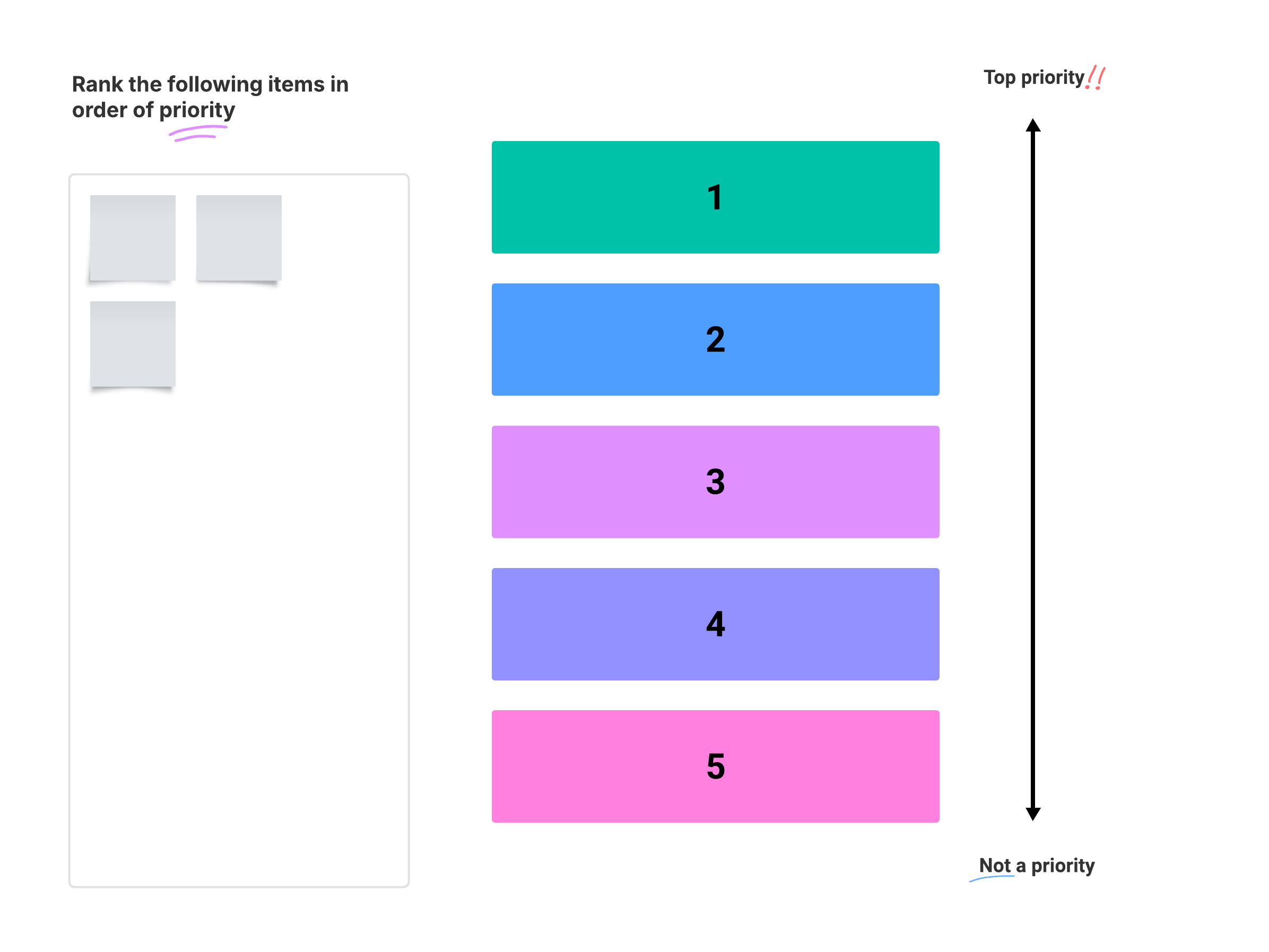
Once you’ve brainstormed, it’s time to narrow down to identify which ones you’ll carry into the prototype stage. Visual Activities are a great way to quickly collect feedback and identify which ideas are the best candidates to move to the next step.
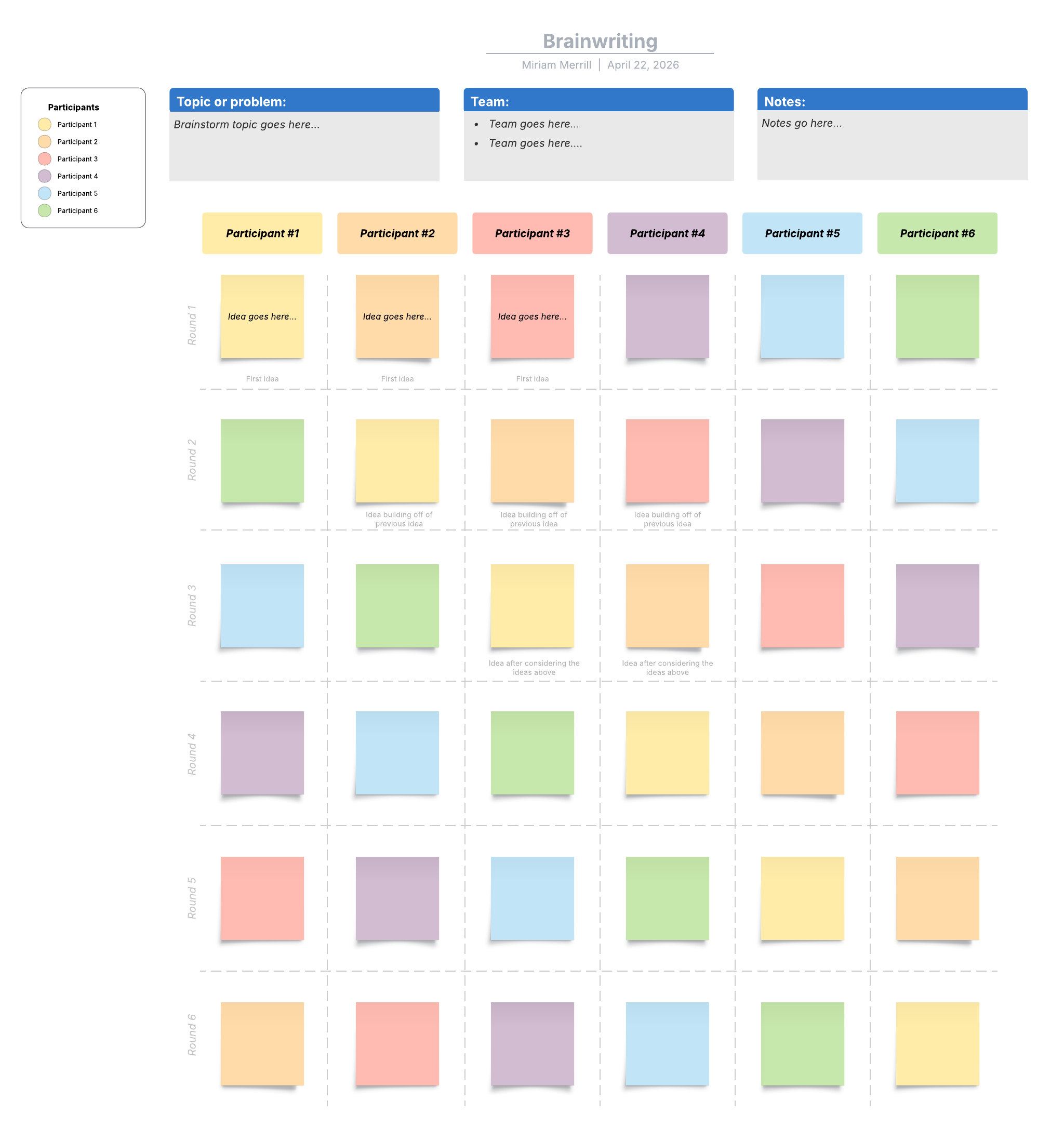
To successfully facilitate the ideate design thinking stage, try different brainstorming strategies, such as brainwriting or mind mapping.
Stage 4: Prototype
Time to bring your solutions to life! Teams build prototypes to ensure that design decisions are grounded in actual usability testing. Whether you choose to create a low-fidelity prototype using paper or blocks, a high-fidelity prototype with advanced materials, or even a digital prototype, this exciting stage is where ideas start to take shape.
Stage 5: Test
Time to test the prototype. Does it meet your users' needs and wants? Does it work? Once you’ve deployed a solution, you’ll need to test, retest, and adjust as needed. This stage is your opportunity to gather feedback from outside the development team and assess your concept against four critical criteria:
-
Desirability: Your solution must align with what customers actually want.
-
Viability: You must ensure there is a clear, reachable market that isn’t already oversaturated.
-
Feasibility: You’ll want to confirm you have the necessary development resources and that the required technology is available.
-
Ease of use: Identify friction points and brainstorm specific refinements that improve the overall user experience.
Benefits of design thinking
Design thinking puts humans at the center of a project, so when a problem is solved, the user feels listened to.
Here are a few more reasons why design thinking is key to innovation:
-
It provides a fresh perspective on problems.
-
It helps determine a problem’s root cause.
-
It encourages collaboration, innovation, and problem-solving.
-
It empathizes with the user.
-
It encourages rapid prototyping and fast feedback.
This method of solving needs creates a need for buyers, driving better innovation and setting your business apart in the marketplace.
Design thinking challenges (and solutions)
Design thinking can be highly valuable for businesses, but it also poses many challenges. Keep these in mind for your best chances of success with the philosophy.
-
Not going deep enough with user research
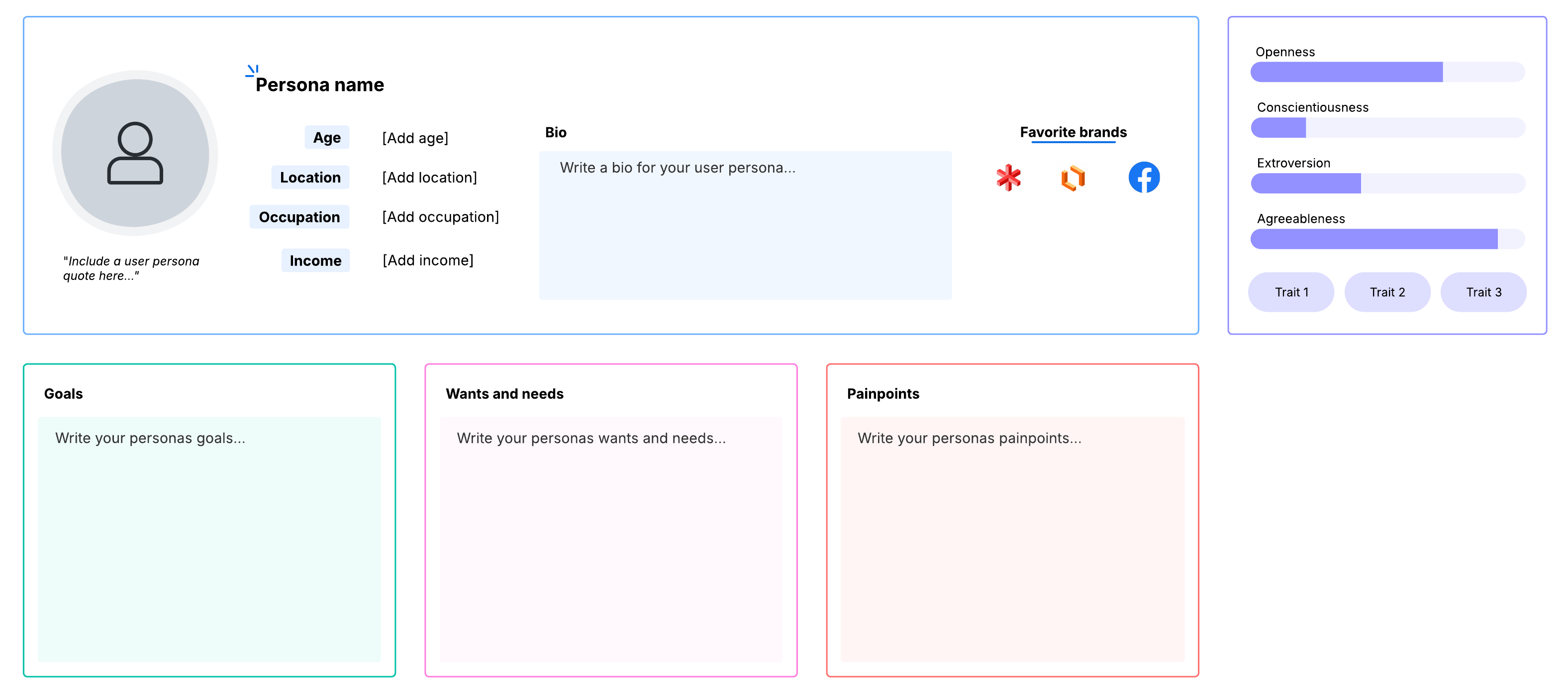
If you haven’t done significant research to develop those user personas, you’ll have no idea how or with whom you’re empathizing. Weak or underdeveloped user personas make it difficult to identify customer needs and ideate solutions.
The solution: Take your time with each step. User personas should be based on robust, accurate research. If you don’t have detailed user personas, research more until you do.
-
Failure to master the design thinking process
Failing to master the design thinking process is a failure of implementation. If only a few people are on board with the idea, it simply won’t work. People are often resistant to change, and without a plan to counter it, you won’t be successful overall.
The solution: Get buy-in from the entire team. You’ll also need training. Invest in tools for design thinking and a professional to motivate and teach your team how to get it right, and encourage your team to ask questions along the way. Share successful design thinking examples to help motivate.
-
Getting discouraged by ideation and experimentation
The design thinking approach emphasizes ideation and testing. It can take a long time to get through this stage.
The solution: If the team is getting discouraged, it may be because they’ve been knee-deep in the prototyping process for too long. It’s often good to take a break so your team can look at the prototype with fresh eyes.
-
Seeing design thinking as a linear process
Don’t treat design thinking like a checklist. It’s a fluid, cyclical process that requires teams to pivot based on what they discover in each stage. The more willing you are to circle back, refine ideas, and embrace iteration, the better your solutions will be in the end.
The solution: Adapt the process to the way that best serves your team. The stages may run concurrently, or you can repeat them. Emphasize to your team that there is no right or wrong way to approach the stages.
-
Becoming too attached to your prototype
One of the most difficult parts of design thinking methods is acknowledging that your prototype just isn’t working. When you’ve invested a lot of time, it can be difficult to let it go.
The solution: Design thinking should be viewed as an iterative process. Remember that if the prototype isn’t serving the user, it’s not serving you either.
The design thinking process focuses on the humans who need solutions and keeps their emotions and behaviors at the center of innovation. That’s why using a well-designed product feels so good as a customer: We feel we had a part in its genesis.

Learn how to facilitate your own Design Thinking workshop to bring what you’ve learned to your team.
Learn more