Key takeaways
-
Root cause analysis (RCA) is a problem-solving technique that helps you identify the root cause of your issues so you can implement the right solutions.
-
The RCA process is associated with better issue resolution, improved decision-making, increased continuous improvement, and strengthened risk mitigation.
-
RCA charts and templates can help you quickly identify the root cause of a problem and find possible solutions.
If you’ve ever spent a summer pulling weeds from your backyard, you know that you have to pull out the entire plant, including the roots, or else they’re bound to come back. Similarly, when a problem occurs within your company, it will likely persist if you don’t identify its root cause and eliminate it.
A root cause analysis is the best way to do this. In this post, we’ll discuss what a root cause analysis is, introduce you to the root cause analysis process, and share templates and tools to make it easier to diagnose and solve problems.
What is a root cause analysis?
A root cause analysis (RCA) is a problem-solving process or technique that lets you look below surface-level issues to find the actual cause of your problems.
Core principles of root cause analysis
The following core principles will help you accurately identify root causes in the RCA process so you can determine the best solution.
-
Focus on finding and fixing the root causes rather than treating just the symptoms. However, sometimes treating the symptoms will help you keep processes running while you dig deeper to find a cause and viable solution.
-
Focus on the underlying systemic issues rather than blaming individuals.
-
Make your analysis methodical and thorough. Examine all the available data, reports, and documentation to determine the root cause. Factual information leads to accurate conclusions and better solutions.
-
Implement corrective actions that fix the current problem and reduce future problems.
What are the benefits of root cause analysis?
Performing RCA offers several benefits, including:
-
Better issue resolution: A thorough RCA ensures you address the underlying factors that cause a problem, rather than just treating surface symptoms.
-
Continuous improvement: Finding and addressing root causes can improve your processes. These continuous improvements lead to improved efficiency and higher-quality products.
-
Risk mitigation: Because RCA focuses on the underlying issues, it becomes easier to find similar issues in other areas of your system. This helps reduce risk as you systematically implement solutions based on those that have already worked successfully.
-
Better decision-making: RCA provides reliable, verifiable data. The data offers insights that help you make better decisions, such as which RCA methods to use, which solutions to implement, and where to allocate necessary resources.
How do you perform a root cause analysis?
Ready to get started? Follow these steps to perform a root cause analysis process and resolve problems.
Step 1: Define the problem
Clearly define the problem. This includes describing what went wrong, when it happened, the symptoms, who witnessed it, etc. Focus on one problem at a time so you find the exact cause and implement the right solution.
Step 2: Collect data
Collect all information that is related to the problem. How long have these issues been going on? What are the signs of these problems or issues? What type of impact has the issue caused? Go directly to the source to gather the most accurate data. Involve everyone who has been impacted by the issue to gain as much insight as possible.
Step 3: Analyze the data to identify the root cause
Brainstorm a list of possible causal factors, then determine the actual reason this issue occurred. Dig deep to examine each level of cause and effect and the events that led to the unfavorable outcomes.
There are several different root cause analysis tools and techniques you can use to find out what is causing your problem, like RCA charts, why analyses, and more.
Step 4: Implement solutions
Rely on the information you gathered through the process to identify what changes need to be made. What can you do to prevent the issue from occurring again? Who will be responsible for the implementation of this solution? Are there any risks associated with it?
Root cause analysis templates and examples
RCA charts and analyses are useful for assessing potential future risks or incidents that have already occurred. These templates can help you quickly dissect and identify symptoms of a problem and possible solutions.
5 whys analysis
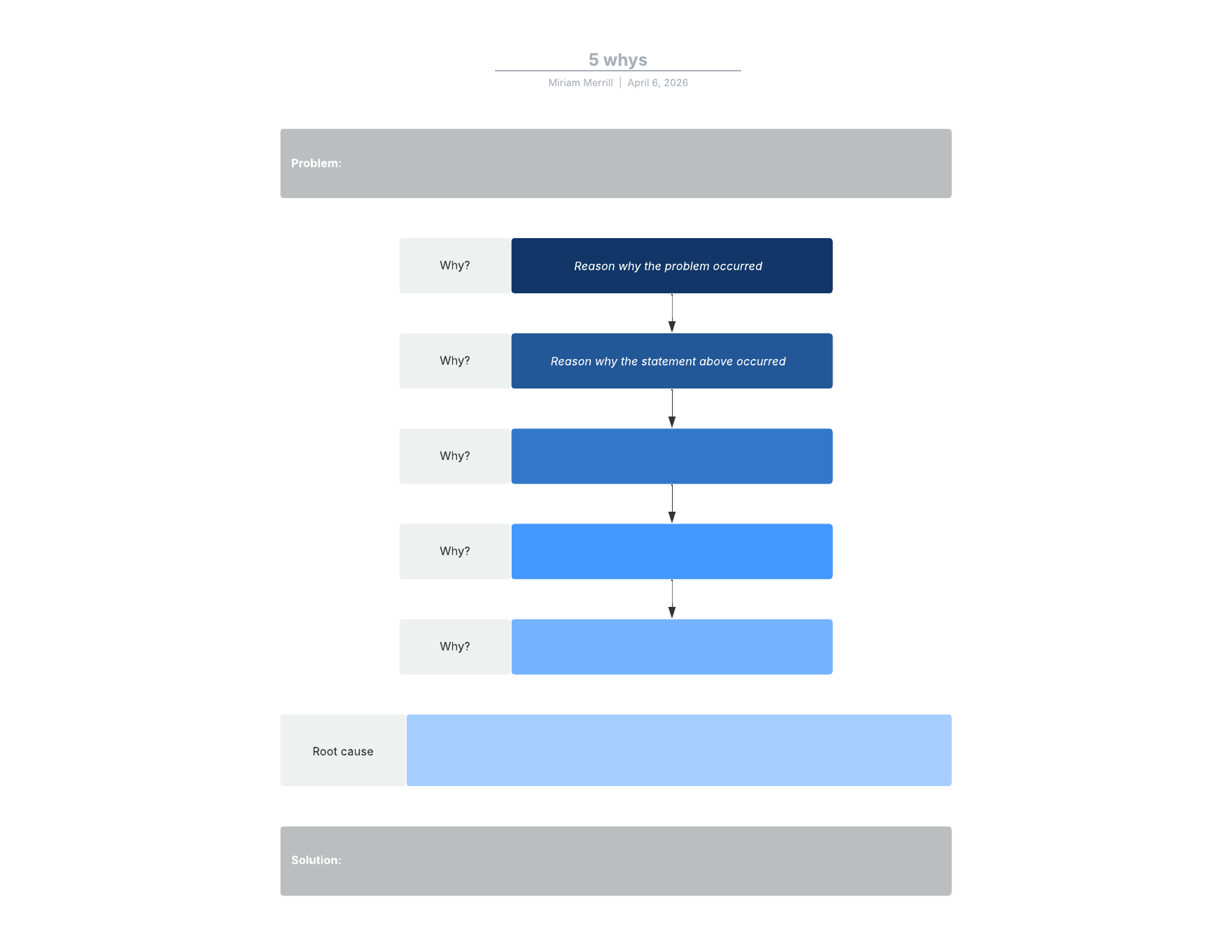
This technique encourages you to keep going deeper as you examine an issue. Ask “Why?” at least five times until you’ve reached the catalyst of the issue. Check out our 5 whys template to begin your own analysis.
Cause and effect analysis
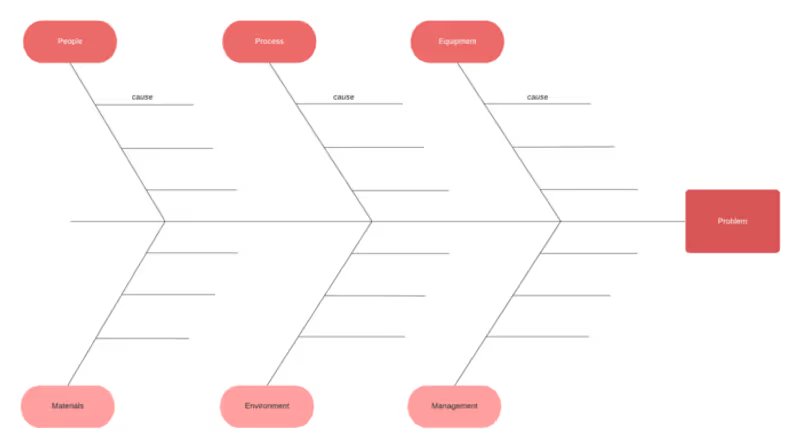
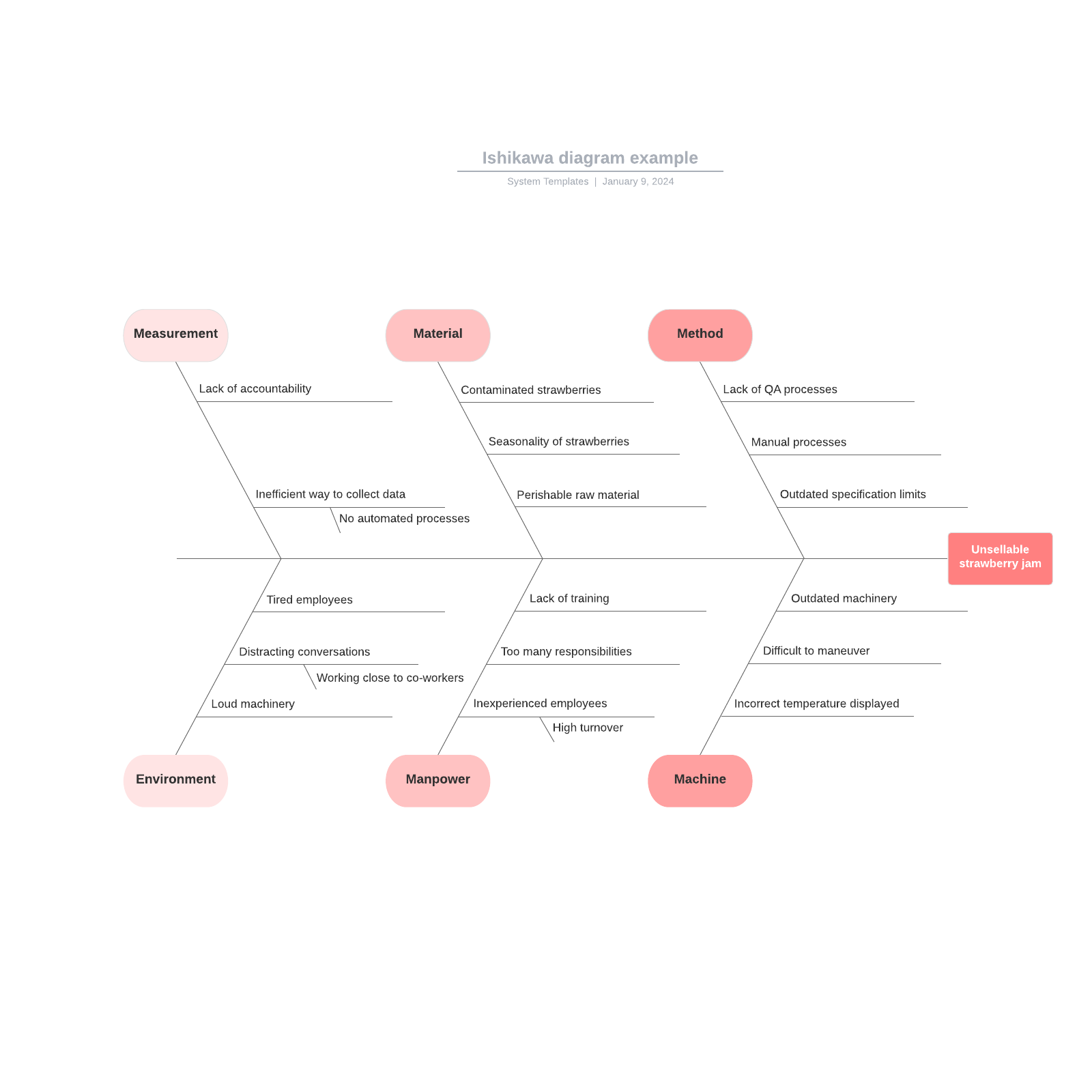
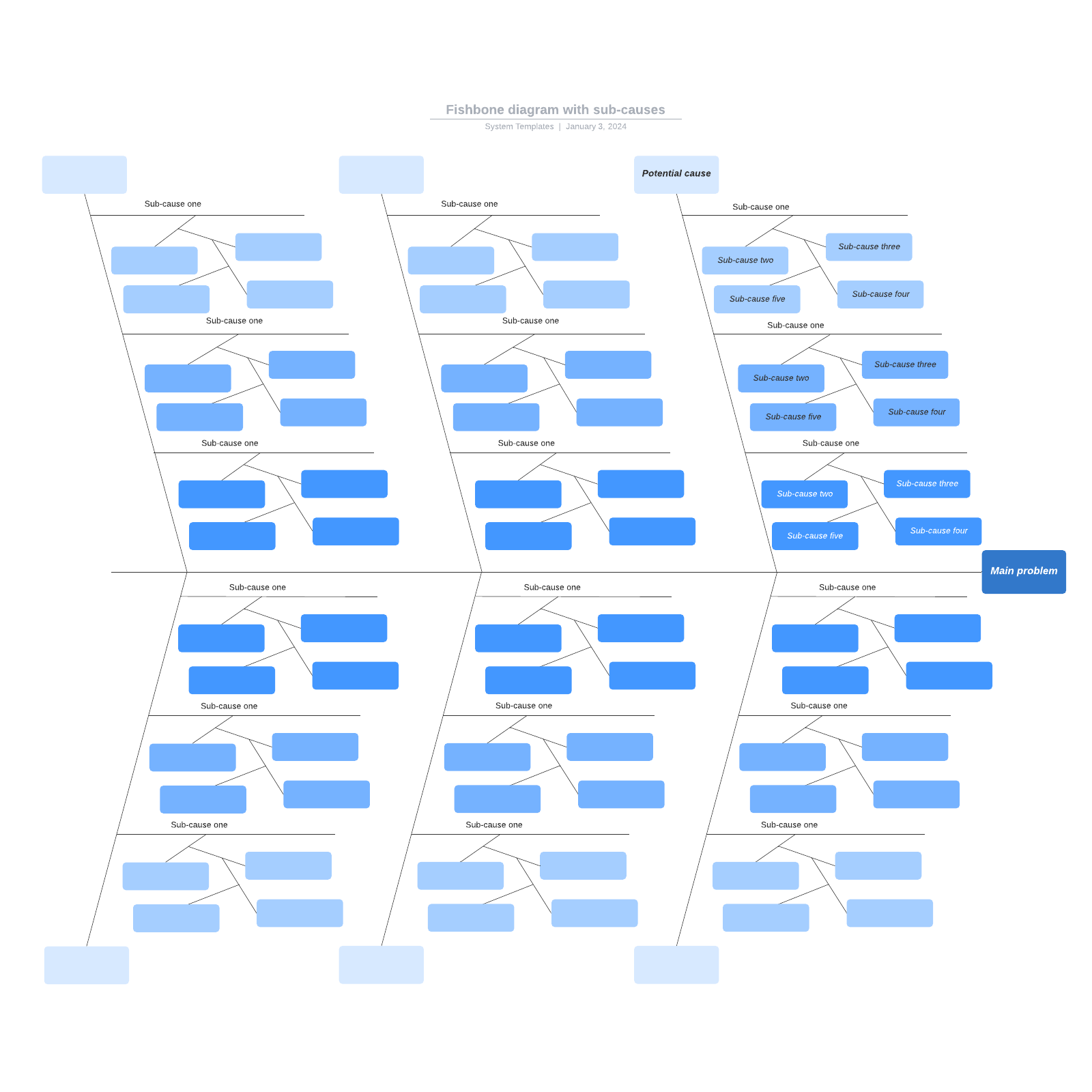
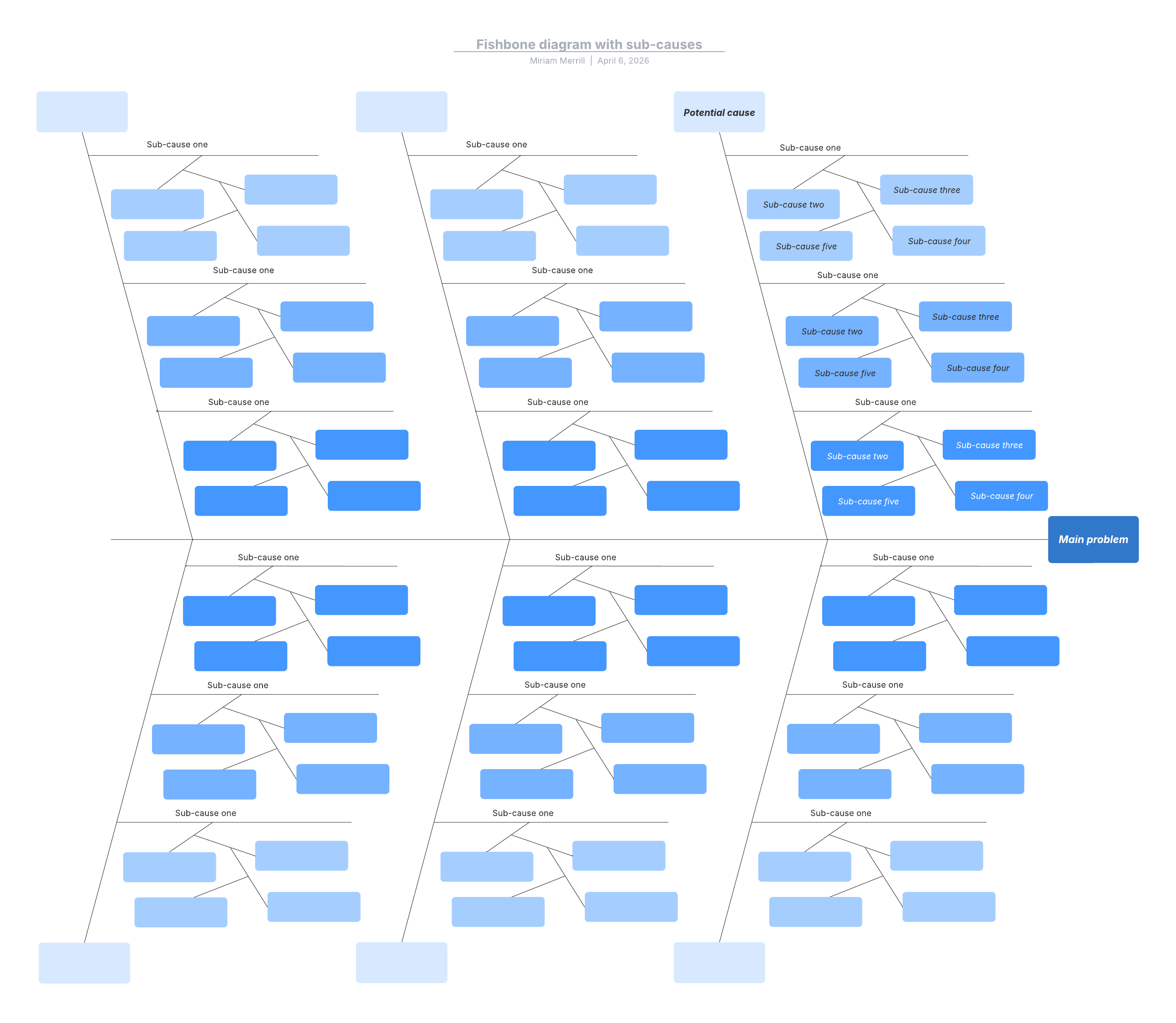
Also known as a fishbone diagram, a cause-and-effect diagram helps you examine potential causes by category. These diagrams encourage you to explore all possible causes of a problem instead of stopping at the most obvious conclusion.
FMEA diagram
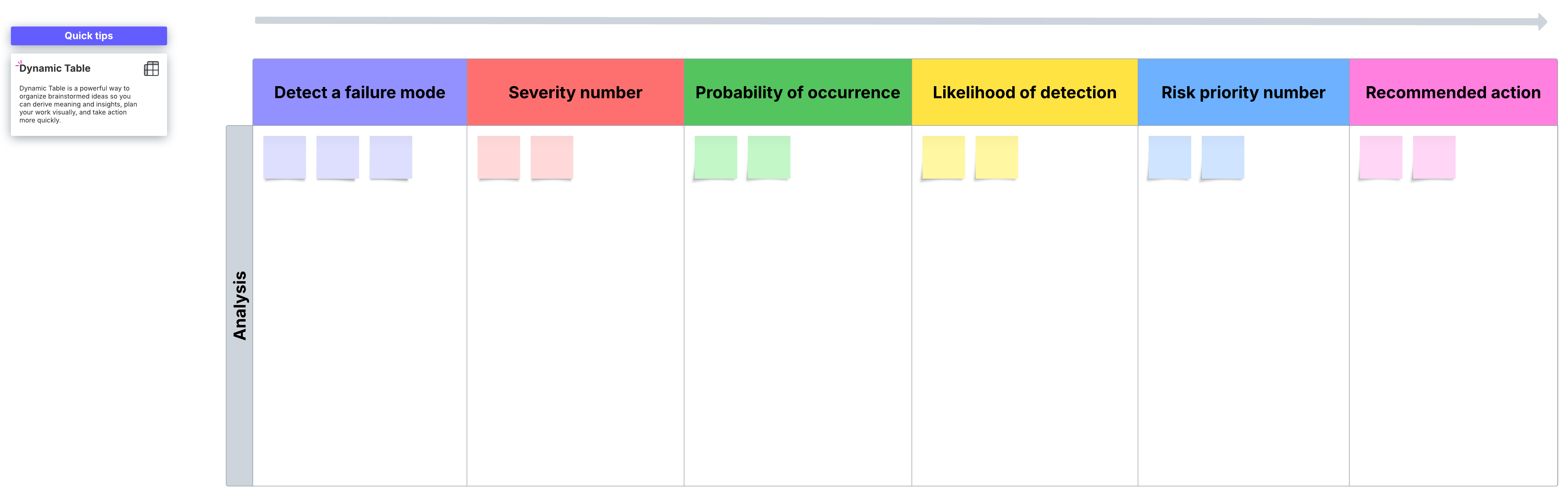
A failure modes and effects analysis (FMEA) is a method that helps you identify potential ways a process or product could fail and ways to prevent those failures.
Fault tree analysis
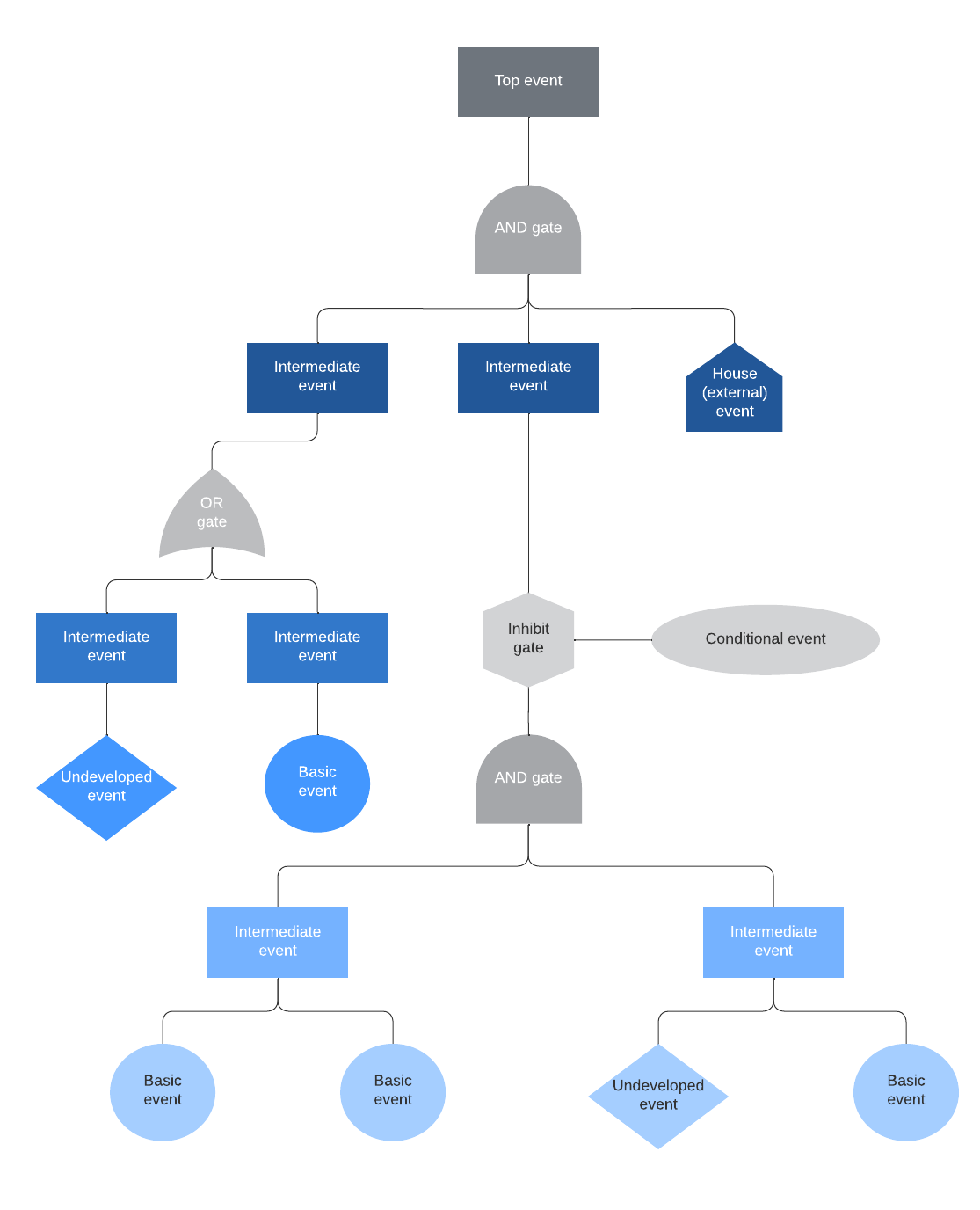
A fault tree analysis diagram is a flowchart that can help you visualize the possible causes of a system failure to examine the reliability of your systems, and ultimately improve them.
Root cause analysis is a powerful tool for identifying the underlying causes of current problems and helping you implement solutions that prevent future problems. Visualizing your system makes it easier to find root causes, implement solutions, improve processes, reduce risks, and make informed decisions.
Everything you need to make a diagram
Make a polished, professional diagram for free with Lucidchart. No matter what you have in mind, we have the tools you need to build it. Make an account and start diagramming today.
Sign up free