
If you could look into a crystal ball and see your business’s future, what would that future look like? What do you hope the future holds? This future-thinking exercise is what a vision statement is all about: imagining and defining what the future looks like for your business.
While writing a vision statement might sound like extra busywork, it actually plays a fundamental part in your business’s strategy and direction.
Without a clear, documented vision, your business is only operating in the now—never for tomorrow or next year, or five years down the road. In other words, you’re rudderless. And this can have a significant impact on your business’s ability to innovate, adapt, and mitigate risk.
That’s why it’s crucial that you not only have a vision statement, but that you write a vision statement that drives purpose and alignment across the business.
Below we’ll cover what a vision statement is, what makes a good vision statement, and actionable tips for writing a vision statement that drives people and results.
What is a vision statement?
A vision statement helps define your business’s identity. It’s a forward-thinking description of what you hope your business will be in the future, typically 5 to 10 years down the road.
On its most basic level, a vision statement answers the questions:
- Who does your business serve?
- Where do you want your business to be in 1 year? 5 years? 10 years?
- What will you do to achieve that vision?
- Why do these goals matter?
It’s a document that outlines both current and future goals for the business and lays out the roadmap to achieve them.
Vision statement vs. mission statement
A vision statement should not be confused with a mission statement. They serve different purposes and focus on different goals.
Whereas a vision statement focuses on the future direction of the company, a mission statement is centered on the present.
In other words, your vision statement describes your company’s target future state, and a mission statement describes your company’s current state and objectives.
Both are important for guiding the day-to-day operations of your business and aligning your company around a shared purpose.
What is the purpose of a vision statement?
So what exactly is the purpose of a vision statement? Can’t you just set some goals and see where they take you? Well, you could...but that won’t take you far.
The purpose of a vision statement is to clearly define your organization’s long-term position and purpose. It encapsulates your business’s “why.”
But this isn’t just a feel-good document of your organization’s dreams for the future. A vision statement should serve as a guiding document that:
- Clarifies the organization’s long-term goals and direction
- Sets a long-term strategic plan for the business
- Builds alignment across the organization
A well-crafted vision statement gives meaning and purpose to everything you do. It provides a target for individuals and teams to rally around, and motivation for the work you do every day.
The trick is getting it right.
What makes a good vision statement?
A motivating and effective vision statement takes careful thought, planning, and execution. But what actually sets a good vision statement apart?
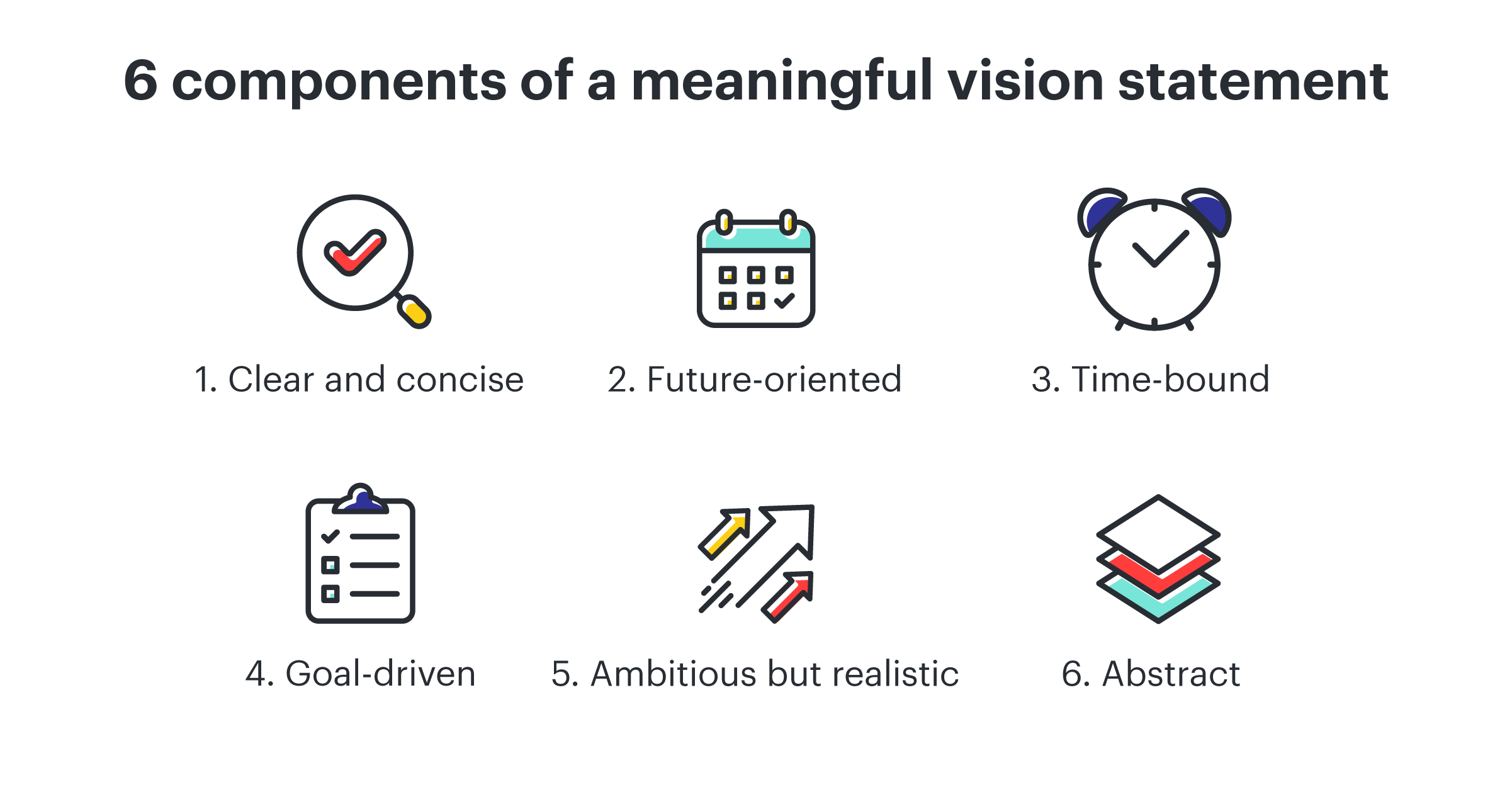
A good vision statement should be:
- Clear and concise. Keep it short and to the point. While you can expand on your vision statement later, aim to have a brief 1-3 sentence vision statement that clearly communicates your vision for the company.
- Future-oriented. A vision statement isn’t about where you are now, but where you want to be. Keep it focused on the future.
- Time-bound. Your vision should aim for a specific point in the future when you want to reach your goals. Otherwise you risk planning for the ever-out-of-reach “someday.”
- Goal-driven. Identify clear, measurable goals you want your organization to achieve. These are the benchmarks your employees and teams will rally around and align their work towards.
- Ambitious but realistic. Dream big—but not too big. Your vision statement should be ambitious in aim but still grounded in reality. If your vision isn’t achievable, it won’t be motivating, it will be defeating or simply irrelevant.
- Abstract. Don’t get too lost in the details. Your vision statement shouldn’t be a fully documented roadmap but rather a general description that gives your organization broad strategic direction.
How to write a vision statement
So where do you start? Nailing down something as ambitious and far-reaching as a vision can be daunting. And getting your vision statement right will take time and consideration. Here are a few key steps to writing a vision statement that drives your organization forward.
Define your organization's purpose
At the end of the day, your vision statement should communicate your organization’s purpose. Home in on what your business is all about.
A good place to start is freewriting your ideas on a whiteboard or virtual brainstorming document. Don’t worry about getting the phrasing just right yet. You can pare it down and polish it later. As you put words on the page, you’ll start to see themes emerge and can pull out the language that best captures the tone and direction you want to go.
Collaborate with leaders of the organization
Don’t write your vision statement in a vacuum. Get input across senior leadership and collaborate to align on a vision that resonates.
Set a time to brainstorm together to identify what goals and achievements are most important and get consensus on the direction you want to take the business.
Outline core values of the business
Your vision statement should reflect your business’s core values. Work backwards by identifying and outlining your company’s core values so you can connect them to your goals and vision.
Focus on where you want to be in the future
Your vision impacts what you’re doing now, but it is by nature a forward-looking statement. As you define your vision more clearly, make sure it is firmly focused on the future.
In order to know where you want to go, it’s helpful to reflect on where you are now too. Assess the current state of your business and the industry. What is going well? What would you like to see change? This gap is at the heart of your vision statement.
Implement a strategic framework to track progress towards your vision statement
The real magic of a vision statement is its power to motivate, align, and inspire people towards that shared vision. Ultimately, no matter how well written your vision statement, if you don’t communicate and act on it, you won’t see the results you’re looking for.
So make the most of your vision statement by implementing a strategic framework to measure progress, drive action, and create alignment across the organization from day one.
One way to do this is with a balanced scorecard. A balanced scorecard template is an effective tool for defining your strategic objectives and breaking them down into manageable goals and milestones.
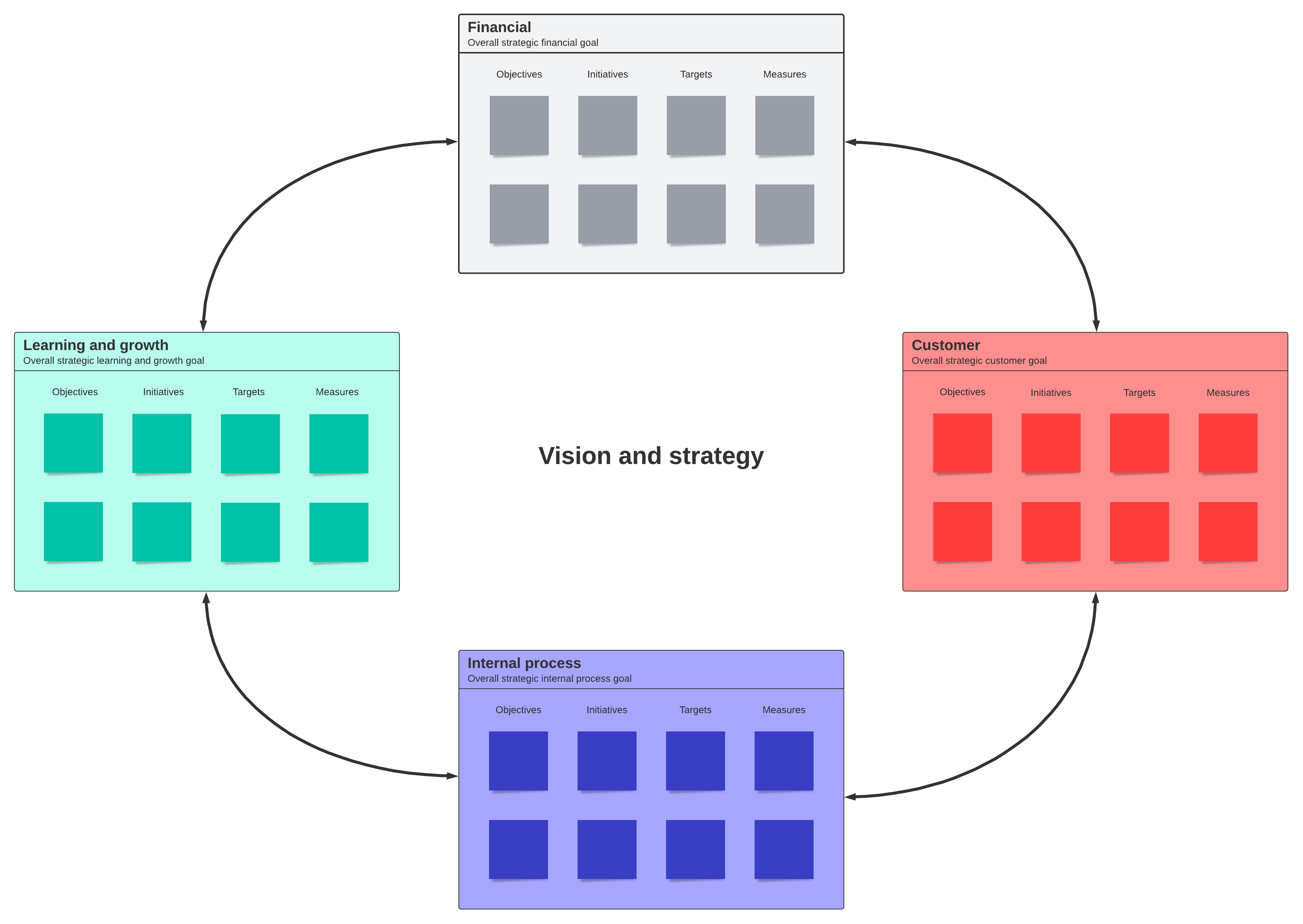
Lucidspark makes it easy to customize your scorecard and collaborate with other stakeholders to build alignment and make sure nothing gets lost in the shuffle. By breaking down your vision into smaller actionable steps, you can more easily move towards that shared goal and make strategic decisions along the way.
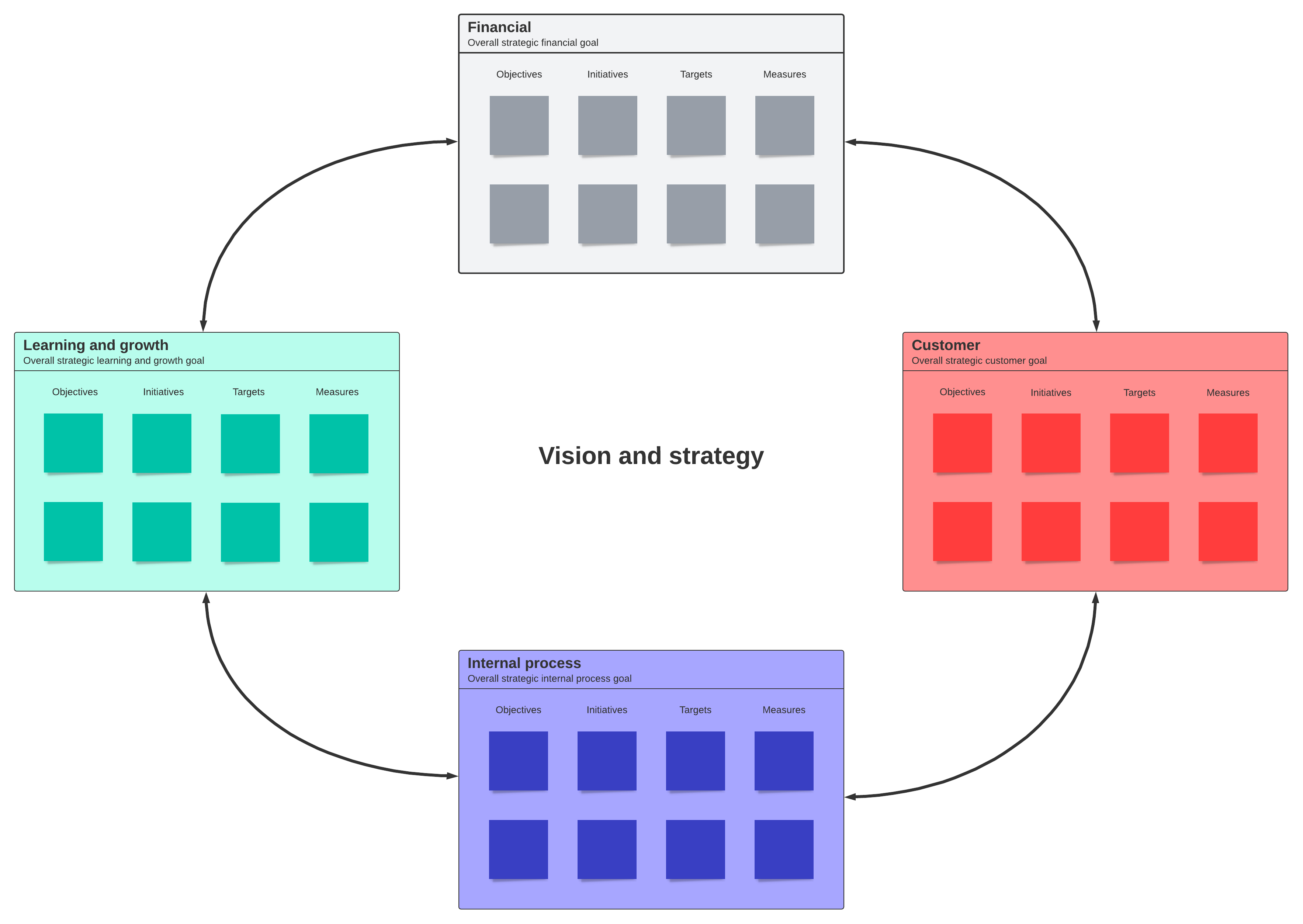
Map out your vision and strategic goals with this balanced scorecard template.
Try this template
