
Most people aren’t fans of meetings. And for good reason. Too often, meetings are inefficient and unproductive, and by the end, it can feel like you just completed a year-long journey to Mount Doom with nothing to show for it.
But when it comes to employee management, there’s one meeting to rule them all—that’s right, the one-on-one meeting.
Effective one-on-one meetings with your employees are a crucial part of building a healthy workplace, driving individual and team performance, and developing strong employee-manager relationships.
However, leading effective one-on-one meetings isn’t always easy. Use the following tips and best practices to get it right.
Why effective one-on-one meetings matter
One-on-one meetings are an important part of your employee management tool belt.
When done right, effective one-on-one meetings make it easy for managers to:
- Hold quick and simple check-ins.
- Foster work relationships.
- Make employees feel valued.
- Encourage problem-solving and collaboration.
Additionally, Quantum Workplace found that 86% of highly engaged organizations conduct regular one-on-one employee meetings and rate one-on-ones as their top communication strategy—above all-company meetings and emails from leadership.
In other words, one-on-ones are key to building and sustaining an engaged workplace. And it makes sense. One-on-ones give you the opportunity to get to know your employees personally, build trust, and work through challenges, obstacles, and performance issues, as well as identify opportunities for development. These are all activities that drive motivation and help employees feel connected to their work, their team, and the organization.
Preparing for one-on-one meetings with employees
Here are three simple ways to plan ahead and make the most of your 1:1 meetings.
Come with a collaborative mindset
One-on-one meetings should ideally be employee-driven and collaborative. While you may use these conversations to address specific issues, don’t monopolize the discussion.
Remember: This is a dialogue, not a lecture.
Work with your direct report to plan the agenda ahead of time and set goals for the meeting.
Consider asking:
- What is the most important thing we need to discuss this week/month?
- What’s on your mind?
- Are there any challenges, ideas, or opportunities you want to discuss?
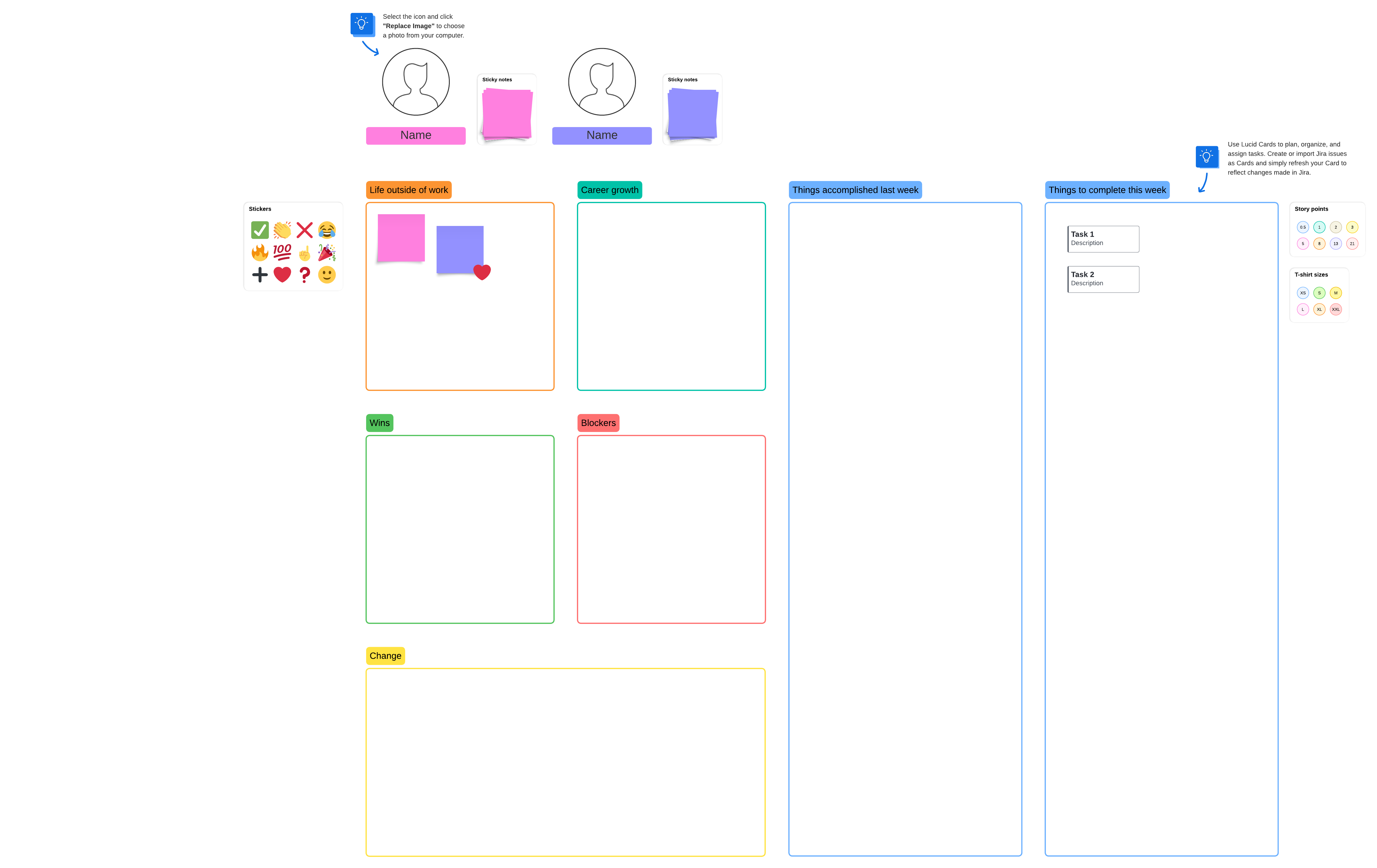
Keep a shared record in your one-on-one meetings for you and your employees to reference in the future. Consider housing all infomation in a virtual whiteboard like Lucidspark. Share ideas, record notes, and problem-solve together in a collaborative workspace, opens in a new tab.
Set a recurring schedule
To make the most of your one-on-one meetings, schedule them regularly. Sporadic, infrequent meetings are less effective because it’s difficult to track progress on goals and stay accountable to decisions or benchmarks if you aren’t checking in regularly.
Plus, irregular meetings signal to your employees that they are an afterthought and that they are not a priority—not a great strategy for making your team feel valued.
Set a recurring meeting schedule to stay on track and maximize one-on-one time. Talk to your employees about a time and cadence that works best for them, and don’t be afraid to adapt your schedule based on their evolving needs.
Create a shared meeting document
Effective 1-on-1 meetings don’t happen in a vacuum. Keep a clear record of your conversations to ensure accountability, reference past discussions, and gain clarity for future decisions.
Set up a shared document or use our one-on-one meeting template to outline your meeting agenda. In this format, you and your employee can collaborate, take notes, record feedback, and guide the discussion.
One-on-one meeting agenda and discussion questions
Your one-on-one meeting agendas will vary depending on the employee you’re meeting with and the overall goals you have for each meeting.
However, it’s important to go into these conversations with a plan in place to ensure you both have a productive meeting. Be sure to share the agenda or topics of discussion with your employee ahead of time so they aren’t blindsided and can come prepared.
Questions to build alignment
One-on-ones are an opportunity to build alignment between the company and your team members. The better aligned your organization, the more effective your team will be in reaching company goals and supporting the overall mission of the organization.
Here are a few questions you can ask to gauge alignment and help your employees connect more meaningfully to the work and the company culture:
- How do you see your goals and our team goals aligning with the organization’s mission?
- How does this job align with your future career goals?
- Are the responsibilities of your role what you expected? Why/why not?
- What excites you the most about your day-to-day responsibilities?
- What do you wish you could do less often?
- What do you wish you could do more often?
- How could our team or organization better live our mission or values?
One-on-one meeting questions to track progress
How well are your employees performing? Tracking and measuring progress and identifying obstacles along the way is an important part of a good one-on-one meeting.
Use these questions to get the discussion going and uncover opportunities to support employee performance:
- How are your current projects going?
- What is keeping you from accomplishing your work? What are the roadblocks or bottlenecks?
- What would help you complete your projects or tasks more efficiently?
- How are you prioritizing your projects or tasks?
- What went well? What could have gone better?
Sharing feedback
Feedback is a two-way street. Take this opportunity to offer constructive feedback and coaching and ask for feedback from your employees. When you ask the right questions, you can gather valuable insight into how you can better support them, the team, and your company's mission.
Here are some questions to get you started:
- Do you have the resources and tools you need to perform your job?
- What could be improved in your work environment to help you work more effectively?
- Do you feel overworked, underworked, or just right?
- How do you think you could improve as an employee?
- How can I help you be more effective or engaged?
- Do you want more or less direction from me on your work? Why?
If you are giving feedback, come prepared with specific examples of what the issue is and how it could be improved. Don’t forget to document the feedback and any action steps you and your employee plan to take so you can follow up next time.
Employee development
Employee development is important for engaging and retaining your employees. Investing in coaching, mentoring, and development opportunities for your employees demonstrates you value their contributions and want to see them grow with the company.
Use your one-on-one meetings to check in on your employees and find out how you can support their short-term and long-term career goals. Try asking:
- What skills or experience are you interested in developing?
- What opportunities for advancement are you interested in?
- Are you interested in leading others?
- What skills are you developing to meet your career advancement goals?
- What additional responsibilities would you like?
- How can we help you develop your career further?
Follow up
Plans and goals will remain plans and goals unless you take action. Remember to follow up on the assignments and decisions from your last one-on-one employee meeting to ensure accountability and drive progress between meetings.
Refer to the previous meeting notes to inform your next discussion points, follow up on feedback, and check in on progress.
- How are you doing on your goals we set last time?
- How well is the action plan working? Should we adjust your assignments or the schedule?
- Are you receiving enough support?
Next steps
Finally, conclude your meeting with clear next steps to take. This ends the conversation on a productive note, ensuring you both know how to act on what you just discussed. Some final questions could include:
- What are this week’s priorities?
- What assignments do I have? Who will follow up?
- Is there anything we should discuss next time?
One-on-meetings don’t have to be a chore. With the right preparation and mindset, they can be your secret weapon to building highly engaged, performance-driven teams.

Use Lucidspark for your next one-on-one meeting.
Try for free