Key takeaways
-
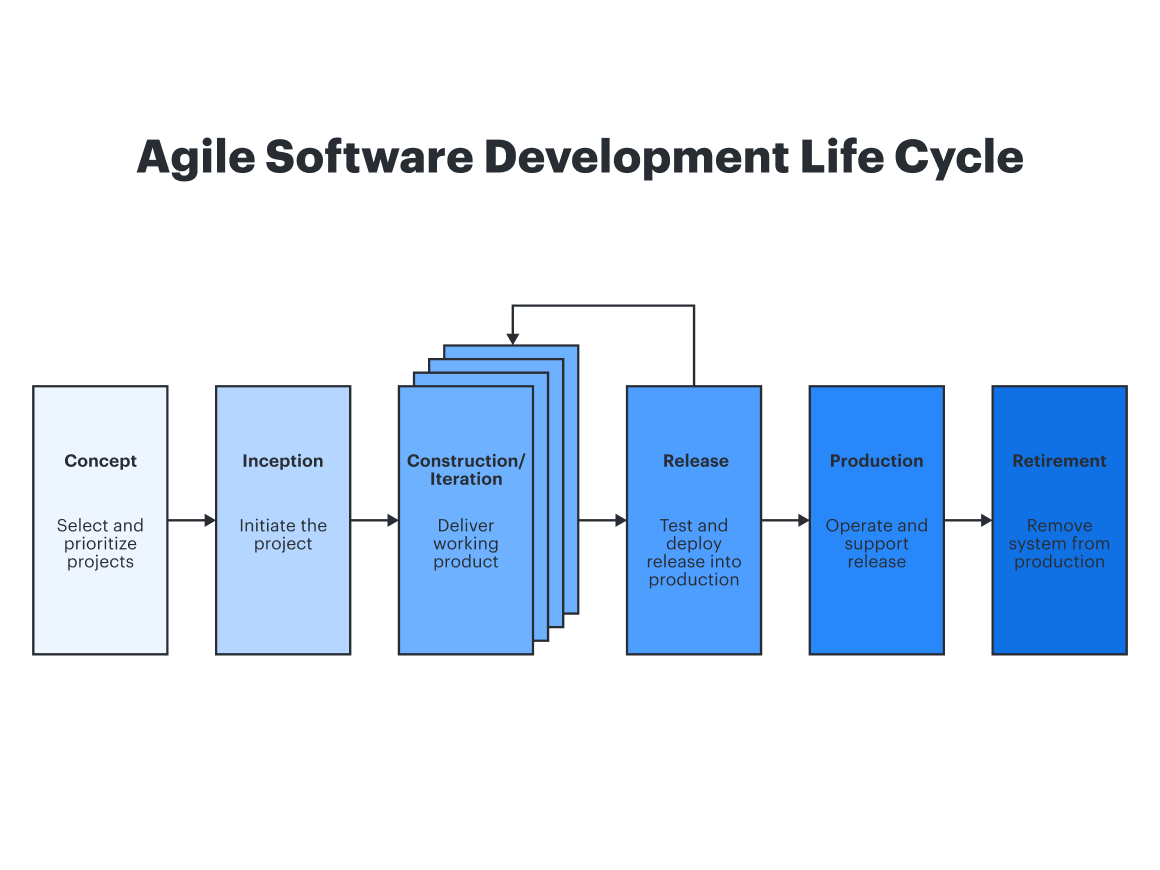
The Agile Software Development Life Cycle consists of six stages designed to help teams develop and deploy software during two-week sprints.
-
During the first stages, teams scope and prioritize projects before they determine requirements and business opportunities. The construction stage focuses on the first iteration of the product.
-
Ongoing production and support stages provide maintenance for the software release until the system reaches the retirement phase.
If tech companies want to remain relevant in a fast-paced, ever-changing industry, software development teams need a way to push their products forward as much as possible to meet customer needs. The Agile software development methodology was developed specifically for the rapid development and deployment of software.
Learn the stages involved in the Agile Software Development Life Cycle (Agile SDLC) to determine whether this process will fit your team’s needs.
1. Scope out and prioritize projects
During the first step of the Agile Software Development Life Cycle, the team scopes out and prioritizes projects. Some teams may work on more than one project at the same time, depending on the department’s organization.
For each concept, you should define the business opportunity and determine the time and work it’ll take to complete the project. Based on this information, you can assess technical and economic feasibility and decide which projects are worth pursuing.
2. Diagram requirements for the initial sprint
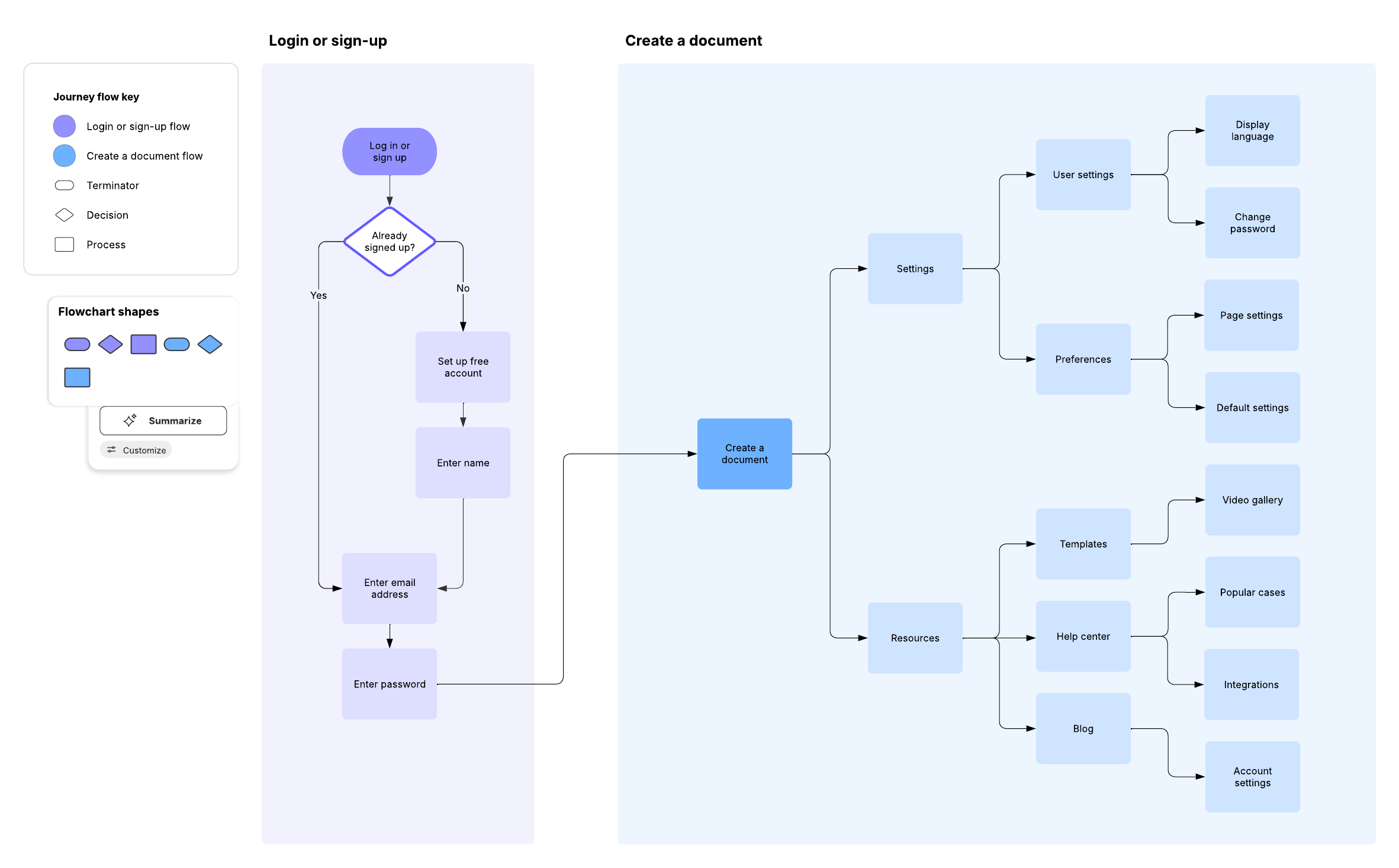
Once you have identified the next project you’ll be completing in the agile life cycle, work with stakeholders to determine requirements. You can use an Agile Software Development Life Cycle diagram, but you also might want to use user flow diagrams or high-level UML diagrams to demonstrate how the new feature should function and how it will fit into your existing system.
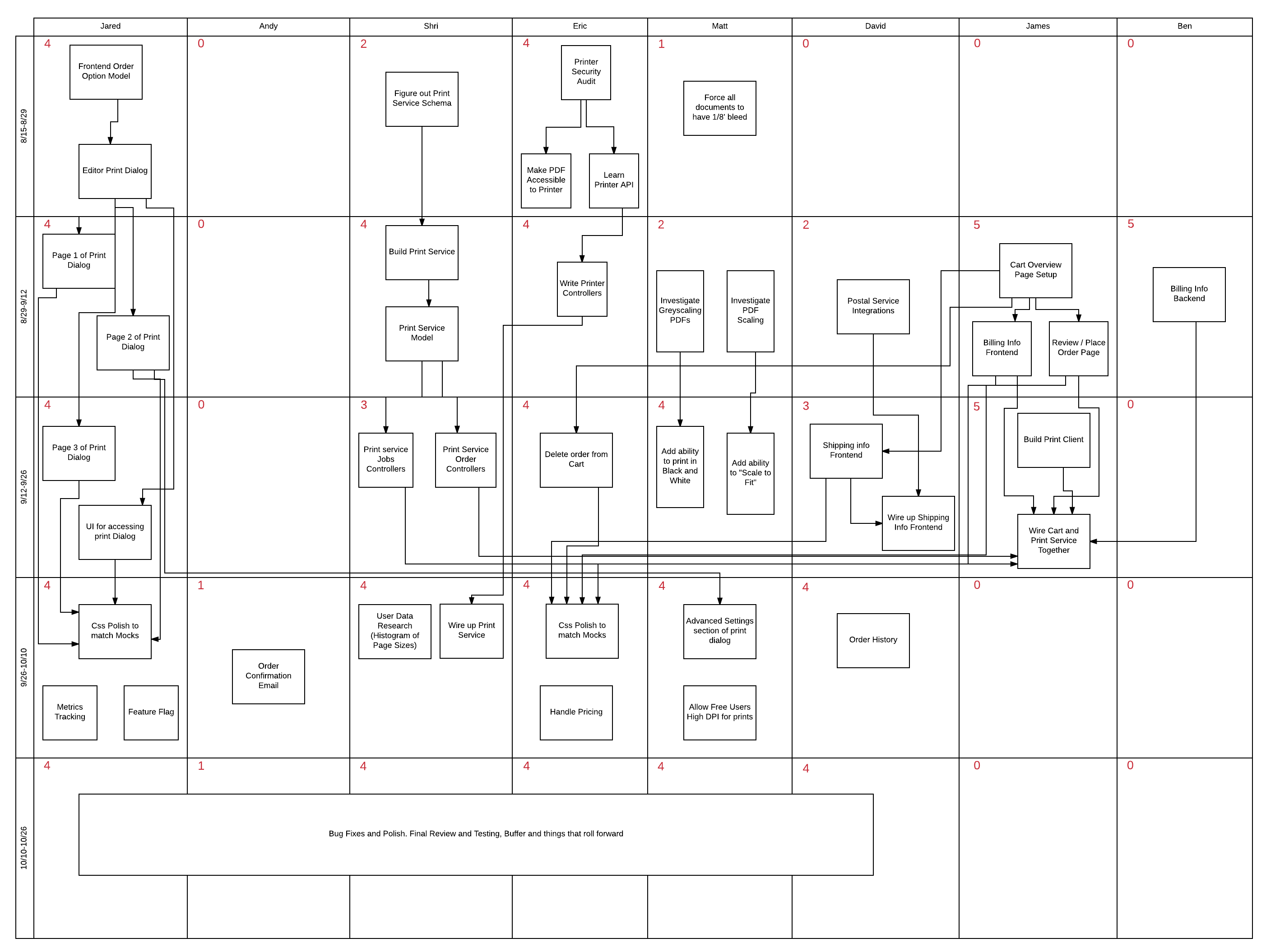
From there, select team members to work on the project and allocate resources. Create a timeline or a swimlane process map in Lucid to delineate responsibilities and clearly show when certain work needs to be completed for the duration of the sprint.
For example, our product team created the following diagram to visualize how the team would implement the print-and-ship process for a business. The columns show each team member’s workload, and the rows show the work completed during each sprint.
3. Construction and iteration
Once a team has defined requirements for the initial sprint based on stakeholder feedback, the work begins. UX designers and developers begin work on their first iteration of the project, with the goal of having a working product to launch at the end of the sprint. Remember, the product will undergo various rounds of revisions, so this first iteration might only include the bare minimum functionality. The team can and will have additional sprints to expand upon the overall product.
4. Release the iteration into production
At this stage of the Agile development life cycle, you’re nearly ready to release your product into the world. Finish up this software iteration with the following steps:
-
Test the system. Your quality assurance (QA) team should test functionality, detect bugs, and record wins and losses.
-
Address any defects. Developers work closely with QA to address issues in real time and conduct further testing to ensure the fix is successful.
-
Finalize system and user documentation. Lucid can help you visualize your system through UML diagrams or user flows, so everyone understands how the system functions and how they can build upon it further.
-
Release the iteration into production. The code is deployed, and the team demonstrates working software to stakeholders to gather feedback for the next iteration.
5. Production and ongoing support for the software release
This phase of the Agile development cycle involves ongoing support for the software release. In other words, your team should keep the system running smoothly and show users how to use it. The production phase ends when support has ended or when the release is planned for retirement.
6. Retirement
During the last of the Agile SDLC phases, you remove the system release from production, typically when you want to replace a system with a new release or when the system becomes redundant, obsolete, or contrary to your business model.
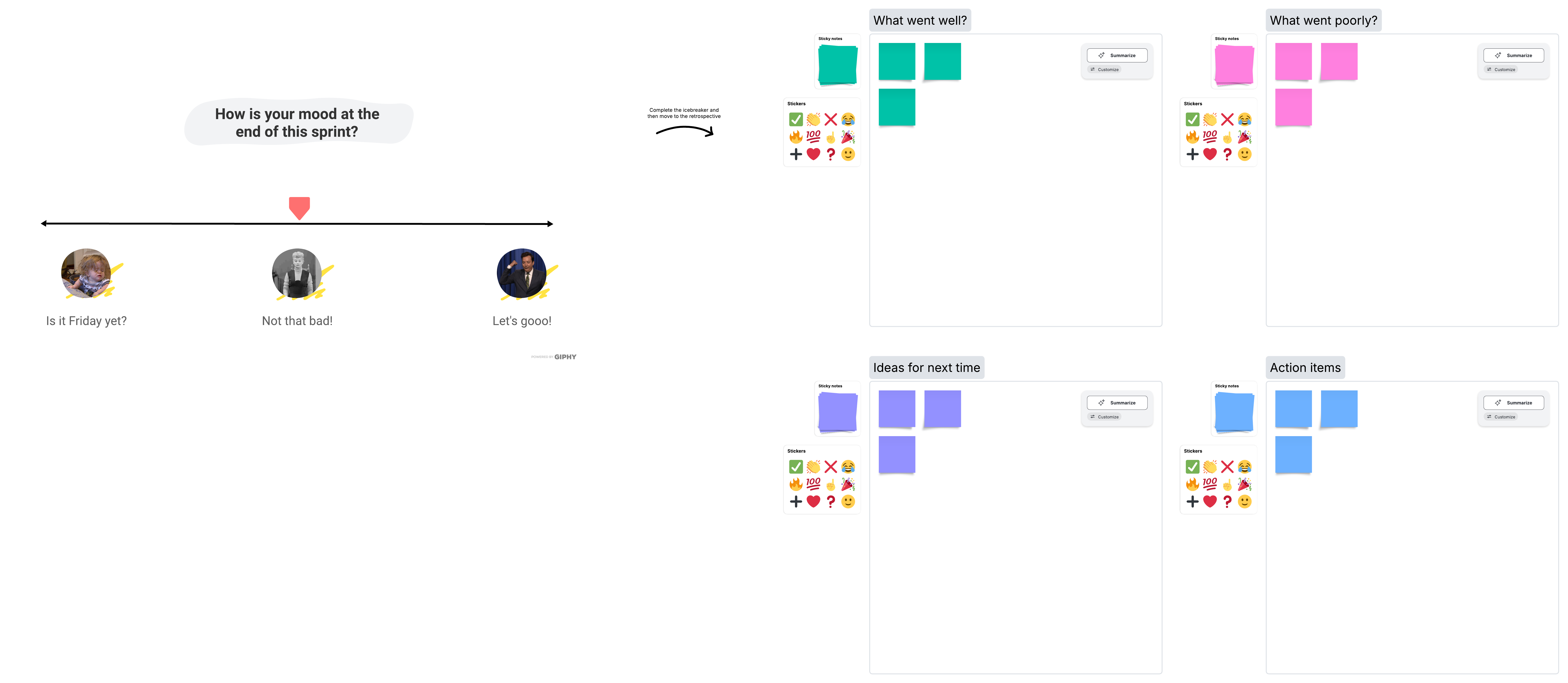
In Agile software development, typically this last stage is followed by a retrospective, during which team members discuss what went well, what they learned, and what can be improved next time.
Agile software development sprint planning
Within the Agile development cycle, work is divided into sprints, with the goal of producing a working product at the end of each sprint. A sprint typically lasts two weeks, or 10 business days. The workflow of a sprint should follow this basic outline:
-
Plan. The sprint begins with a sprint planning meeting, where team members come together to lay out components for the upcoming round of work. The product manager prioritizes work from a backlog of tasks to assign to the team.
-
Develop. Design and develop the product in accordance with the approved guidelines.
-
Test/QA. Complete thorough testing and documentation of results before delivery.
-
Deliver. Present the working product or software to stakeholders and customers.
-
Assess. Solicit feedback from the customer and stakeholders and gather information to incorporate into the next sprint.
In addition to sprint planning meetings, your team should gather for daily standups to check in and touch base on the progress, hash out any conflicts, and work to keep the process moving forward.
Remain flexible and open to changes, too. After all, this methodology is called “Agile” for a reason.
Bottom line: The goal of the Agile Software Development Life Cycle is to create and deliver working software as effectively as possible.

Learn more about the Agile approach to software development
Get tips from seasoned experts in our in-depth Agile series.
Go now