Key takeaways
-
The linear waterfall methodology requires completing distinct, sequential phases and is best for projects with fixed requirements.
-
Agile methodology focuses on iterative workflows that allow teams to adapt to changing requirements and constraints.
-
As specific Agile frameworks, Kanban uses a visual board to coordinate work and optimize continuous delivery, while Scrum uses short work periods called sprints to help teams deliver value faster.
-
Choosing between Agile vs. waterfall vs. Scrum depends on project complexity and the need for flexibility.
A project’s success largely depends on having the right project management processes in place. Organizations with a mature project management program are more likely to deliver on time and on budget, even if that program is a hybrid of different approaches. In fact, 57% of businesses have now taken a hybrid approach to project delivery.
Building a mature project management program starts with deciding on what project management methodology you’ll follow. There are several methodologies to choose from, the most popular being:
-
Agile
-
Waterfall
-
Kanban
-
Scrum
If you aren't well-versed in project management methodologies, it can be hard to tell the difference between a Kanban board and a Scrum board or to understand why the differences between Agile vs. waterfall are important. It might even seem like it doesn't matter which project management method you choose. But each methodology has its strengths, weaknesses, and best use cases.
Compare Agile vs. waterfall vs. Kanban vs. Scrum and get a quick overview of which project management methodology might be a fit for you and your team.
Agile vs. waterfall vs. Kanban vs. Scrum
While these methodologies have significant differences, it’s important to acknowledge that each project management methodology ultimately has the same goal: to facilitate the completion of projects. To that end, each methodology helps manage your team’s work processes through structure and communication. Though you would implement each of these methodologies differently, Agile, waterfall, Kanban, and Scrum all have this much in common.
But even the distinctions between the approaches can sound confusingly similar. When do you use a Scrum board vs. a Kanban board? Is a burndown chart just another way of talking about a backlog? And where do swimlane diagrams come in? Throw in the project management best practices that apply to each methodology, and it’s easy to see them all as slight variations on a theme.
While the differences between methodologies might seem small, rest assured that they do exist. In fact, these seemingly small details make a big difference in how a method functions. With that in mind, let’s examine what sets each project management methodology apart.
What makes waterfall unique
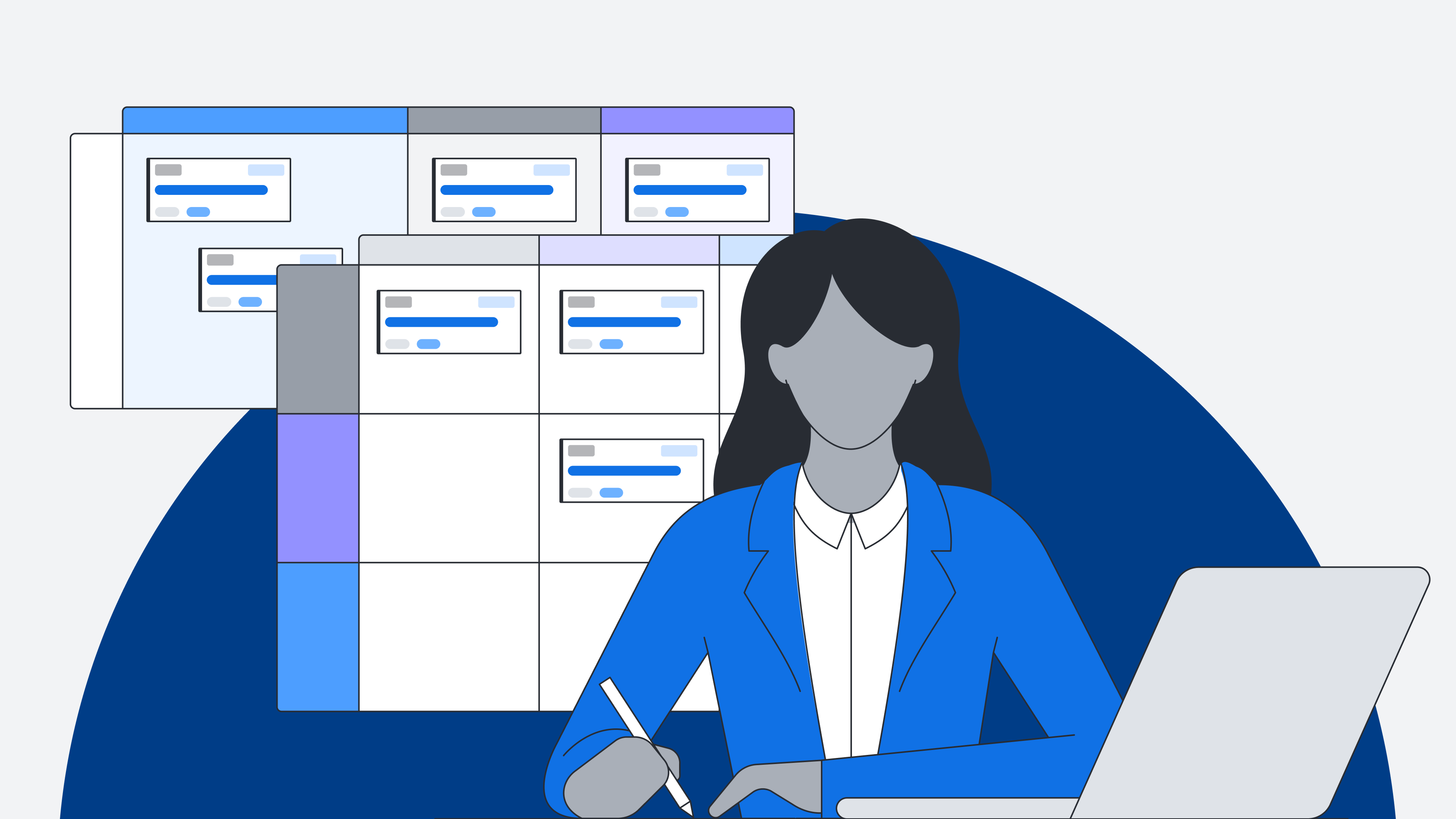
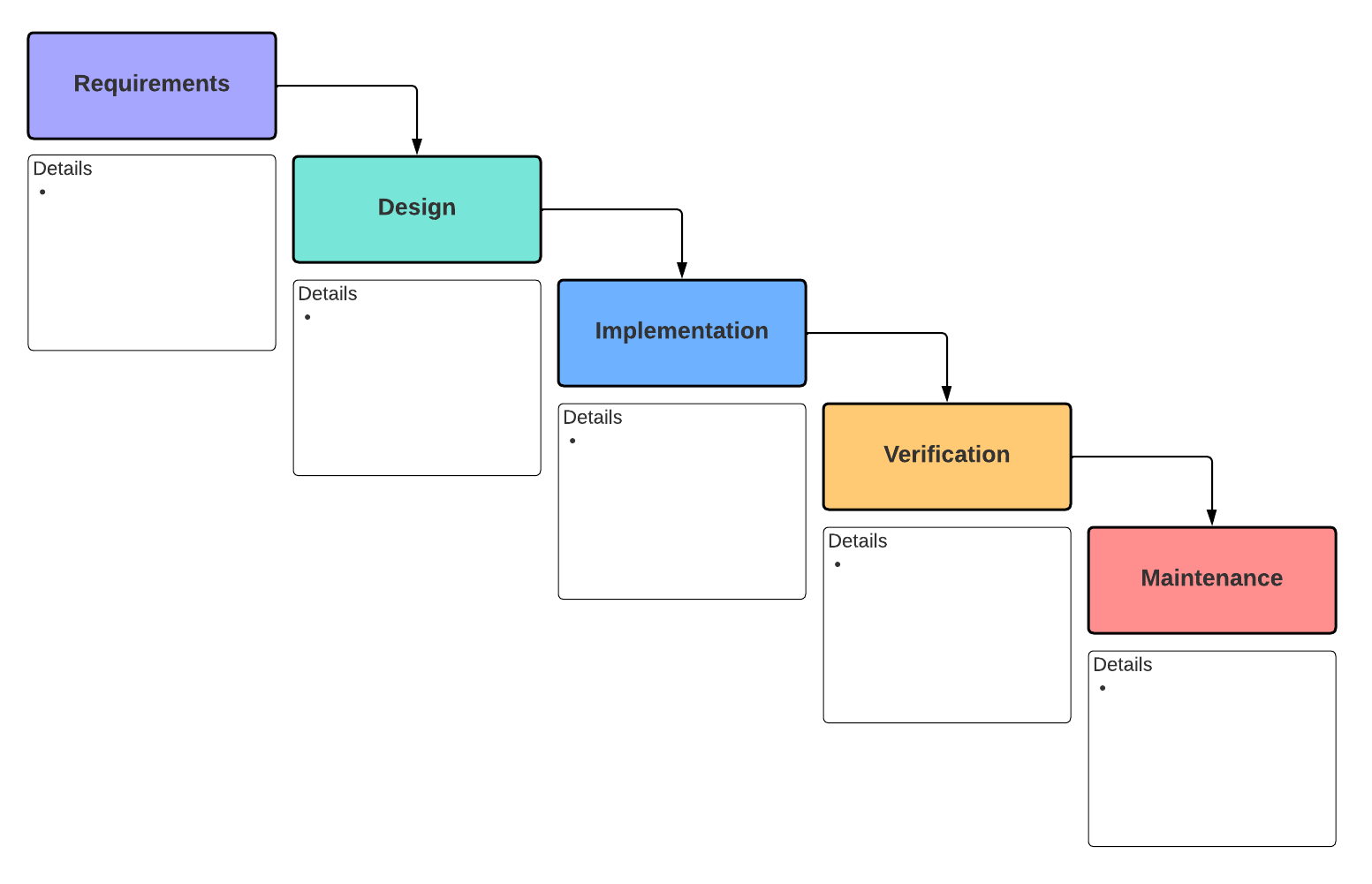
In waterfall project management, projects are broken down into linear and sequential stages, where each piece of the project relies on the completion of preceding deliverables. As such, Waterfall has two unique traits.
Distinct, terminal phases
Waterfall project management originated in construction and manufacturing, industries where one phase must be completed before another begins. You can’t begin roofing, for example, if you haven’t completed framing. This emphasis on linear completion is central to waterfall’s workflow.
Waterfall uses distinct phases rather than simultaneous work. You cannot go back to a prior phase, and any revision requires restarting the entire process. So if you're considering Agile vs. Waterfall for your project management style, remember that waterfall offers less flexibility.
Thorough documentation
Because waterfall does not allow going back to a prior phase, project requirements need to be clear up front. This methodology begins with gathering and documenting requirements, then making these requirements accessible to team members.
Team members also document their work as the project continues through each phase. Ideally, team members can exit or enter a project without disrupting workflow, making waterfall a good solution for teams expecting changes in bandwidth.
What makes Agile unique
The Agile mindset is a collaborative, self-organizing, cross-functional approach to completing work. While Agile was originally practiced in software development, even non-technical teams can implement Agile principles and values.
While you might hear Agile talked about as a distinct project management approach, it more correctly refers to a collection of Agile frameworks that includes Scrum and Kanban. Still, there are fundamental differences between Agile and waterfall project management. Agile focuses on adaptive, simultaneous workflows—a far cry from the linear nature of Waterfall. Each Agile methodology will have the following characteristics.
Simultaneous, incremental work
This is the most distinguishing trait when comparing waterfall vs. Agile. Agile methods break projects into smaller, iterative periods, which work particularly well for products that benefit from user testing and regular revision (like software development).
Adaptability
Because Agile methods work incrementally, teams can adjust their processes frequently. Where waterfall uses a set, inflexible process, Agile methodologies encourage teams to improve and adjust workflow as needed.
The adaptability of Agile is particularly well-suited to projects in which you expect requirements or constraints to change. While you should avoid such alterations when possible, Agile methodologies let teams adapt their processes to compensate for such changes.
What makes Kanban unique
While many people want to compare Kanban vs. Agile, Kanban methodology is more accurately a specific type of visual project management. Kanban strives to better coordinate and balance work with workers’ capacity and bandwidth. The Kanban method uses the Agile principles discussed above but implements them in a particular way.
Kanban board
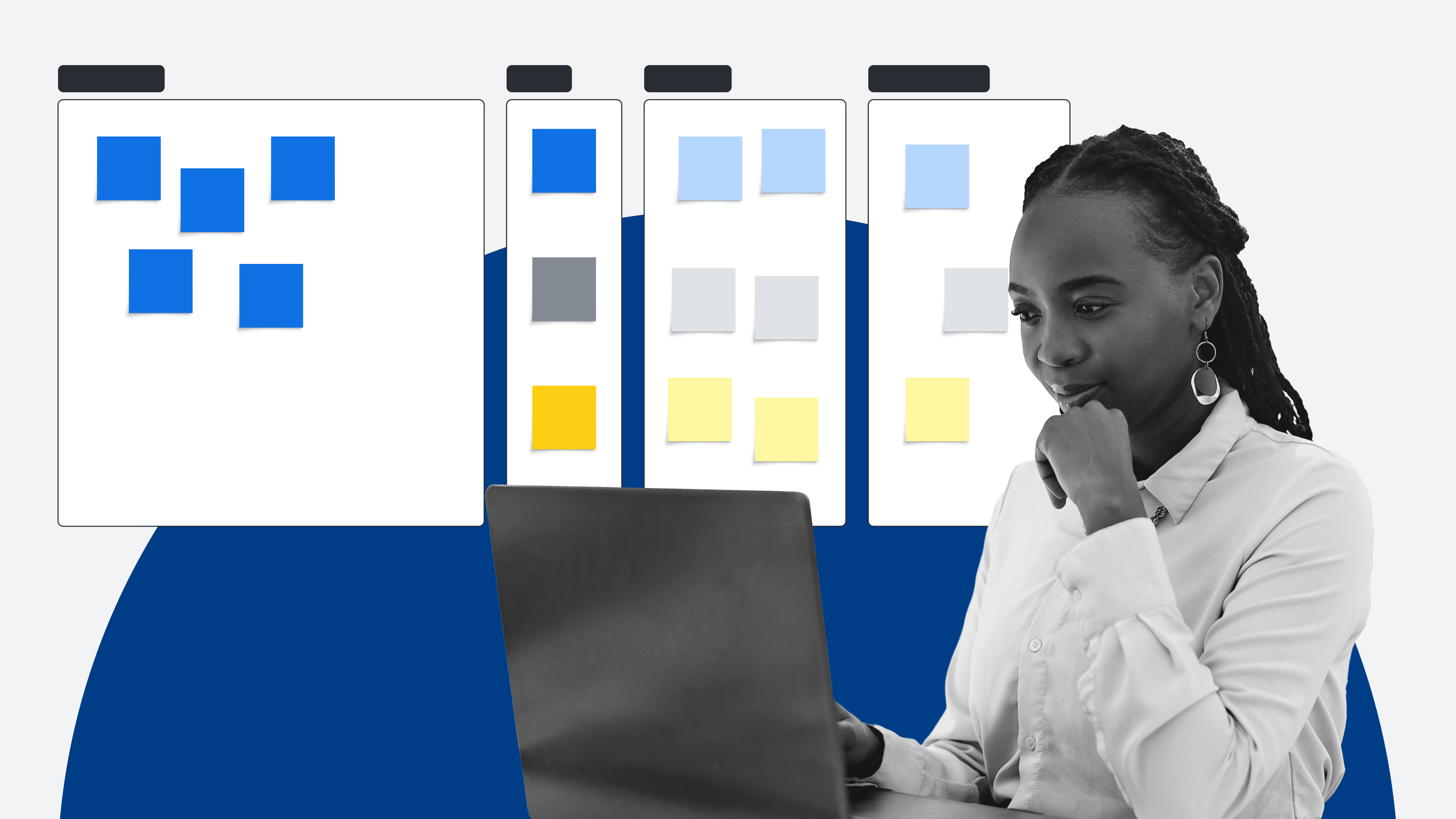
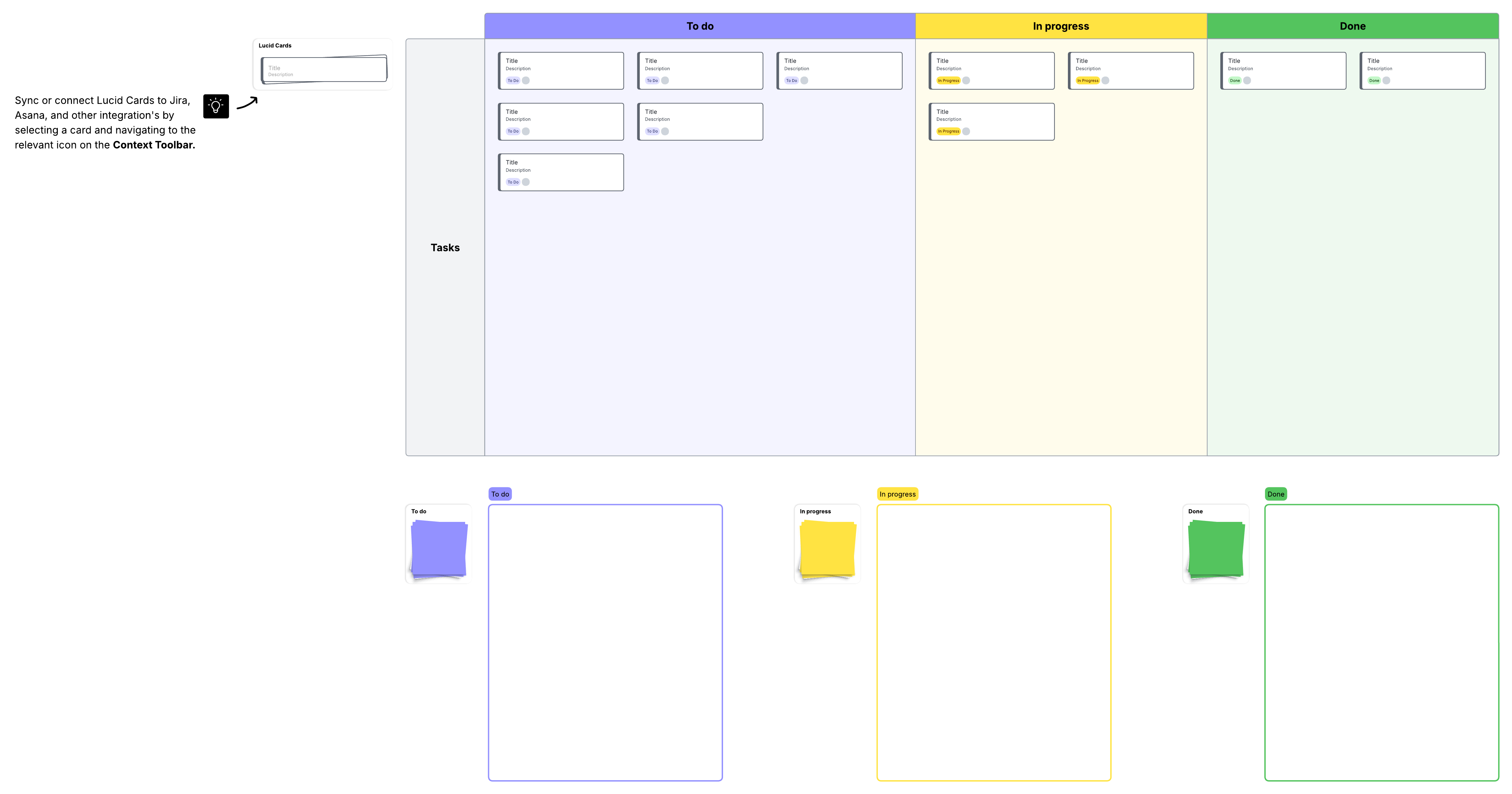
Kanban’s namesake board visualizes the team’s workflow. The board is split into categories of work to be done, work in progress, and completed work, and teams can add more categories as necessary to better visualize their process. Each task is recorded on a Kanban card, which moves from column to column on the board as it moves through the team’s process.
The Kanban board keeps team members on the same page and helps teams identify where processes need improvement. Using a board makes problems like bottlenecks highly visible, allowing the team to make corrections as needed.
WIP limits
The Kanban methodology requires strict limits on the amount of work in progress at any given time. Teams assign a limit to the number of cards in any active-work columns. When the limit is met, no new work can enter the column until a task is completed and moved to the next column. Again, this system helps teams identify bottlenecks, and it encourages individual contributors to rally together to fix issues.
Continuous improvement
The goal of the Kanban methodology is to improve the team’s process. The team meets periodically to discuss changes that need to be made, and the data displayed on the Kanban board guides these discussions.
When held regularly, these meetings help the team continuously correct and adjust their process. This cadence improves workflow without sudden or dramatic changes, ensuring easy Kanban implementation on nearly any team.
What makes Scrum unique
The final methodology we'll cover, Scrum, is an Agile framework that uses an incremental approach to complete projects more quickly. Scrum methodology typically tackles complex knowledge work, such as software development. If you're looking at Kanban vs. Scrum, Kanban is primarily concerned with process improvements, while Scrum is concerned with achieving more incremental delivery of value.
Sprints
Scrum focuses on work completed during two- to four-week increments known as sprints. These sprints are planned in advance, executed, and then reviewed at the end. During sprint planning, the team pulls work items from the product backlog. The team completes these items during the sprint, managing the work among themselves.
Team members also hold a 15-minute Scrum meeting (commonly known as daily standups) each day of the sprint. During this time, contributors discuss any potential roadblocks interfering with project success. They also review the previous day’s work and plans for the upcoming day’s tasks. This Scrum meeting ensures the team works collaboratively and stays in sync.
Scrum Master
A Scrum master ensures that the team understands and applies the principles and values of Agile. Before beginning a project, the Scrum master works with the product owner to define requirements. They then help the team plan sprints. Once a sprint begins, the Scrum master helps remove any roadblocks that arise.
It’s important to note that a Scrum master is not a traditional project manager, as a Scrum master facilitates work rather than managing it. The Scrum methodology encourages teams to manage their own productivity; the Scrum master merely helps them do so.
Burndown charts
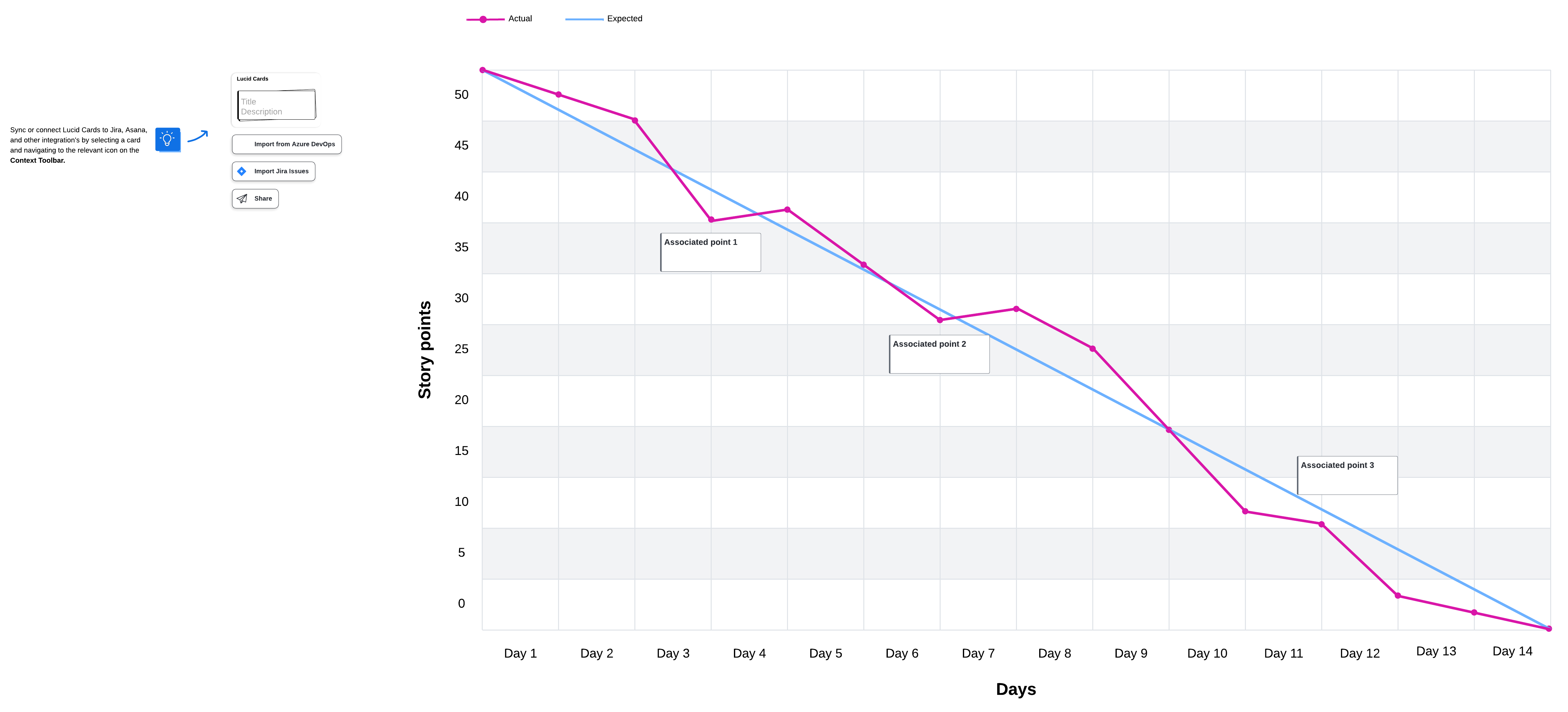
Scrum uses a burndown chart during sprints to let team members see progress at a glance. Rather than displaying completed tasks, a burndown chart visualizes what’s left to be done. The chart should be continuously updated to help team members manage their workflow.
Which project management methodology should you use?
Unsurprisingly, the answer to this question depends on your unique team and its aims. To help you decide, ask yourself these two questions.
What goals do I have for my team?
While each methodology has the same goal of project completion, their secondary aims make them truly distinct. Your goals can help you decide which methodology is the best fit for you.
Determine what you want most for your team. If you simply want to produce work more incrementally, try Scrum. If you want to improve your production process, use Kanban. If your projects demand a linear workflow, implement waterfall. If you’re not sure, explore other Agile options and ask yourself the next question.
Which methodology will we actually stick to?
The differences in project management methodologies only matter if you implement your approach consistently. Without WIP limits, for example, Kanban may not help teams manage their workflow. And if you don’t keep your phases distinct when using waterfall, then the more flexible approach of Agile might be better.
As such, the best project management methodology for your team is the one your team can fully commit to trying. Discovering the methodology that works best may take some time and experimentation.
Remember, you can always try some elements from one approach (such as the daily standups in Scrum) and combine them with aspects of another approach (such as using a Kanban board). In fact, many teams implement Scrumban or other hybrid mixes and adapt a mixed approach that works well.
Dive deeper into Agile, waterfall, Kanban, or Scrum to learn more about these different approaches and how each provides benefits to teams who are looking to increase alignment, agility, and improvement.
Check out our in-depth guides on Scrum, Kanban, and everything you need to know about implementing Agile for your team.
Learn more