Key takeaways
-
Agile project management uses iterative sprints and customer feedback to deliver on projects that have high ambiguity. Benefits of this project management approach include increased flexibility, transparency, and efficient problem-solving.
-
The traditional waterfall project management approach follows a linear lifecycle best suited for well-defined projects. Key benefits of a traditional approach include thorough documentation and a single point of accountability.
-
To choose the correct approach, teams must evaluate project needs, budget, and timeline to determine the best fit.
Agile and traditional project management both offer distinct advantages, so making a decision between the two requires thinking carefully about which one is a better fit for your team. According to the 17th State of Agile report, more than 70% of organizations use Agile frameworks, but there are some cases where a traditional project management approach might be more beneficial.
Here’s a quick guide to agile project management vs traditional project management to help you make the decision that’s right for your team and the projects at hand.
What is Agile project management?
Agile is an approach to project management that focuses on creating results through an evolutionary process. Each project goes through several iteration phases that refine and adjust the product through customer, team, and environment input.
Rather than planning everything up front, Agile project management uses multiple steps and customer feedback to continually refine a “draft” project into a final version. Agile emphasizes teamwork and brings the customer into your project team.
Along the way, your team develops versions of a product instead of working towards a single final version. Problems and challenges provide opportunities to shape the early product, turning a negative— encountering roadblocks—into a positive for your product development.
When to use Agile project management
Agile works best for projects with a lot of ambiguity and potential uncertainty. Agile project management is also a good option if customers need to be more involved in product development, or if you’d like to enhance transparency and collaboration among your team.
If your project is routine and straightforward, however, then you may want to consider waterfall project management instead.
Benefits of Agile
- Flexibility: Agile project management allows teams to quickly adapt based on customer or environmental feedback.
- Transparency: With ongoing feedback incorporated into the project management process itself, Agile is very transparent, keeping end customers informed at every step. This helps reduce confusion and manage expectations.
- Better collaboration: By bringing teams, customers, users, and other stakeholders into the project, Agile encourages stronger collaboration.
- Efficient problem solving: Problems are caught early, when they are often easier to solve, instead of post-launch. The product is subjected to regular testing so you can efficiently solve problems.
Important characteristics of Agile
Agile, opens in a new tab is a strategy born out of software development. As such, this type of project management originated for the needs and expectations of software teams, but it can be used for any kind of team, even non-technical teams.
With Agile, your team should expect to deliver regular updates to customers and incorporate feedback regularly. Generally, project progress is undertaken in two- to four-week cycles called sprints. By hosting Agile events such as sprint planning and daily standups, your entire team knows the status of each project and can provide input or help with problems as they arise.
Many Agile events are hosted in-person, but if you have a distributed team, you can use online Agile templates to help facilitate your planning.
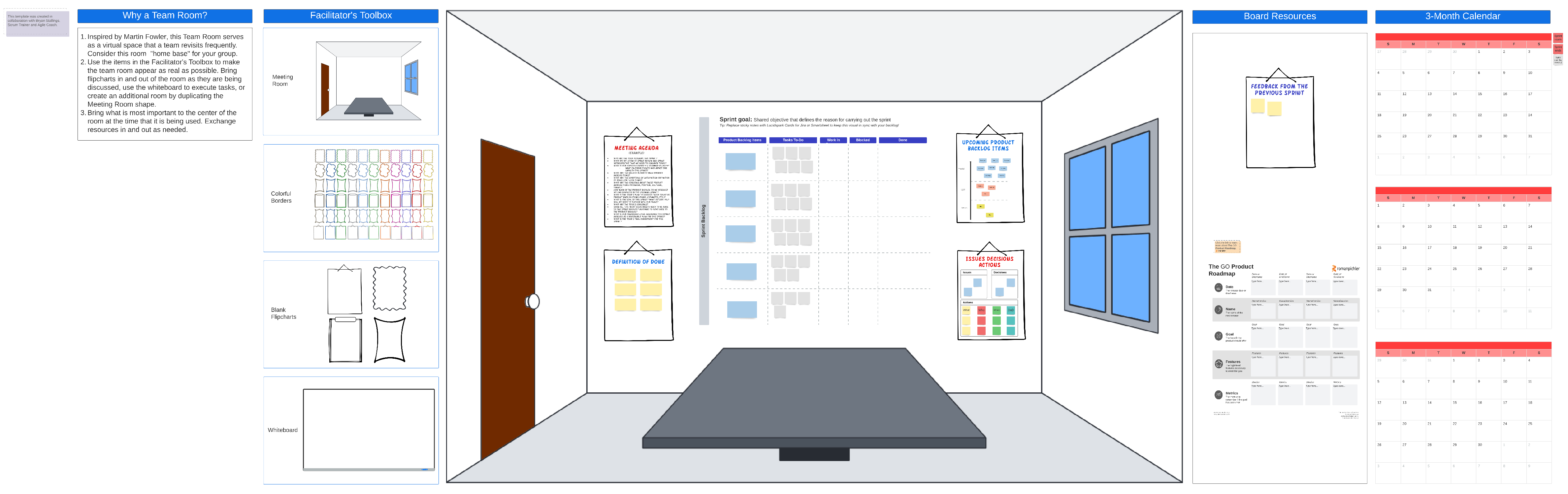
It’s important to keep in mind that Agile can be less predictable, more demanding, and not as clear for your team. With less documentation and upfront planning than other forms of project management, Agile can sometimes lead to frustration if stakeholders are not involved enough.
What is traditional (waterfall) project management?
Traditional project management assumes that a project can be planned ahead of time with relatively little change to scope. In a waterfall project, little to no uncertainty is expected. Projects are defined early on and move along a streamlined, consistent process until the product is deployed and maintenance begins.
Waterfall projects follow an identical lifecycle with similar milestones involving planning, design, implementation, testing, delivery, and maintenance stages. Since there is presumably low ambiguity, a project following this approach can be expected to be highly linear.
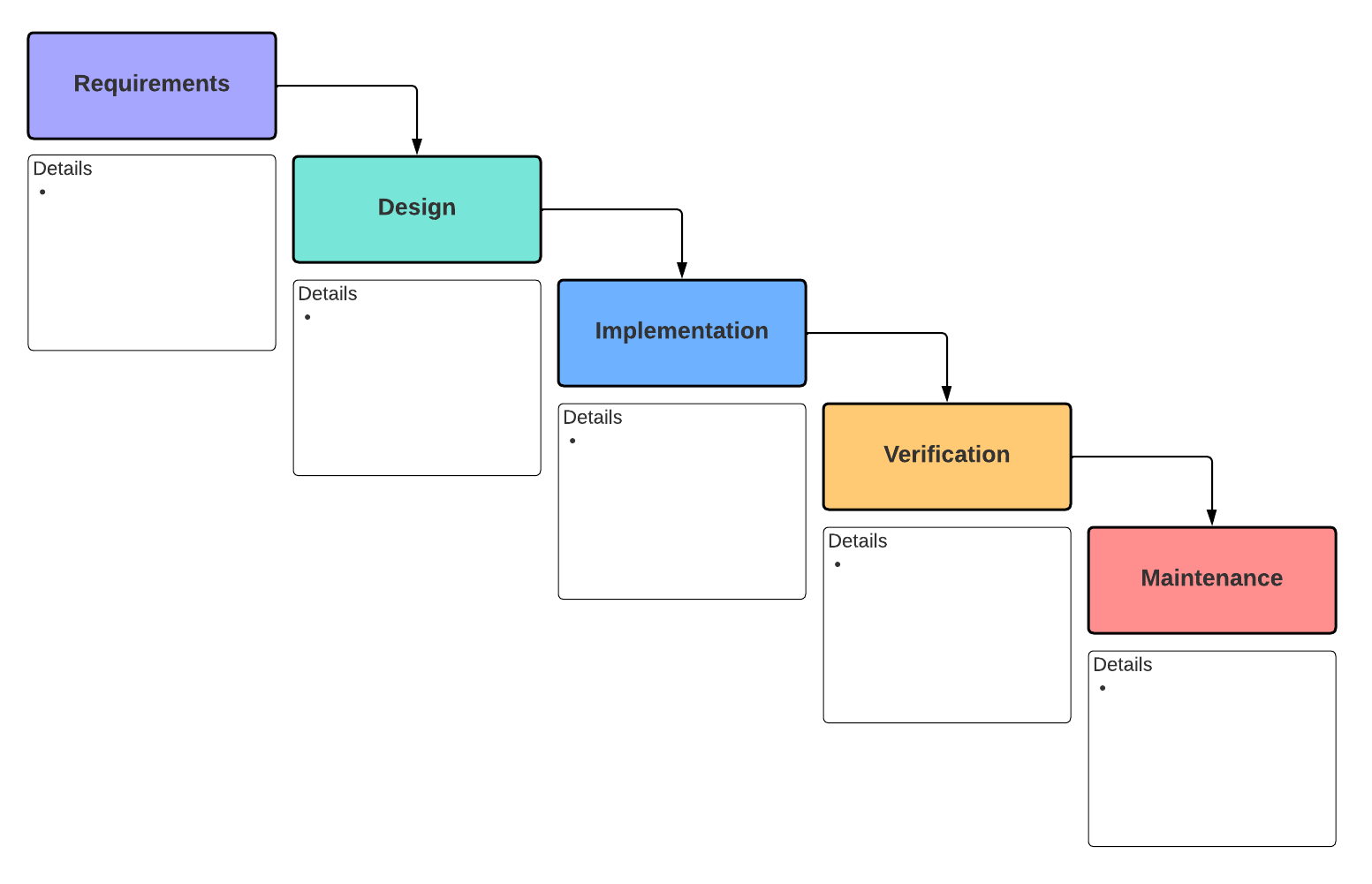
This style works best for well-defined projects and is at a disadvantage for projects with unanswered questions, missing information, or experimental concepts.
Phases of the traditional project management approach
- Documentation and gathering requirements: Before you can start your project, you begin with thorough brainstorming and planning. Gather together stakeholders and sketch out all of the requirements for your project, set budgets, bring the right personnel on board, and distribute clear documentation to everyone on the team.
- Designing the system: Start designing your system and creating clear specifications and requirements for the hardware. Determine what programming languages you’ll use and prepare for any coding you’ll need in the project.
- Implementation: Build a functional product that’s nearly ready to go live. Your coding teams will probably bring together multiple smaller batches of code into a full system.
- Testing: Thoroughly test your system and ask the testers for feedback, particularly any problems they’ve discovered. Refine your product design and code based on what they find.
- Delivery and deployment: Prepare to release your product and deliver it.
- Maintenance and updates: Create updates and provide maintenance to your product as customers identify issues. Your team regularly builds patches to keep your new system functional and performing according to the original specifications.
Benefits of traditional project management
Waterfall project management does offer benefits for teams working on clearly defined projects. These advantages can strengthen your overall project and improve your outcomes:
- Clear direction: From start to finish, the structure behind waterfall projects is very clear and every step has to be finished before your team can successfully move on to the next step. You can’t, for instance, implement before outlining requirements and designing the system. With the planning upfront and finished early on, your team can quickly determine what happens next, no matter where you are right now in your project.
- Clear documentation: Thanks to that early clarity, your team knows what the goals are and can readily get what they need from your documentation. The focus is on the final end goal throughout the project, with clearly defined benchmarks to ensure you’re still on track.
- Single point of accountability: The project manager has final responsibility and is the single point of accountability, keeping the team organized, focused, and accountable. If anyone has questions or if a decision needs to be made, the project manager can provide direction.
Pain points project managers face within traditional project management
Traditional project management has unique limitations:
- Reliance on the project manager: Not everyone in the team knows the project’s status, since communication about big-picture project progress largely depends on efforts from the project manager. In this sense, the project manager’s status at the center of the project can be both a strength and a weakness.
- Low or no involvement from customers: Customers often do not have the opportunity to shape product development after the project starts.
- Less flexibility: When an issue arises, teams often have to go back to the first stage and start over, which delays delivery and can push projects over budget.
Traditional vs agile project management: How to choose the correct approach
Both of these types of project management have different strengths and limitations. The right project methodology for you will likely depend on the type of product you’re developing. Although it can be difficult to choose between traditional versus agile project management, with some research and consideration, you are likely to find one project management approach more appealing than the other.
Project needs
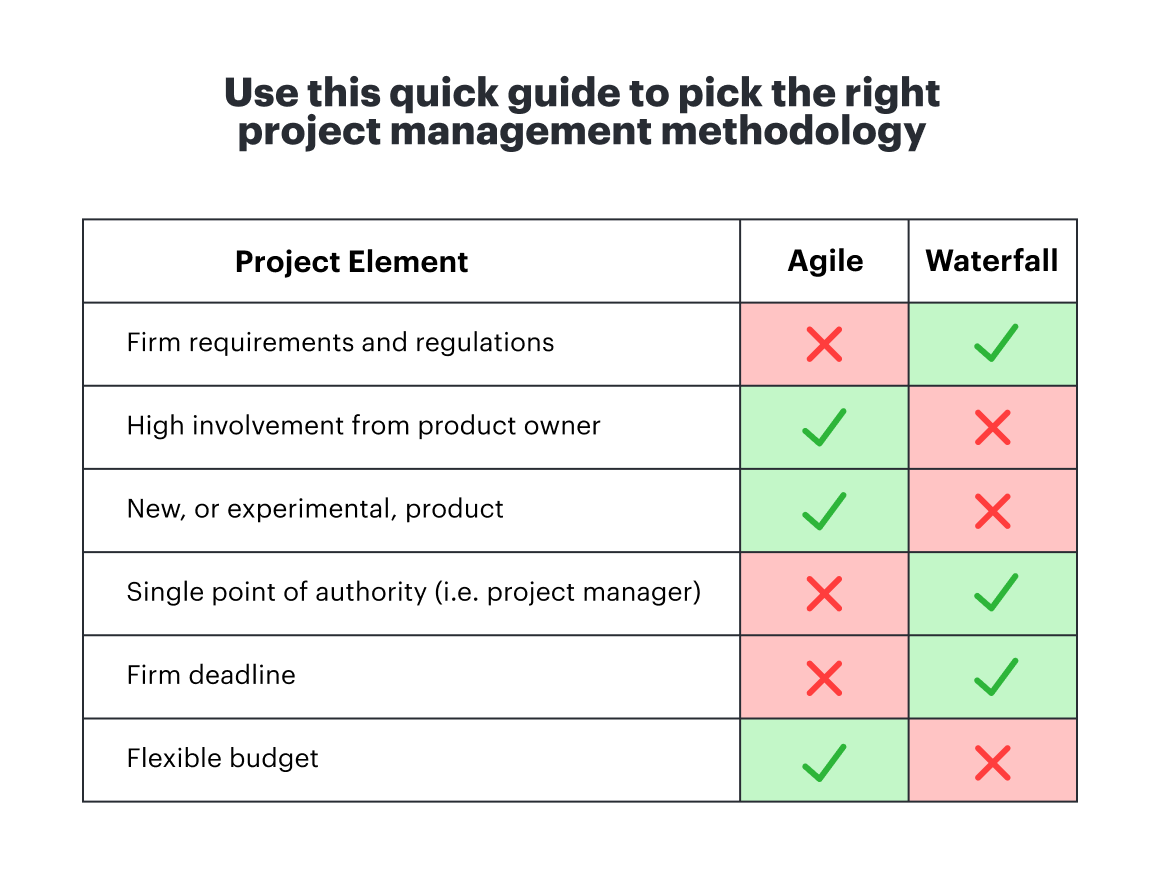
Take a close look at your project. If its deadline is firm, a waterfall approach may be better. This gives you a chance to decide all the details before you begin. You can then follow the project lifecycle from requirements all the way to the deployment and maintenance stages. For a shorter deadline, Agile allows you to get a product built faster with regular feedback along the way.
Team needs
If your team is already familiar with a particular type of project and project management style, that can also guide your decision. For instance, familiarity with how Agile works may mean that using Agile is a better fit for most (if not all) of the projects your team undertakes.
Take a look at the background and preferences of the people on your team. Ask for their input, too, if possible.
Other factors to consider include:
- Nature of the project: Some projects are better suited to one project management framework or another. For instance, a project your team has a lot of experience and familiarity with may be a good fit for the waterfall method.
- Existing organizational processes: Teams that have established processes that fit one method in particular, such as regular sprint meetings, may favor that method in their projects.
- Budget: Waterfall is great for a clearly defined, specific budget.
- Project timeline: With a shorter timeline, Agile can help your team deliver quickly.
How to adjust the approach mid-project when necessary
Sometimes, you have to adjust your approach mid-project. Make sure you bring on any expertise you need, involve your stakeholders, and gain strong visibility about your project. You may need to redo some of your project planning depending on how far along you are in the project lifecycle.
Explore Agile for non-technical teams
Curious to see whether Agile is an option for your non-software team? See how marketing teams, sales, HR, and more use Agile in this blog post.
Read more