Key takeaways
-
Agile release planning is a flexible approach that breaks down large development projects into iterative stages. This approach maps out exactly when and how specific features will be delivered, enabling teams to adapt to changes and manage constraints effectively.
-
Release plans and product roadmaps are two distinct documents that are both crucial to the development and release of a product.
-
To create a successful product release plan, you’ll need to define your vision, rank the product backlog, hold a product release planning meeting, and finalize the product release calendar.
The foundation of a successful project is a well-laid plan. An Agile release plan acts as a project’s map, providing context and direction on product goals, vision, and expectations. In this article, we will dive into what release planning is and how to create a release plan for yourself.
What is Agile release planning?
Agile product release planning is an approach to product management that takes into account the intangible and flexible nature of software development. As part of this approach, teams plan iterative sprints across incremental releases.
In other words, instead of trying to develop every proposed feature in one large, regimented project, the Agile software development life cycle breaks down the development process into stages called releases. In this context, releases are essentially periods of time set apart to work on a limited scope of the overall project. An Agile release plan maps out how and when features (or functionality) will be released and delivered to users.
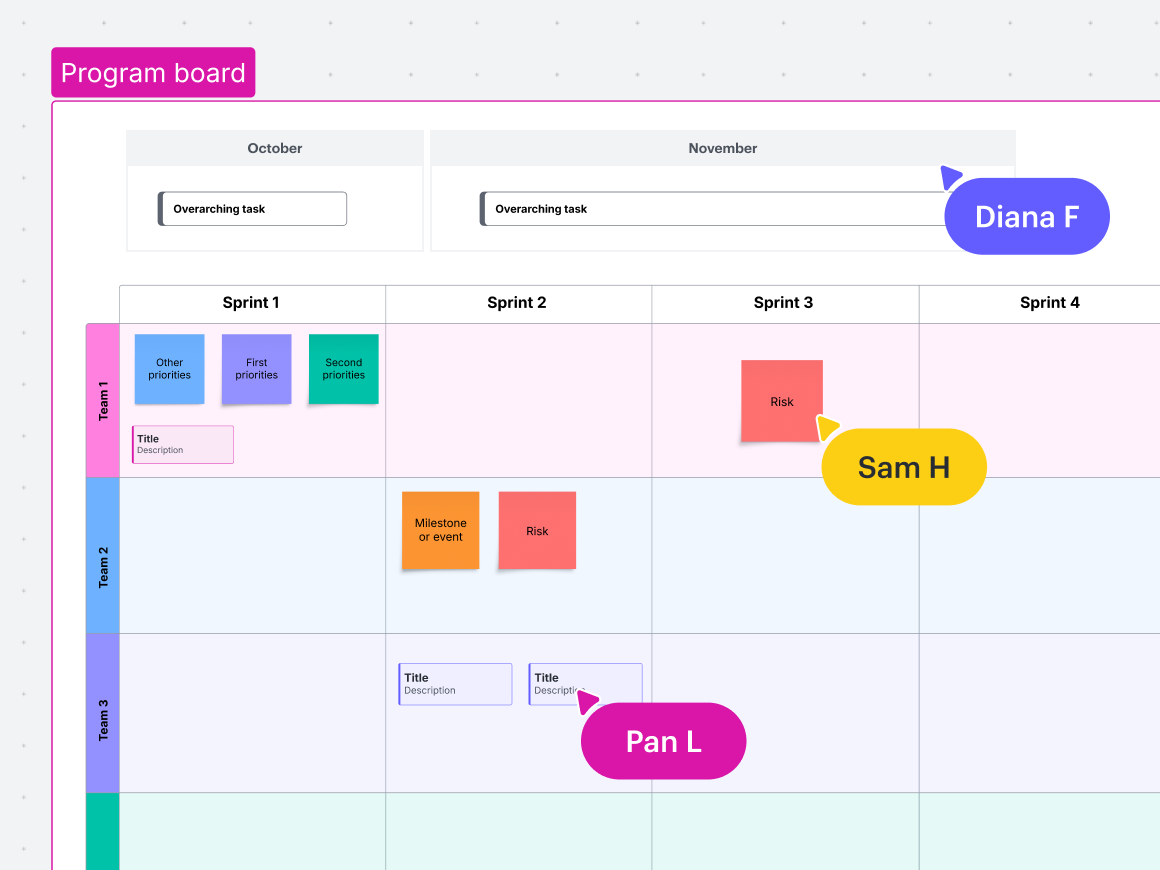
Through release planning, product managers can better manage project constraints and adapt to evolving needs or challenges that arise through the development stage while regularly producing product deliverables for the end user.
What’s included in a release plan
A release plan typically includes the following:
-
Backlog: A product backlog is a prioritized “to-do” list of items like bug fixes, new features, change requirements, user stories, etc. This list lets you know which items are most important and must be worked on next.
-
Product scope: Include a clear definition of the scope and objectives for a specific release. The scope helps you to more accurately estimate timelines and budgets for the project. The scope communicates to the team what they should work on and what needs to wait for another release. Also include the specific goals you expect to achieve by releasing the product.
-
Release schedule: Provide a detailed timeline with the start and end dates. Include key milestones like task due dates, feature freeze, testing phase, etc.
-
Resource allocation: Outline all the resources you’ll need (i.e., people, materials, technology, equipment, budget) to complete the project.
-
Risks and dependencies: Identify potential risks and challenges (technical issues, resource constraints, or scope creep) that could impact the release cycle. Outline strategies to mitigate these risks.
Product roadmap vs release plan
A product roadmap and release plan are both crucial to the successful development and release of a product, but each document serves a distinct purpose. When used together, they provide a comprehensive framework for development, release, and management of a product’s entire lifecycle.
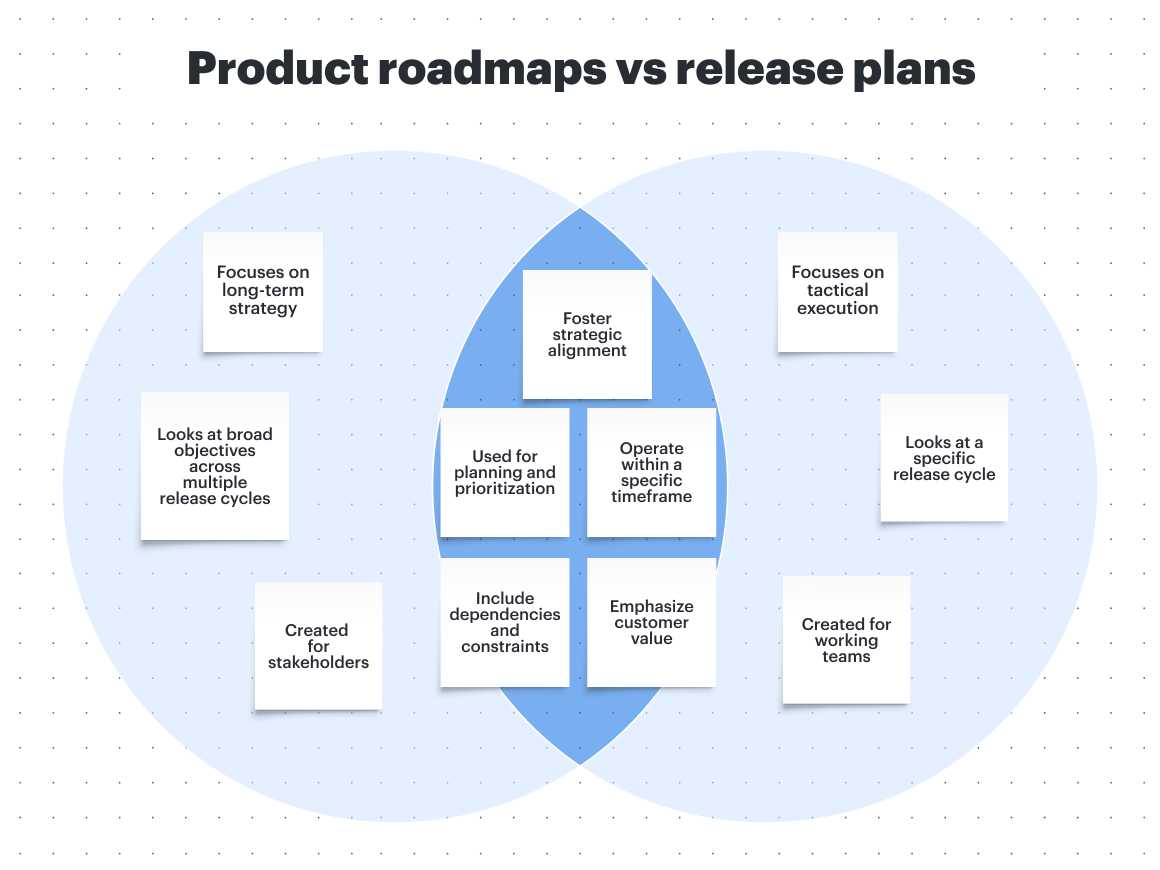
Similarities of product release roadmaps and release plans
There are many key similarities shared by both documents, including:
-
Strategic alignment: Both documents align with your company’s strategic goals and objectives to ensure that development efforts fulfill business objectives and customer expectations.
-
Planning and prioritization: These documents both include feature planning and prioritization that can help with effective resource allocation and assigning tasks.
-
Timeframes and timelines: The product roadmap and release plan operate within a specified timeframe. They also each identify timeframes that help guide planning and project execution.
-
Dependencies and constraints: Both documents look at circumstances that could impact the project’s successful execution.
-
Delivering value: These documents emphasize the importance of delivering value to customers. Features and enhancements are prioritized based on their potential to satisfy customer needs.
Differences between product roadmap and product release plans
Here are some of the ways that product release roadmaps and release plans differ from each other:
-
Focus: The product roadmap focuses on the long-term strategy, vision, and goals for a product. The release plan focuses on the tactical execution of specific tasks derived from the product roadmap within a specified timeframe.
-
Perspective: The product roadmap is a high-level overview that is seen from a long-term perspective that focuses on broad objectives and initiatives that encompass multiple interactions and release cycles. The release plan focuses on the details of the tasks and timeline in a specific release cycle.
-
Audience: The roadmap’s target audience includes key stakeholders, including managers and executives who will fund or greenlight the product’s development. The release plan targets the development team, testing, customer support, marketing, and more. This helps the teams to align and keep the project on track.
How to create an Agile product release plan
To create a successful product release roadmap, you’ll follow four basic steps.
1. Define your vision
One of the most important steps in the planning process is defining the vision for your product. The vision will guide subsequent decisions on which features to prioritize, where to focus effort and resources, and how to adapt if the project requires adjustment during development.
You may need to consult with executives or other high-level stakeholders to ensure your vision aligns with both the market and the organization’s overall objectives.
2. Rank the product backlog
Next, you will need to review your product backlog and rank the features. Use the product vision as well as input from stakeholders to determine product priorities and map out user stories. User stories are user-centered descriptions of the proposed functionality (or feature).
During this step, the product manager should outline a basic Scrum release plan or roadmap that includes the release goal, release target date, and the ranked user stories.
3. Hold a product release planning meeting
Once the overall product vision and release map are outlined, it’s time to gather all stakeholders together in a Scrum release planning meeting to review the proposed plan, add to or edit the plan as needed, and align on the product deliverables.
This step ensures everyone is on the same page regarding strategy and collaboration before diving into the project.
A basic agenda will include the following actions:
Review roadmap
The first item on the meeting agenda is to review the vision and product roadmap to confirm that everyone understands the overall goal for the product.
Review architecture
Next, stakeholders should review the architecture and technical details for the release. This is the time to discuss any new information that could affect the product release plan estimates and scope, including dependencies, assumptions, or gaps.
Review velocity and iteration schedule
Present the estimated velocity—typically based on previous projects or iterations—along with the proposed iteration schedule.
Each user story is assigned points based on how much effort or work is required to complete the associated tasks. The product manager calculates the velocity by adding all user story points within a sprint (or release). The result is a reasonable estimate of how quickly the team could complete that iteration. From there, you can outline an iteration schedule based on the scrum team’s velocity.
The iteration schedule essentially outlines how much work will be included in a particular release and how the work will be distributed across the team. Review key milestones and events and confirm the schedule as a group.
Establish the definition of done for the release
As a group, review and decide on the definition of done for any given release. In other words, what are the acceptance criteria across all user stories in the release?
When all conditions are met, the team can confirm a release is completed. The definition of done usually means the team has completed every task outlined under a user story and documented the work for the product owner to review.
4. Finalize and share the product release calendar
Following the planning meeting, finalize details, make any last adjustments, and then share the product release calendar with all stakeholders. Everyone should have ongoing access to the release plan for reference and updates. The Scrum release plan will help the team stay focused on the right tasks at the right time.
Because Agile release plans have such a significant impact on the future success of a project, it is important to create clear timelines and process flows that all stakeholders can access. Use a dynamic workspace like Lucid to create informative, clear Scrum release plans for more efficient and effective development. Managers, team members, and other stakeholders can view plans and project details in real time, so nothing gets lost in the shuffle.

Explore how Lucid’s own product teams use Lucid to drive innovation and stay aligned on release plans.
Read now