
If you search for the term "AIDA," you'll find one of two topics: 1) a four-act opera by Italian composer Giuseppe Verdi that premiered in 1871 detailing the story of star-crossed lovers or 2) a model used in marketing and advertising named after an acronym for Awareness, Interest, Desire, and Action.
Because you probably already know everything there is to know about Giuseppe Verdi and his famous opera, in this article, we’ll discuss the AIDA model instead.
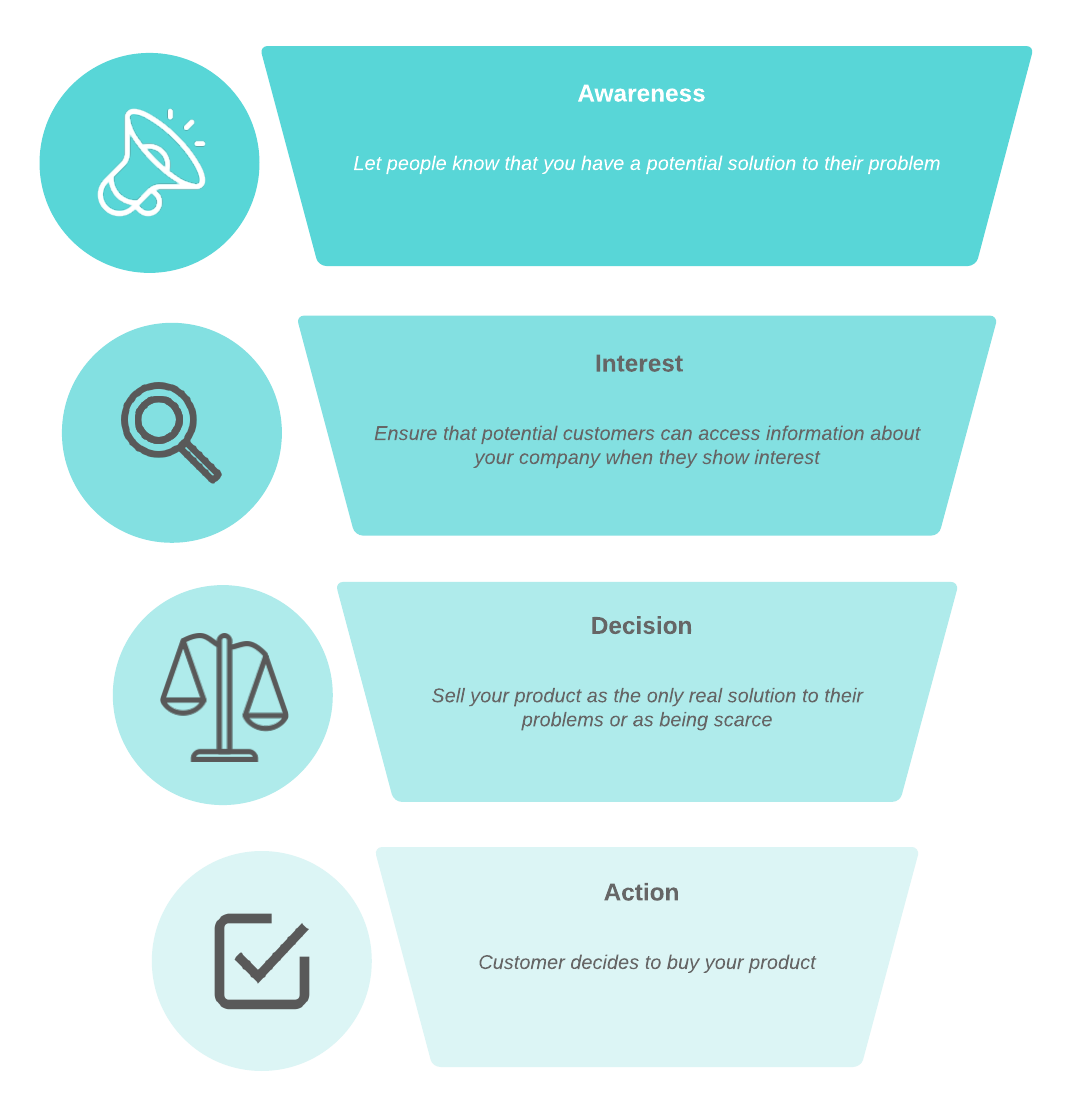
What is the AIDA approach?
The AIDA concept was developed by American businessman Elias St. Elmo Lewis in 1898. Lewis was an advertising advocate who wrote and spoke often about advertising’s potential. This model describes a series of steps or stages that customers follow when making purchasing decisions. The AIDA stages are:
- Awareness: Customers are made aware of a product, brand, or service. Awareness typically comes from advertising.
- Interest: Customer interest grows as prospects learn more about what benefits the product has to offer and how it fits with their lifestyle.
- Desire: The customer develops a connection with the product and moves from being interested to wanting or “needing” it.
- Action: Customers decide to interact with the product or service, by downloading a trial version, creating an account, subscribing to an email, or making a purchase.
The AIDA approach has proven to be important to and effective for advertisers and marketers. It is over 100 years old and is still being used today in one form or another. The model has been modified and expanded over the years as new media and communications platforms have entered our lives. The AIDA model now belongs to a class of models known as “Hierarchy of Effects” models. But more on that later.
Understanding the AIDA model
In the late 19th century when AIDA was developed, there were not that many media channels available for advertising and marketing communications. Today, there are so many media channels that it’s almost impossible to avoid advertising messages.
Some digital marketing experts estimate that we are hit with 4,000 to 10,000, opens in a new tab advertisements every day. Of course, how many ads you are exposed to depends on several factors such as what type of job you have and how you spend your leisure time. A factory worker on an eight-hour shift probably is not exposed to as many ads as somebody engaged in social media during that same amount of time.
With so much competition, it can be very difficult for you to get your message to your intended target. The AIDA principle can help you stay focused as you work through your message to grab potential buyers.
Attract attention
At this stage of the AIDA model, you want to make potential customers aware of your brand, product, or service. Types of content commonly used at the awareness stage include advertisements, videos, podcasts, and social media.
Your biggest challenge may be attracting the attention of your target audience. You can’t engage with potential customers if they don’t know you exist. People may be exposed to 4,000 ads per day, but how many do they actually see? How do you break through the clutter?
To attract attention, you may need to be a little disruptive in the following ways:
- Position striking pictures in unexpected ways.
- Use bold colors that attract the eye.
- Create a sensational and entertaining video.
- Add a provocative graphic on a landing page.
- Use music that evokes nostalgia.
The idea is that you are trying to startle the customer into paying attention. Be careful about being too disruptive. There is a fine line between being clever and annoying.
Use Lucidchart to create low-fidelity mockups of webpages, ads, and other types of content—visuals can help you more easily relate to team members what you expect to see from this content. See how the marketing manager at PlanSwift communicated his ideas and kept his team on the same page through Lucidchart.
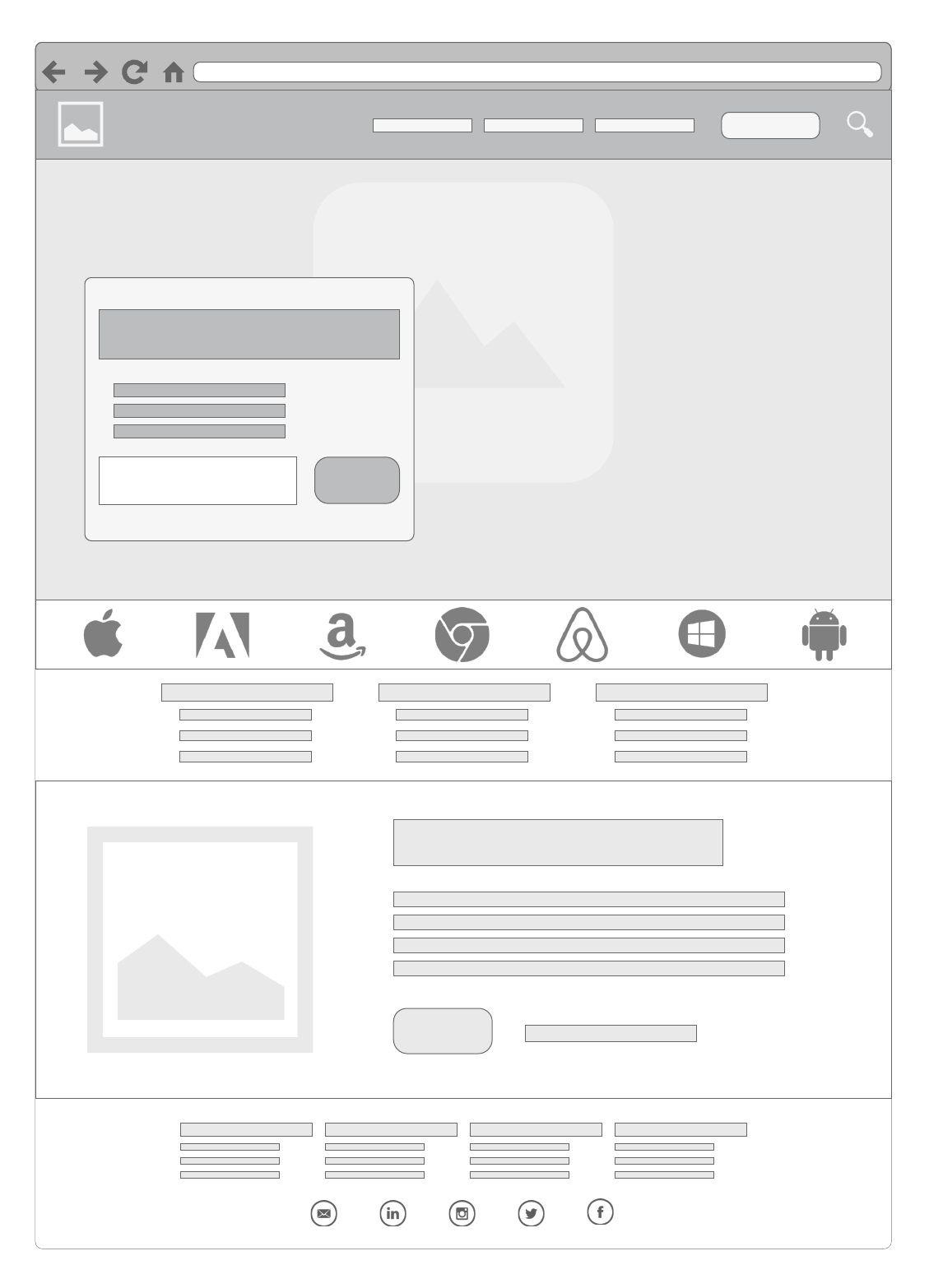
Maintain interest
After you get your potential customer’s interest, you need to keep it—a feat that can be harder than attracting attention. You’ve piqued the interest of a sizeable chunk of your audience enough to click a link or watch a video, but what do you do to keep them engaged?
This AIDA stage generally uses web content, newsletters, blogs and articles, and email campaigns.
Keeping interest may be a little easier if you create funny, entertaining videos or use music that is familiar with your target audience. It may be more difficult to keep attention if you overload a page with too much text. Try to keep it light with short chunks of information and break it up with lively subheads and graphics.
Through user flow diagrams and other visuals, you can map out the customer journey as potential buyers progress through the funnel so everyone on your marketing team is aware of the content that potential buyers receive.
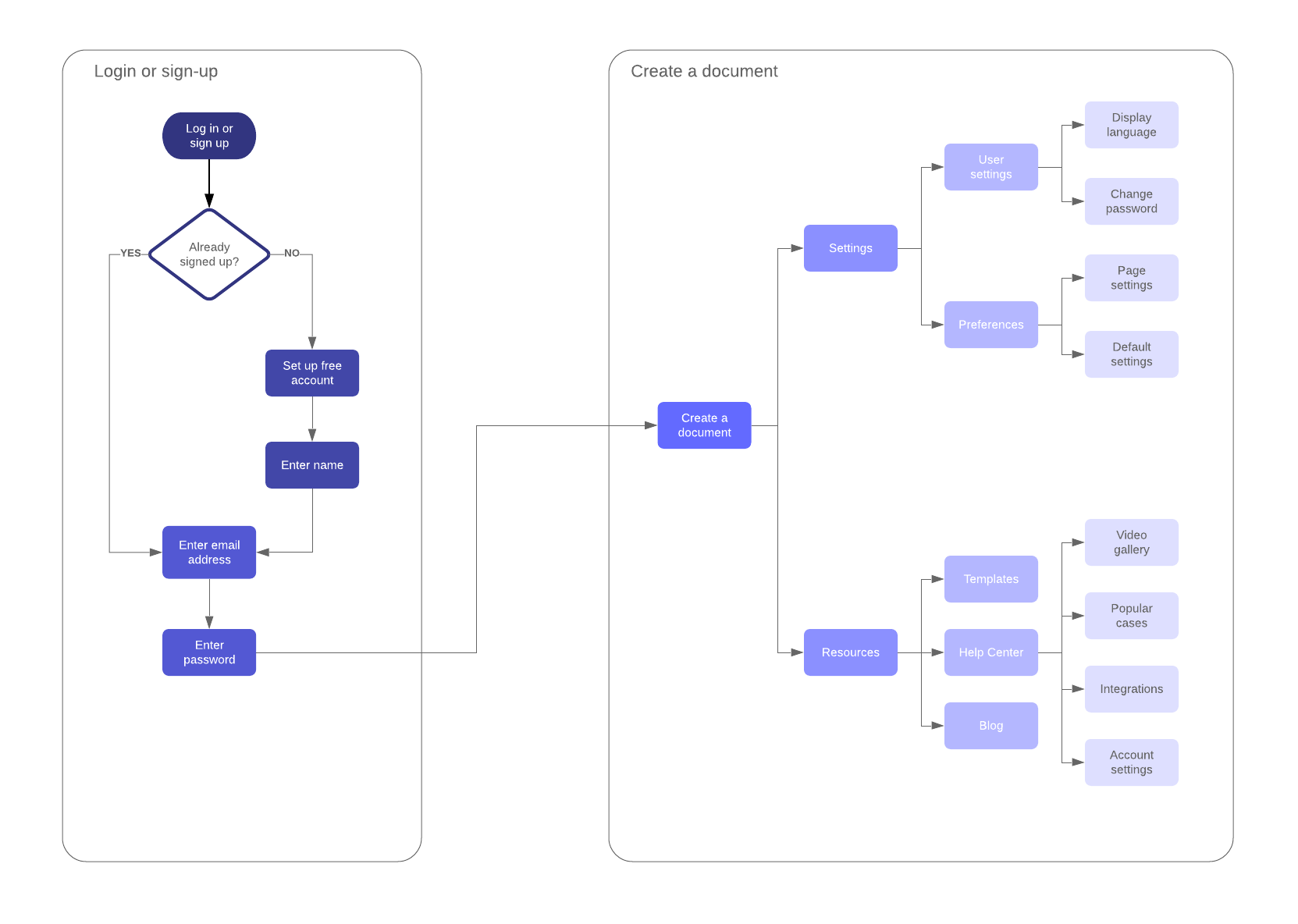
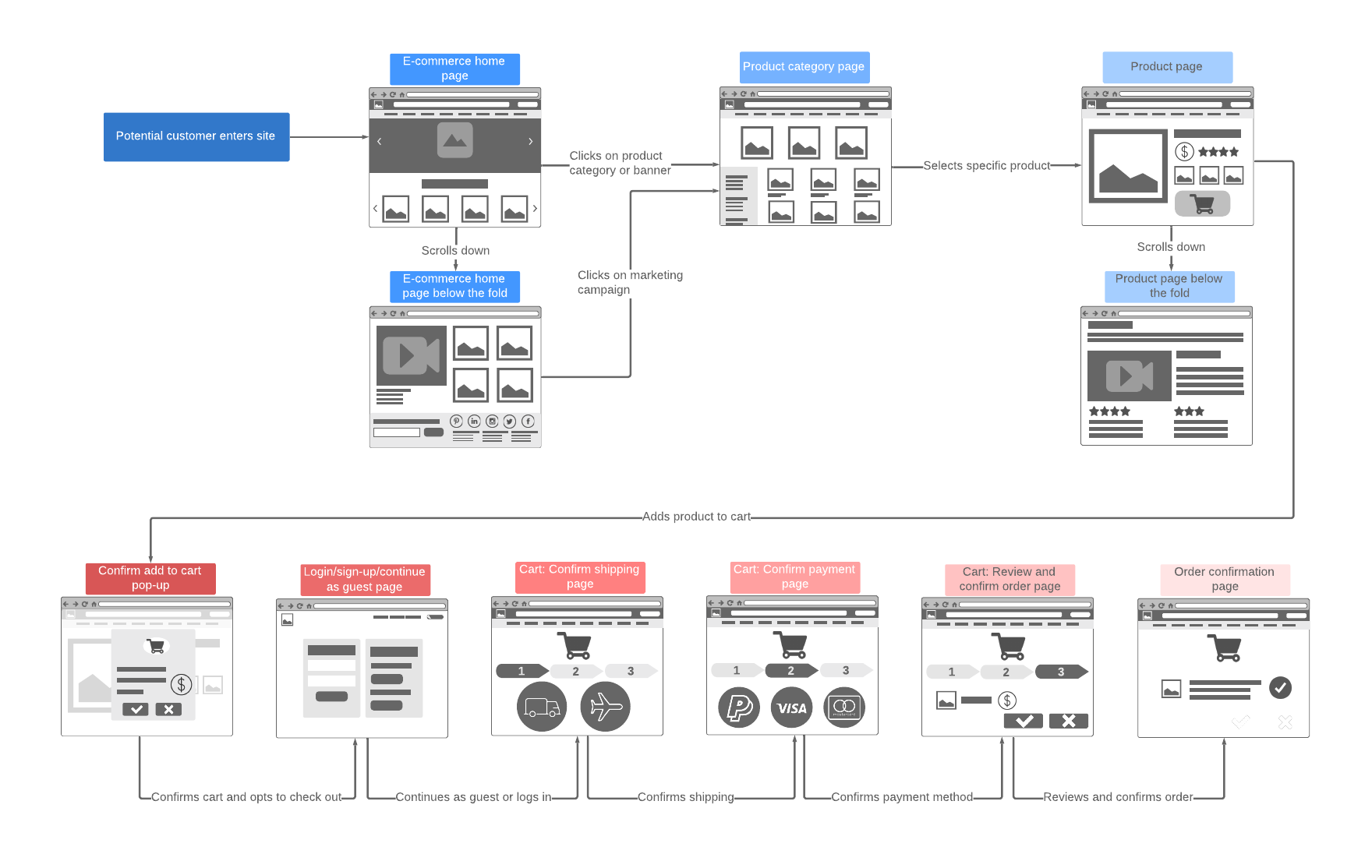
Create desire
As you build your customer’s interest, you have to tell them how your product or service can help them in real ways. This is where you persuade your audience that they need your product to solve a problem or to appeal to some emotion.
In this stage, you want to stress the features and benefits you are offering and show how these features and benefits are different from or superior to your competitors’ products. Don’t stress the features too much. The benefits are generally more persuasive than a stale list of features. You want to “sell the sizzle, not the steak.”
Take action
After you grab attention, maintain interest, and create desire, you need a call to action that will compel the customer to purchase or start a trial. On a website, you can add a link to more information, to sign up for a free trial, to create an account, or to place items in a shopping cart. In the real world, this means you need to compel your customer to get up off the couch and walk into your store.
Expansions to the AIDA model
As mentioned earlier, the AIDA model has been modified and expanded over the past 100 years. A few of these modifications include:
- Retention: The original AIDA model did not account for retaining a customer after purchase. You want your customers to be happy so they will come back for more or give you leads for more sales.
- Targeting: Data is mined as users interact with search engines, websites, and social media. With this data, advertisers have the opportunity to target ads specifically to the interests of potential customers based on their browsing habits.
- Conviction: Potential customers are interested, but they may have doubts about purchasing. You can alleviate some of these doubts by giving out free samples, offering free trials, offering test drives, and so on.
- Satisfaction: After you take their money, you want to make sure that your customers get their purchase in a timely manner and that the purchase is what they expected. You can do this through your customer support team, by sending out surveys and asking for customers to rate the product or service. Great customer service is very important as it helps with retention and can lead to future sales.
Building your own AIDA model
The AIDA model and its variations are typically modeled as a funnel. In the real world, most of what is poured into the top of a funnel makes it out the other end. In the advertising and sales world, while many potential purchasers enter the funnel, not all of them will make it out the other end.
The funnel is simply a graphic representation of prospective customers and their potential to purchase as they progress through the stages of the model. Using Lucidchart templates, you can build your own AIDA model or other models specific to your role.
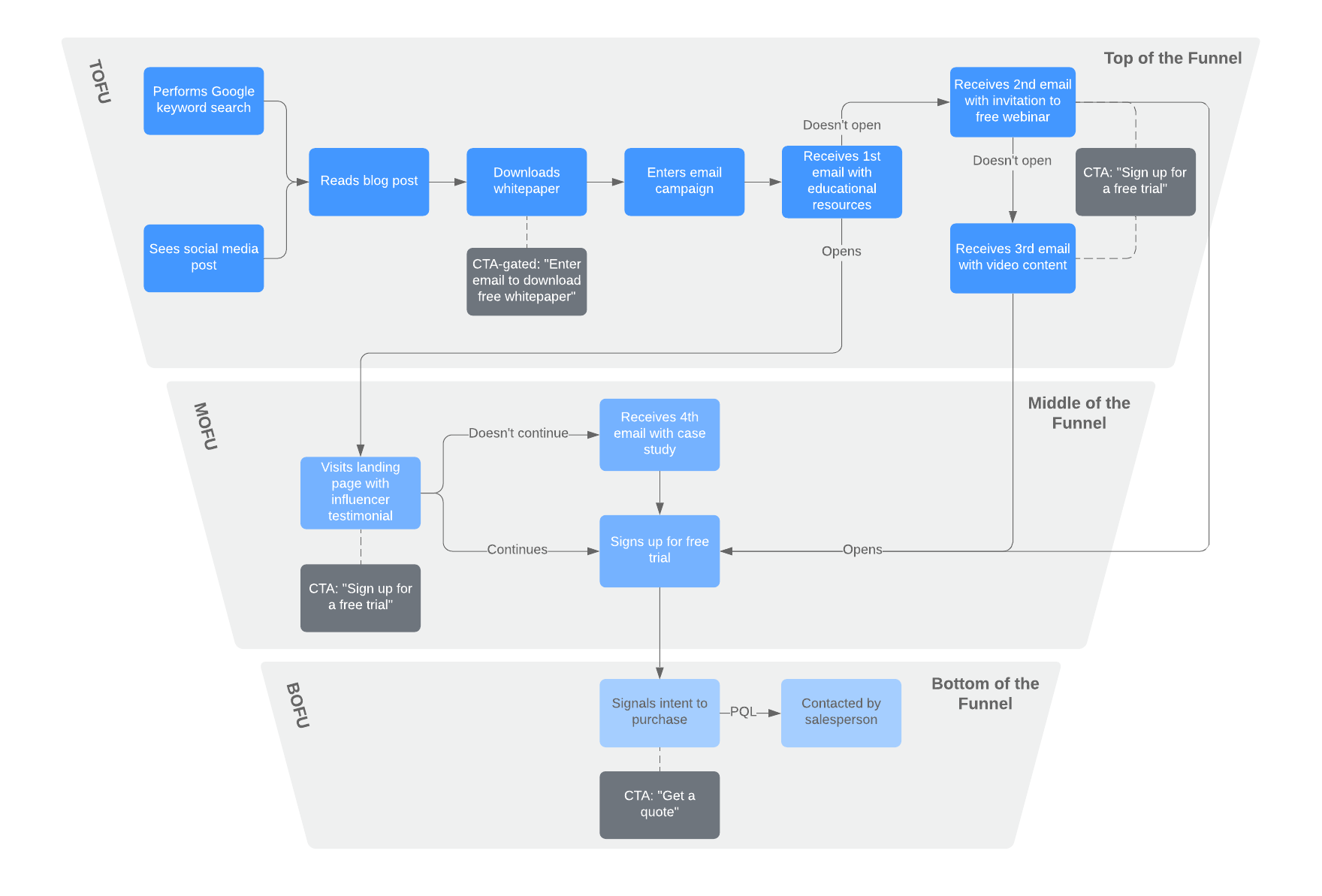
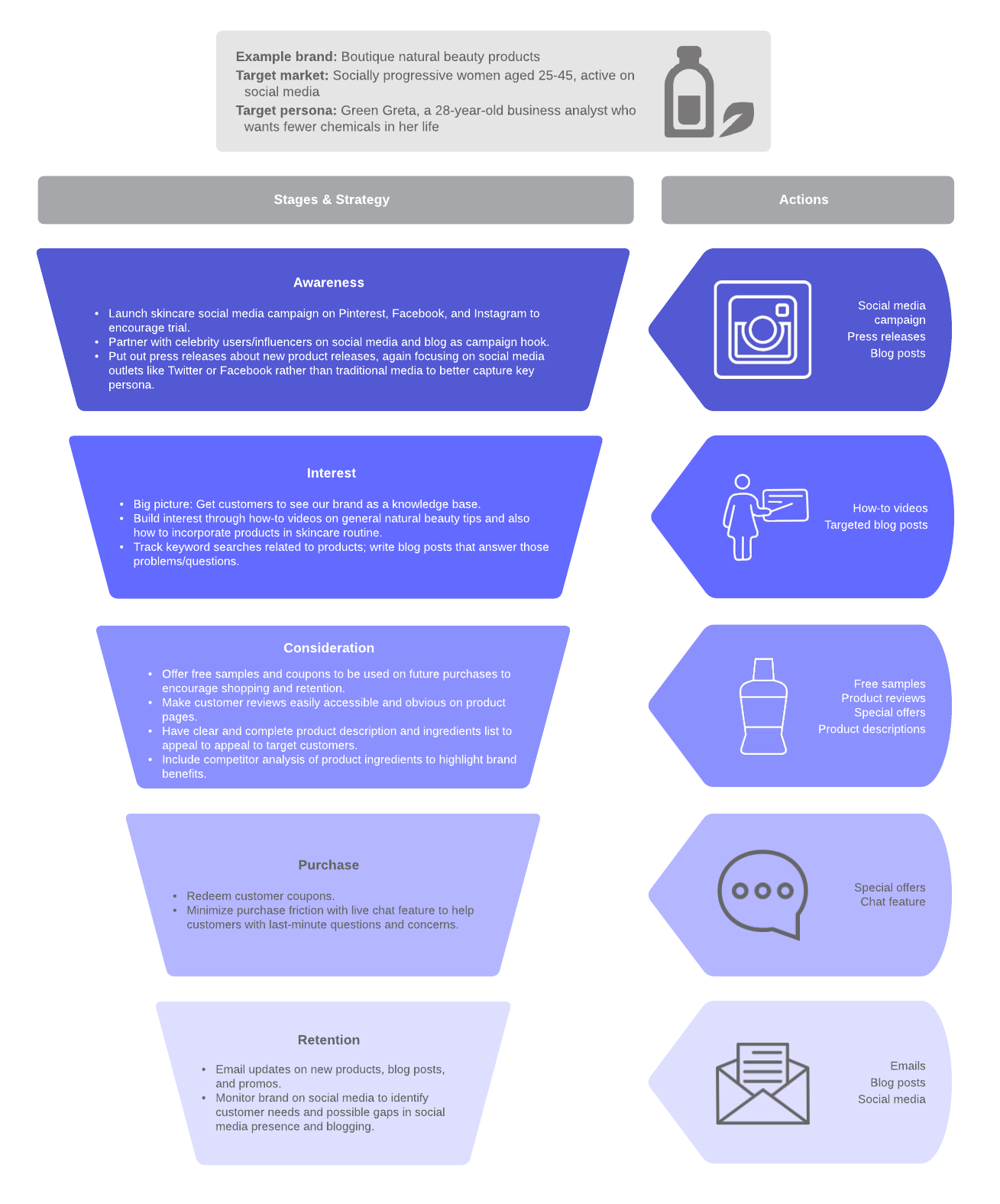
You are not required to build your model in the shape of a funnel. The AIDA procedure and other similar models are linear and can be drawn in any format that makes sense to you, such as a simple flowchart or a wheel.
Lucidchart has a vast library of templates you can draw from for inspiration to help you visualize processes and procedures that are important to your organization. The documents you create are web-based and easy to share, and they can be accessed from anywhere at any time. Lucidchart documents make it easy for you and your team to collaborate, giving all involved the ability to make meaningful contributions on every project.
Sign up for a free account and explore the Lucidchart template library today.
Try Lucidchart today, opens in a new tab