Key takeaways
-
Stakeholder analysis is the process of identifying and prioritizing your stakeholders.
-
A stakeholder map is a visual roadmap of your stakeholder analysis.
-
Both stakeholder analysis and mapping are important for enlisting key players in your project, aligning on goals and plans, and addressing concerns.
-
Use Lucid templates and collaborative features to make stakeholder analysis and mapping easier and more efficient.
Projects aren't completed in a vacuum. In order to get new initiatives or projects off the ground, you need buy-in and support from a variety of stakeholders, such as managers, executives, and clients.
Stakeholders can make or break your project before it even starts, so it's crucial to understand who your stakeholders are, what level of input they should have, and the communication they will need throughout the project.
But how do you know who your stakeholders are? And how do you keep them engaged? When working on large or complex projects, it can be difficult to keep track of all the relevant stakeholders involved.
That's where stakeholder analysis and stakeholder mapping come in. The purpose of stakeholder analysis and mapping is to enlist key players early on, align stakeholders on project goals and plans, and uncover and address conflicts or concerns. Use our quick guide to identify and visualize stakeholders from start to finish.
What is stakeholder analysis?
A stakeholder analysis helps you identify your stakeholders and prioritize them based on interest, influence, and financial investment (among other relevant factors). An analysis also helps you tailor levels of communication and visibility so stakeholders can quickly understand how the work fits into the bigger business picture and so you can build advocacy (or prepare for opposition) before it slows you down. Done well, stakeholder analysis supports more than alignment—it can also strengthen execution.
Once you understand who your stakeholders are, what they need, and how they impact your project, you can make better decisions, communicate effectively, and secure the buy-in you need.
A stakeholder analysis template, also known as a power interest grid, can help you in four key ways:
-
Gathering crucial input: You don't know what you don't know. Often, key stakeholders deliver valuable insight that can help keep your project on track and successful.
-
Gaining more resources: If your stakeholder has a full understanding of what it will take to get your project off the ground, they may be able to help you secure the people, tools, and resources you need to make you successful.
-
Building trust: By consistently engaging and involving stakeholders in your process, you're building trust that may make them more likely to support upcoming projects.
-
Planning ahead: Consistent feedback from key stakeholders helps you anticipate feedback and requirements on future projects to gain buy-in more quickly.
How to perform a stakeholder analysis
There are three main steps in a stakeholder analysis: identify, prioritize, and create an engagement plan.
1. Identify potential stakeholders
The first step is brainstorming who your stakeholders are. Keep in mind that stakeholders can be internal, such as your company's top leadership, team members, and department supervisors, or external, such as your client and their extended team, as well as potential end-users.
As a reminder, stakeholders aren't just decision-makers—anyone who is affected by the outcome of your project, or is actively involved in the project, is referred to as a stakeholder.
This includes:
-
Project managers
-
Team members
-
Senior management
-
Executives
-
Clients
-
Partners
-
Investors
-
Suppliers
-
End users
Identifying internal vs. external stakeholders is a helpful first step, but it's worth being explicit about both categories so you don't miss a critical voice.
As you evaluate potential stakeholders, consider:
-
Who has the most influence on this project?
-
Who will be most impacted by this project?
-
Who controls the resources you will need?
-
Who has a financial stake or interest?
-
Who might be an important person but not a central stakeholder (such as a separate department leader)?
2. Prioritize stakeholders
Once you have your list of stakeholders, it's time to prioritize them based on their relative importance and influence on your project. In other words, some stakeholders will have more say in how the project evolves and what resources are made available than others. It's important to uncover who these key players are so you can effectively communicate with them and create buy-in throughout the project.
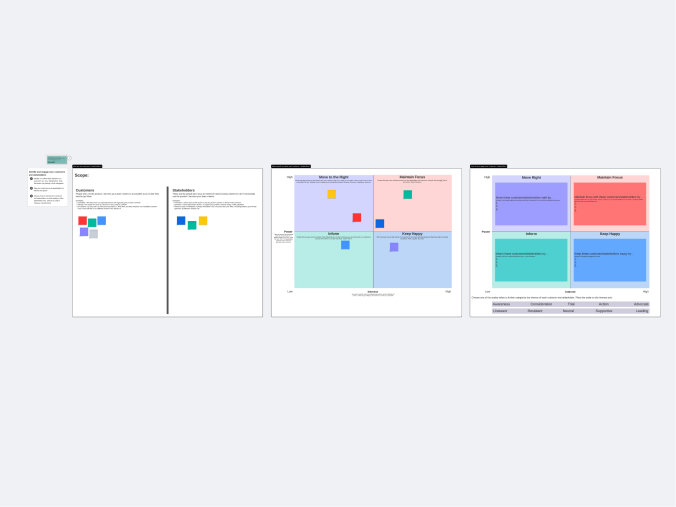
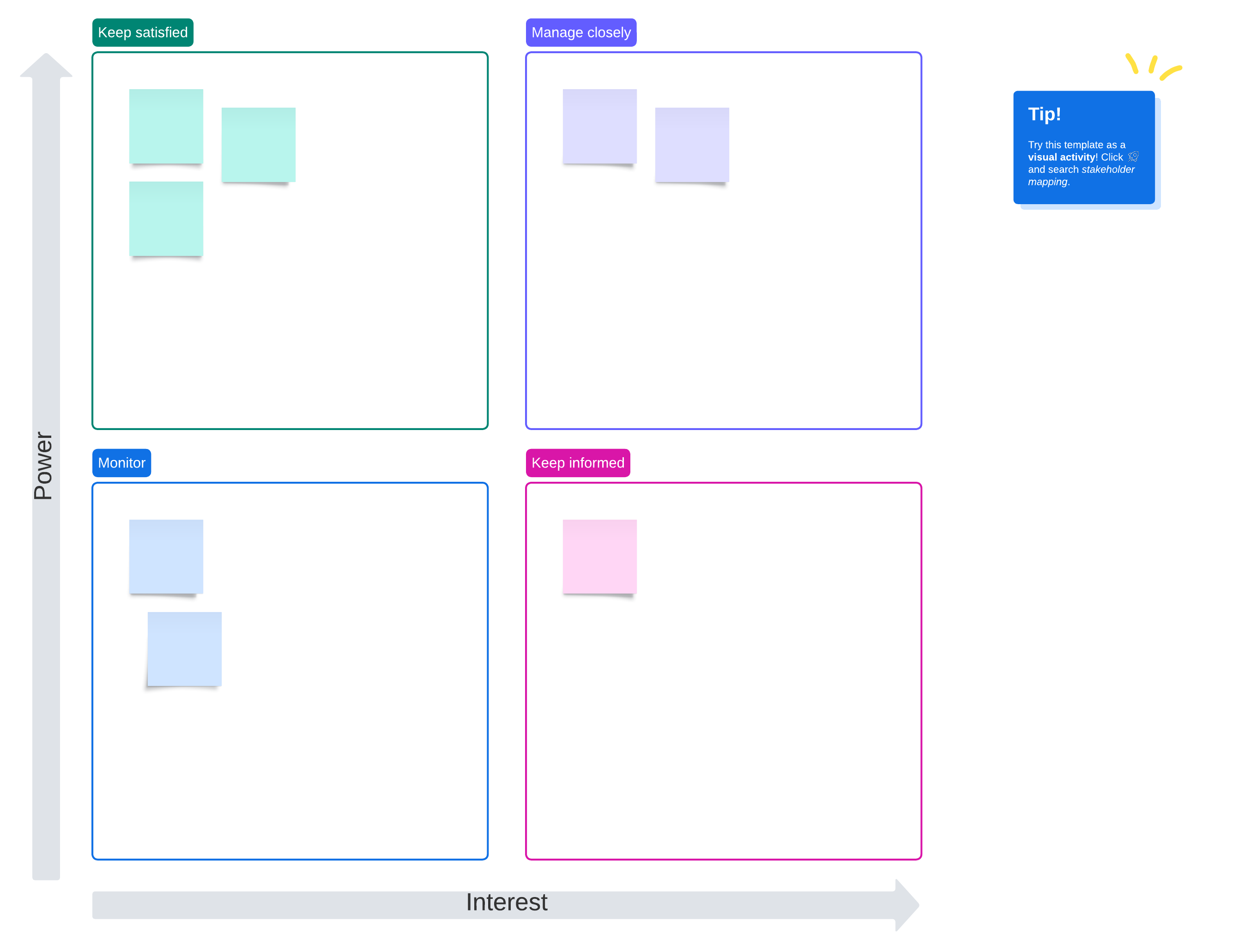
This is a good time to use a stakeholder matrix to organize your players. By organizing each stakeholder according to their influence and interest, you can determine which groups they fall in, including:
-
High-power, highly interested people: Fully engage these stakeholders and make every effort to satisfy them.
-
High-power, less interested people: Keep these stakeholders satisfied but not so much that they become bored with your message.
-
Low-power, highly interested people: Adequately inform these people, and talk to them to ensure that no major issues arise. People in this category can often be very helpful with the details of your project in a supportive role.
-
Low-power, less interested people: Again, monitor these people, but don't bore them with excessive communication.
The more power and interest a stakeholder has, the more attention they will need to stay informed and engaged. If you fail to keep these stakeholders satisfied, you could endanger your project if they choose not to approve key funding or other resources.
3. Create a plan for engaging with stakeholders
When creating a plan for engaging with stakeholders throughout the life of your project, you'll want to consider factors like:
-
Who has an emotional interest?
-
What are the top motivations or priorities for each stakeholder?
-
Who are the biggest supporters or sympathizers?
-
Who are the blockers or naysayers?
To make your engagement plan more actionable, capture each key stakeholder's current stance, what information they actually care about, and who influences them. Now that stakeholders have been identified and prioritized, you need to understand how they feel about your project. Some good questions to ask include:
-
Do they have a financial or emotional interest in the outcome of your work? Is it positive or negative?
-
What motivates them the most?
-
Which of your project information is relevant to them, and what is the best way to relay that information?
-
What is their current opinion of your work? Is that opinion based on accurate information?
-
Who influences their opinion, and are those influencers also your stakeholders?
-
If they're not likely to be supportive of your project, what can you do to win their support?
-
If you can't win their support, what can you do to manage their opposition?
Once you've answered those questions, you can formalize the “how and when" of outreach so everyone knows what to expect.
What is stakeholder mapping?
While stakeholder analysis is the process of identifying and prioritizing stakeholders, stakeholder mapping is the process of visually representing that information. A stakeholder map is a roadmap of your completed stakeholder analysis. A stakeholder mapping tool helps you organize your analysis into a clear, digestible format and outline a plan of action for communication and engagement with your stakeholders. Stakeholder maps can be outlined in a simple grid, spreadsheet, or digital whiteboard like Lucidspark.
When should you use a stakeholder map?
Stakeholder maps are helpful for any project, but especially when you have a large project that impacts lots of key players across roles, departments, and even organizations. Particularly at this scale, projects require clear and polished communication to ensure successful management, streamlined processes, and enthusiastic buy-in. In other words, use a map when you have a big journey ahead of you. It's easy to get lost when you have too many stakeholders to juggle.
Common stakeholder types
Here are a few examples of common stakeholders and how you might communicate with them.
Your direct manager or supervisor
High power, high interest
Your boss's reputation is tied to the productivity of the people they lead. Your boss also likely has the power to advance or shut down your projects. This means that you should manage this relationship closely, communicating frequently and requesting and implementing feedback.
Shareholders/investors
High power, medium interest
Shareholders and investors usually hold stake in multiple entities, diluting their unique interest in your project. As such, to leverage their investment in your work, you should communicate frequently with them, consult and involve them, with a goal of increasing their interest over time. This is obviously dependent on the type of investment role that exists, and whether your project is the sole investment or part of a portfolio of investments.
Government
High power, probably low interest
The government controls the laws and regulations that could shut down your business or project. Health code inspectors and IRS auditors are examples of government officials who are classified as stakeholders. Because government entities monitor everything, their interest in your individual business endeavor is likely low. As such, your goal should be to keep them satisfied, communicating regularly, consulting, and involving them in order to prevent them from posing a risk to your project.
Senior executives
High power, low interest
Your company's senior executives make the biggest decisions, giving them high influence but limited bandwidth to focus on your project specifically. This means your strategy should be to keep them satisfied. Communicate when necessary, consulting and seeking feedback, to increase their interest in you and your work.
Your coworkers
Medium power, medium interest
Coworkers carry a range of influence, but mostly their influence will be in their ability to leverage additional resources for your project, including the support of other coworkers and leaders. That means you want to keep them satisfied and informed. Update them on your project, and be willing to leverage their interest into a supporter role.
Map stakeholders with the right tools
While you can manually analyze and map your stakeholders, this can be a tedious and time-consuming effort—particularly for larger, more complex projects. Lucidspark makes stakeholder mapping easy with ready-made templates to get you started.
Organize your stakeholder info by adding virtual sticky notes and comments directly to the whiteboard, use color-coding so you can quickly understand the big picture, and loop in team members with easy sharing and @mentions for collaboration.
Take advantage of Lucidspark's infinite canvas to add custom flowcharts and decision timelines so you can easily manage your stakeholders and keep everyone aligned from start to finish.

Try Lucidspark for your next stakeholder analysis or map.
Sign up now