
A business case can be a written document or a visual presentation that outlines your rationale and justification for starting a new project or other type of initiative. The idea is to persuade senior management, decision-makers, and other stakeholders to approve, support, and provide funds for your new project.
You may be familiar with the phrase, “You have to spend money to make money.” The concept is simple—generating revenue and growing your business requires some kind of capital investment. When you want to start a new project, chances are that you’ll need to spend some money. And chances are that the money you want to spend won’t be your own.
A business case can help you to persuade investors and other stakeholders that it’s a good idea to invest their money in your new project.
Of course, securing funds is not all you need because spending money alone is not going to guarantee success. You also need to explain why stakeholders should support and invest in your project, what the benefits will be, whether the benefits outweigh the costs and potential risks, how the project fits with company goals and vision, and so on.
This is where a well-written business case can help you to define and acquire everything you need—finances, equipment, materials, training, time, effort, etc.—to initiate a new project.
What is a business case?
A business case can be a written document or a visual presentation that outlines your rationale and justification for starting a new project or other type of initiative. The idea is to persuade senior management, decision-makers, and other stakeholders to approve, support, and provide funds for your new project.
Basically, your business case should tell stakeholders and decision-makers:
- Why you believe this project needs to be initiated.
- What the available options are.
- The benefits of available options.
- Potential risks associated with the options.
- Estimated costs.
- Projected timelines.
- How you will measure project success.
Essentially, you want the business case to help stakeholders feel confident that investing in your project will be worth it.
Why do you need a business case?
You don’t always need a business case. For example, a new project might include updates or improvements to an existing successful product. It’s likely that updates and improvements have already been accounted for in the budget plan.
But if you are proposing a new initiative or project that will require a significant amount of business resources, you’ll likely need a business case to explain why you need more money and resources.
Here are a few key reasons for creating a business case:
- To provide the justification and evidence that will help decision-makers to understand the necessity of the project and the benefits it will bring
- To demonstrate the expected ROI so decision-makers can prioritize and allocate necessary resources for the initiative
- To analyze potential risks and uncertainties. This helps decision-makers to develop strategies to mitigate risk before greenlighting the project
- To help stakeholders objectively evaluate the project’s feasibility and viability
- To evaluate the potential impact the project will have on business operations
- To get buy-in from stakeholders by communicating the project’s goals, benefits, and risks
- After the project is approved, you can use the business case as a benchmark for measuring and evaluating the project’s performance
- To outline how the project will adhere to legal and regulatory requirements
- To help you and stakeholders assess the capacity and capability to complete the project on time, within budget, and with the desired outcomes
Who should be involved in building a business case?
While you might be ultimately responsible for building a business case, you don’t have to do it alone. You’ll want to get input from and collaborate with a variety of people throughout your organization. These people can include subject matter experts, financial analysts, market analysts, members of the IT team, HR professionals, technical writers, and so on. The specific people you’ll ask to collaborate on the business case will depend on the nature of the project and its complexity.
To help you ensure that all team members are aligned and working toward the same goals, consider using Lucidspark. Lucidspark has the tools and templates you need to brainstorm ideas and collaborate in real time with team members no matter where they are located.
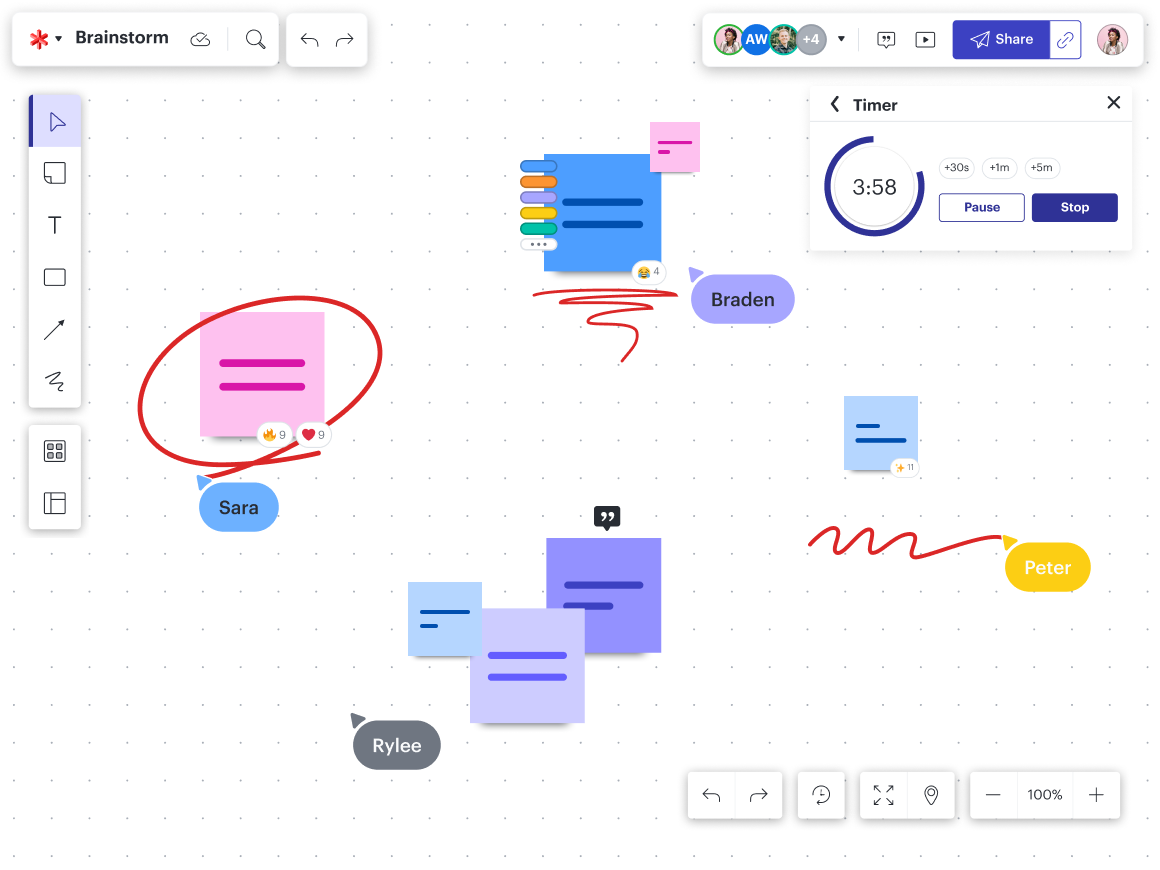
When all team members are aligned and effectively collaborate with each other, it helps you to build a well-rounded business case. The business case is more likely to address various risks and concerns while providing stakeholders with a strong rationale for going forward with the project.
How to write a business case
Now you have an idea of what a business case is and who should be involved in creating it. The next step is the process of writing the business case.
Again, keep in mind that you are trying to persuade decision-makers to support or finance your project. So, make sure the document is interesting, concise, and includes all the information stakeholders need to know. Avoid jargon and use simple, easy-to-read words and phrases that describe your vision and the benefits of backing your project.
The number of steps involved in building a business case might vary depending on the initiative or project you are working on. Below is a set of steps you might want to use to write your business case.
Step 1: Gather information
This step is good for inviting collaboration among your team members. Their involvement can help you to see things from multiple perspectives, which can help you to develop a well-thought-out and credible business case.
Brainstorming sessions using a brainstorming template encourage team members to share and expand on ideas. Working together in the same document can help you to:
- Define what the problem is.
- Develop possible solutions.
- Determine which solutions are best.
- Identify the impact the solution might have on the team and company.
Step 2: Write the business case document
Using the information you've gathered, compile all the parts of your business case. A business case document might include:
Executive summary
This is a short, high-level overview intended to give your target audience a quick and easy way to read and digest the main points, objectives, and recommendations without reading the entire document. This summary will appear at the beginning of the document, but you might want to write it after you have written the other sections.
Problem statement
Define the problem or issue your business case will address in a short, specific, understandable, and actionable way.
Objectives
Use the SMART method to outline your business case goals and objectives. Align these goals and objectives with your company’s strategic goals, and describe how your project will achieve those goals.
Preferred solutions and options
Include a short description of your preferred solution for addressing your stated problem. This should include how you determined this is the preferred solution and a cost-benefit analysis of the solution.
Alternatives and options
Present alternative solutions and approaches to solving your stated problem. Include a cost-benefit analysis for each alternative solution.
Cost estimates
This outlines the estimated costs of the project. These costs could include initial capital, resource acquisition, ongoing operational costs, total cost of ownership, maintenance, support, and so on.
Benefits
Describe how you expect the company will benefit from initiating this project. Be sure to include quantitative and qualitative benefits and calculate the expected return on investment.
Risk assessments
Outline the potential risks associated with the project. Include the likelihood that the risk will occur and what the impact might be. Describe your strategies for mitigating risk.
Estimate timelines
Create a high-level timeline that includes major milestones and deliverables. Estimate how long it will take to complete the entire project.
Resource requirements
List the financial, material, technological, and human resources you will need to complete the project.
Recommendation
Use this section to summarize the findings from your research into this business case. This should include facts and figures that support your recommendation to proceed with the project or scrap it.
Implementation
Describe your strategy for implementing your project plan. This implementation strategy should describe how this approach is the best for achieving your goals.
Finalize and distribute the business case
As you build your business case, it will likely be subjected to multiple reviews and revisions before it gets final approval. After it has been approved you’ll want to distribute it to the stakeholders and decision-makers for their review and consideration. Consider the distribution format—printed, PDF, slide deck, etc.
Step 3: Present your business case
Get the stakeholders, executives, and other decision-makers together for a formal presentation of your business case. Use visuals to help your audience quickly understand your problems, proposed solutions, recommendations, and so on.
Lucidspark has the tools and templates you need to create timelines and other visual aids that support your findings and recommendations. Visuals can keep your audience more engaged, help them to understand the data more clearly, and lead to better decision-making.
Bonus: Lucidspark also includes Presentation Mode, where you can add frames around your Lucidspark board to quickly turn it into a slide deck and present without leaving the app!

Free template
Get started creating a business case by using our business case template. The Lucidspark board has already been set up for you and makes it easy to start adding the different sections of your business case.
Try template