The difference between demand generation and lead generation is that demand gen helps you raise awareness about your brand within your target audience, while lead gen helps you turn potential buyers into customers by targeting people who are already aware of your brand and ready to make a purchase.
Both of these marketing tactics are important for business, as they help you secure new customers while nurturing existing relationships. To be successful, however, you need to know the difference between these two tactics and when the right time is to launch a lead gen vs demand gen campaign.
In this blog, you’ll learn everything you need to know about demand generation vs lead generation, as well as how to bring the two together so you can accomplish key marketing goals. You’ll also find templates to help you get started on your demand gen and lead gen strategies.
What is demand generation vs lead generation?
Let’s take a deeper look at demand gen vs lead gen.
Demand gen and lead gen are marketing tactics that take place at different stages within the marketing funnel. At the very top of the funnel is demand as you bring potential customers into the beginning stages of your buying process, or customer journey, and they become aware of your brand. For example, this is when customers visit your company’s website or social media profiles.
Lead generation comes later in the funnel, when buyers pass beyond awareness and show enough interest in your product to provide their contact information in order to learn more. This is when they sign up for your newsletter or register for a demo through a form on a landing page.
Since demand generation has to come before lead generation, if you are having a problem with sales-qualified leads (SQL), you may be having issues with generating demand. While it’s tempting to focus on converting leads, there has to be action to generate those leads in the first place, which is why companies have to know the difference between lead gen and demand gen and the importance to each tactic.
Why is this difference so important?
While many people think of demand gen and lead gen as one tactic, they are two separate inbound marketing tactics that each have their own benefits when executed successfully.
Often marketers will focus on one tactic but not the other and prioritize existing leads, but neglecting to build your brand through demand gen can compromise future sales. After all, more than half of software buyers tend to choose a brand they’ve had in mind for a while.
Focusing on both demand gen and lead gen helps you find a balance between your short-term and long-term goals. In reality, these two tactics work hand in hand, and understanding the difference helps improve alignment between marketing and sales teams. It also makes it easier for both marketing and sales to deliver on targets.
If you aren’t able to strike a balance between lead gen and demand gen, this can result in lost leads, unsatisfied customers, higher customer acquisition costs, and misaligned targets.
Important considerations when prioritizing lead gen vs demand gen
There are certain times that software marketers need to generate leads and other times that they need to generate demand. Knowing when to focus on demand generation vs lead generation depends on a few factors. Take these three considerations into account when you’re deciding to prioritize lead gen or demand gen:
Your goals and timeline
Know your target audience and understand how much time you have. If you need to acquire leads quickly or want conversions for something that was just launched, lead gen is the best tactic. On the other hand, demand gen is the better choice if you want to increase awareness over a long period of time since demand gen helps create a brand-new audience.
The focus of your content and distribution channels
Lead generation requires conversion-focused content that’s aimed at convincing potential buyers to take action, such as signing up for emails, subscribing to a newsletter, or filling out a form. You need strong calls to action, persuasive copy, and paid ad channels to connect with potential buyers.
Demand generation, on the other hand, is more subtle and focuses on general, long-term relationship-building. It relies on referrals, thought leadership content, social sharing, and organic reach to help establish you as an authority in your industry as you connect with new prospects.
How you will measure success
There are different metrics for measuring demand gen and lead gen. For demand generation, success is often defined by brand visibility and engagement. Key metrics to track include:
-
Website traffic
-
Content downloads
-
Prospect engagement levels
-
Social media reach
For lead generation, you’ll often measure success by the quantity and quality of the leads. Key metrics to track include:
-
Cost per lead
-
Conversion rates
-
Number of form submissions
-
Free trial sign-ups
How to bring demand generation and lead generation together
A successful marketing strategy doesn’t just focus on generating as many leads as possible—it also focuses on generating demand. Without demand gen, lead gen doesn’t work well because it’s difficult to convert leads if they’re not already aware of your brand.
It helps to begin with a demand gen strategy that connects with a lead gen strategy and consider them as one leading to the other. Modern buyers tend to spend more time evaluating a brand before they make a purchase, so demand gen that focuses on providing these buyers with valuable, free content helps you identify buyers that you can target with a lead gen campaign later on.
For example, demand gen is used during opportunities where there’s a low intent to buy, such as trade shows, community events, or podcasts. Then companies typically use a lead scoring system to know when to target leads that were generated during those events with more impactful content that has specific calls to action.
By bringing demand and lead generation together, you can create new awareness for your brand and cultivate customers who are more likely to make a purchase.
How Lucidspark can help you strategize for both demand gen and lead gen
Lucidspark helps enhance collaboration and bring your ideas to life so your team can successfully strategize demand gen and lead gen campaigns. Use Lucidspark’s infinite canvas to brainstorm, keep track of essential metrics, and visualize your customer’s journey. It’s the perfect solution for bringing your demand gen and lead gen tactics together as you plan how to guide customers from becoming aware of your product to eventually making a purchase.
Start out with a customizable template. Lucidspark’s demand generation strategy template helps you craft a strategy for demand gen that builds awareness and trust among customers. Use this template to plan out each aspect of your strategy, then develop action items that’ll help you launch your demand gen campaign effectively.
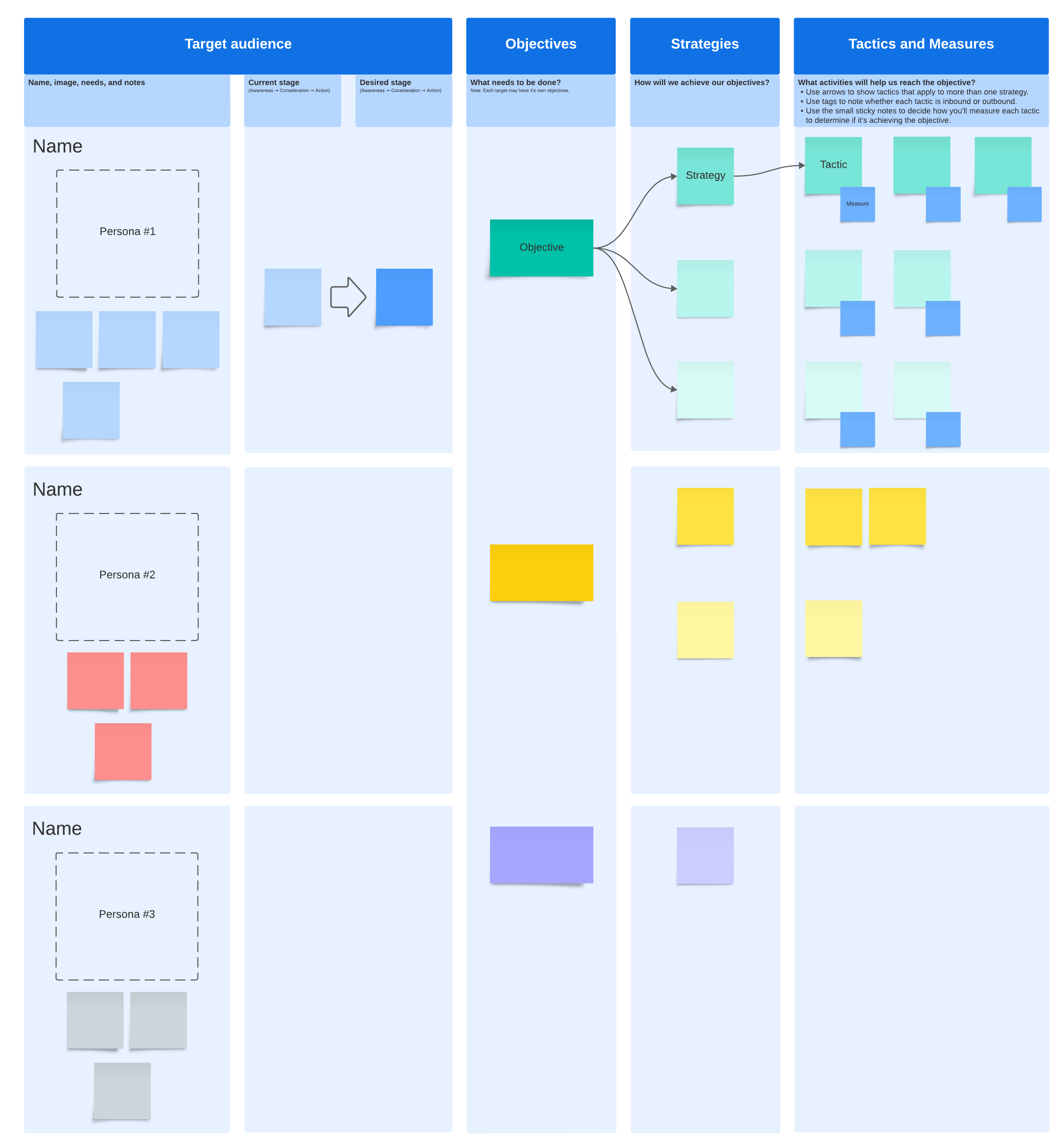
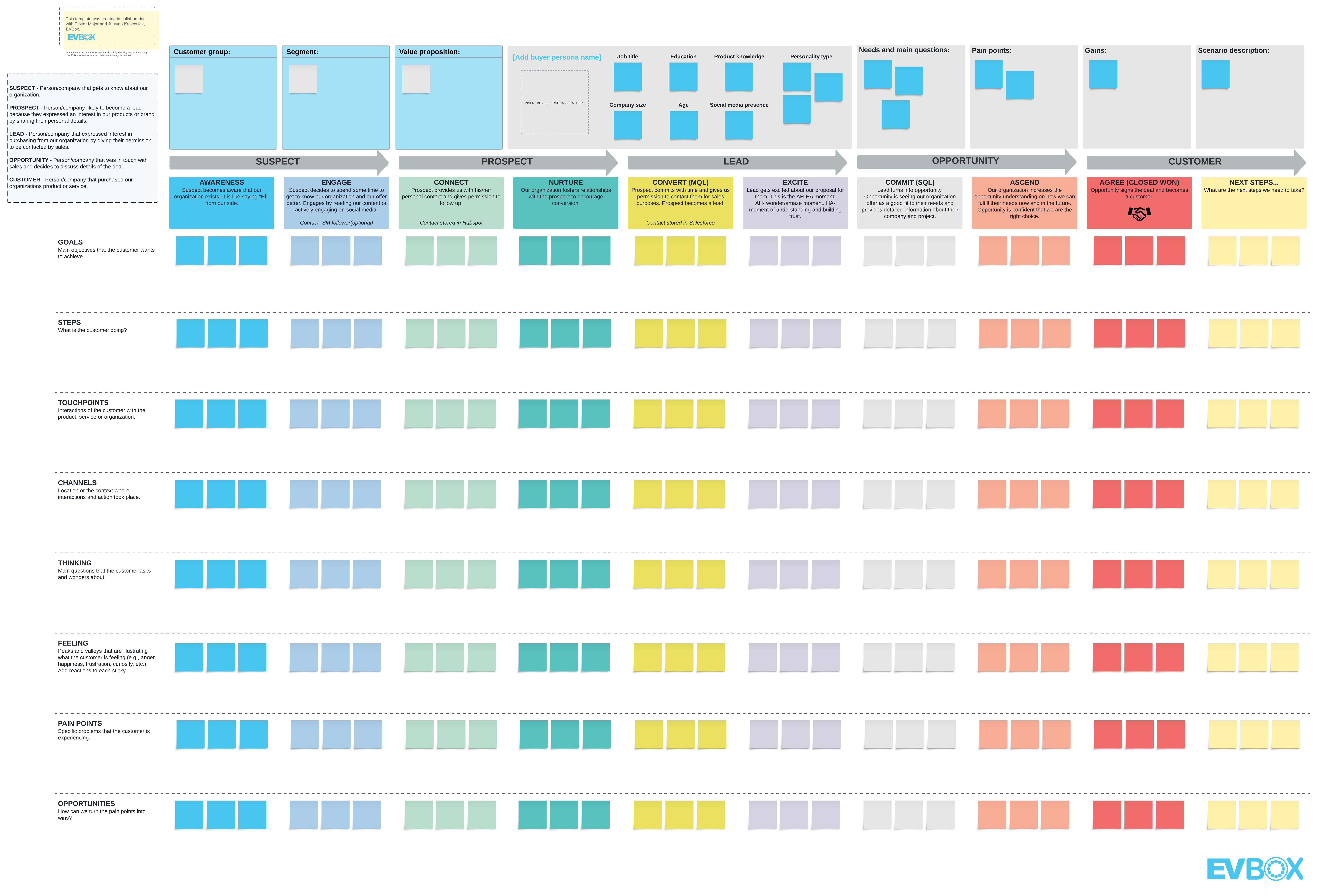
Or, to help with lead gen, build out your customer’s journey using the EVBox customer journey template. With this template, you can dig deeper into each of your buyer personas and visualize each stage of your customer’s journey, from introduction to purchase.
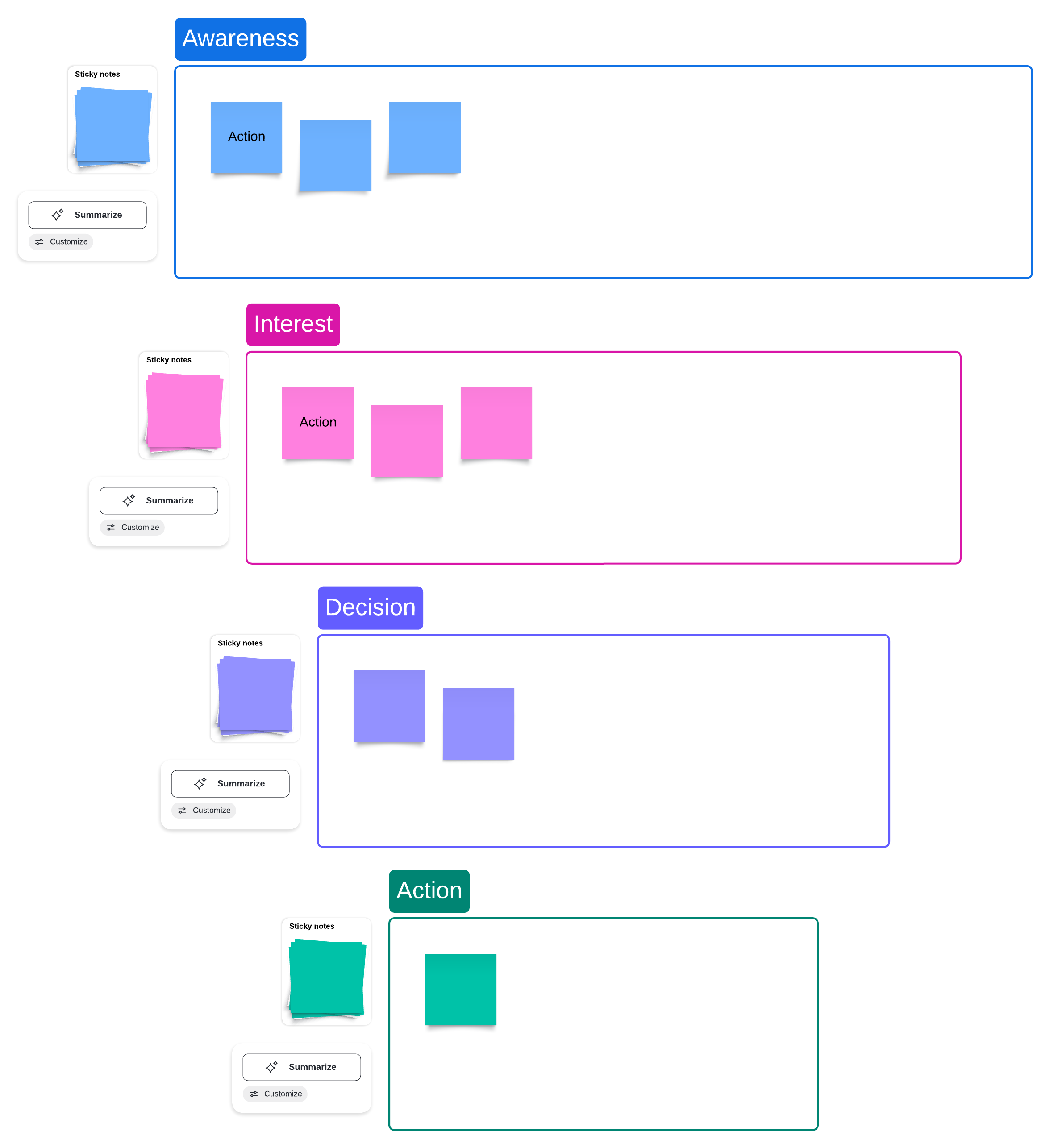
You can also use a conversion funnel template to understand the best ways to guide customers along each step of the conversion path, helping you determine when to use demand gen and when to use lead gen.
Whether you’re launching demand generation or lead generation campaigns—or still determining when the best time for either tactic is—use Lucidspark to visualize action steps and align your team on your overall strategy.
Key takeaways
-
Demand generation helps you raise awareness of your brand.
-
Lead generation helps you convert customers who are already aware of your brand into buyers.
-
Lead gen and demand gen help you convert leads while increasing overall brand awareness, accomplishing both short- and long-term goals.
-
Understanding your goals, timeline, metrics, and distribution channels will help you determine when to launch a demand gen vs lead gen campaign.
-
Use Lucidspark to craft your campaigns, enhance alignment across teams, and visualize your customer journey.

Looking for additional templates to help you analyze customer insights?
Browse templates