
You wouldn’t consider sewing a dress without a pattern or building a house without blueprints. But for some reason, many projects get underway without a defined scope in place, and that’s just as big a mistake as making baklava without a recipe.
In fact, 33% of project managers say the most common reason for project failure is scope creep or unrealistic deadlines.
Understanding scope in project management and how to manage scope within a project is essential for project success.
But the concept of project management scope can be tricky, so we’re here to help.
In this article, we’ll
-
Define scope in project management
-
Review the project scope management process
-
Provide the best project management templates to use
By the end, you’ll understand what a project scope is and how to manage it.
Let’s get started.
What is project scope?
A project scope defines the purpose, goals, and deliverables for a proposed project. Without these key elements, projects can quickly become derailed. That’s why it’s important to not only manage the project, but also to manage the project scope itself.
You’re likely familiar with the four phases of the project management life cycle, which means you already know that “scope” exists within the initiation phase of a project. It’s during this phase that you'll determine the project scope, including:
- Goals of your project
- Justification of the project
- Project requirements
- Project strategy
- Constraints
- Cost estimates
- Budget
- Breakdown of required tasks
- Cost-benefit analysis
- Deliverables
- Deadlines
Once you have a clear understanding of what the project’s goals are and what the deliverables are, you can proceed to set responsibilities, but it’s important to have a scope in place before that. The scope will be a guiding force throughout the project and will help you keep the project on track.

Take a deep dive into how to conduct a project cost estimation.
Learn howProject scope management process
The purpose of a scope management process is to create a scope management plan that keeps your project on time and on track. This process is a process group in our Project Management Body of Knowledge (PMBOK) guide, which we recommend reading for additional context.
A basic project scope management process includes the following steps:
1. Plan scope management
During this phase, you create a scope management plan to determine how you will define, manage, validate, and control the scope of the project. This part of the process will require you to gather input from stakeholders and review the project charter/project plan.
2. Collect requirements
Before you can begin to define the project, you’ll need to know the exact requirements for the project to accurately predict costs and ensure that deliverables meet the expectations of your stakeholders.
Consider creating a project charter, business case, or other documentation to gather the necessary information. Based on the PMBOK Guide, requirements can include:
- Business requirements: Explanation of why the project should be undertaken and how the project aligns with the company’s strategic objectives
- Stakeholder requirements: Requirements determined after identifying and engaging with stakeholders
- Solution requirements: Features, functions, and characteristics of the product required for it to meet business and stakeholder requirements
- Transition requirements: Any actions needed to implement or transition from as-is to future state
- Project requirements: Events, processes, and constraints on time and budget
- Quality requirements: Criteria and conditions to validate that the project has been successfully completed (i.e., success factors)
Without knowing exactly what the project’s expectations and targets are, there’s no way to know if the project is successful or unsuccessful.
3. Define the scope
Even seemingly straightforward projects can fall victim to scope creep, opens in a new tab (the ballooning of a project’s original goals).
For instance, you may initially have been tasked with building a landing page for a white paper that includes a simple form, but after the project is underway, the stakeholders change the project’s parameters to include a fully animated embedded video, an interactive quiz, and a customer service bot. Suddenly, something that should have taken only a week to complete ends up taking well over six months because things kept getting added to the project.
Scope creep is common, but you can avoid it with a project scope statement. This detailed documentation includes a list of what’s in and what’s out of scope so that, when someone asks you to add to the project, you can politely (but firmly) point that person to the change control process, opens in a new tab.
A project scope statement should include:
- Purpose of the project.
- Desired results.
- Deliverables.
- Acceptance criteria for project deliverables.
- Exclusions.
- Limitations, including timeframe and cost.
- Procedure to follow in addressing uncertainties.
Create a project scope statement template so your team can consistently follow this process for each project that comes up.
As you determine and communicate realistic timeframes for the project, consider these tools. These are also great to show shareholders so they can weigh in on timelines and deadlines.
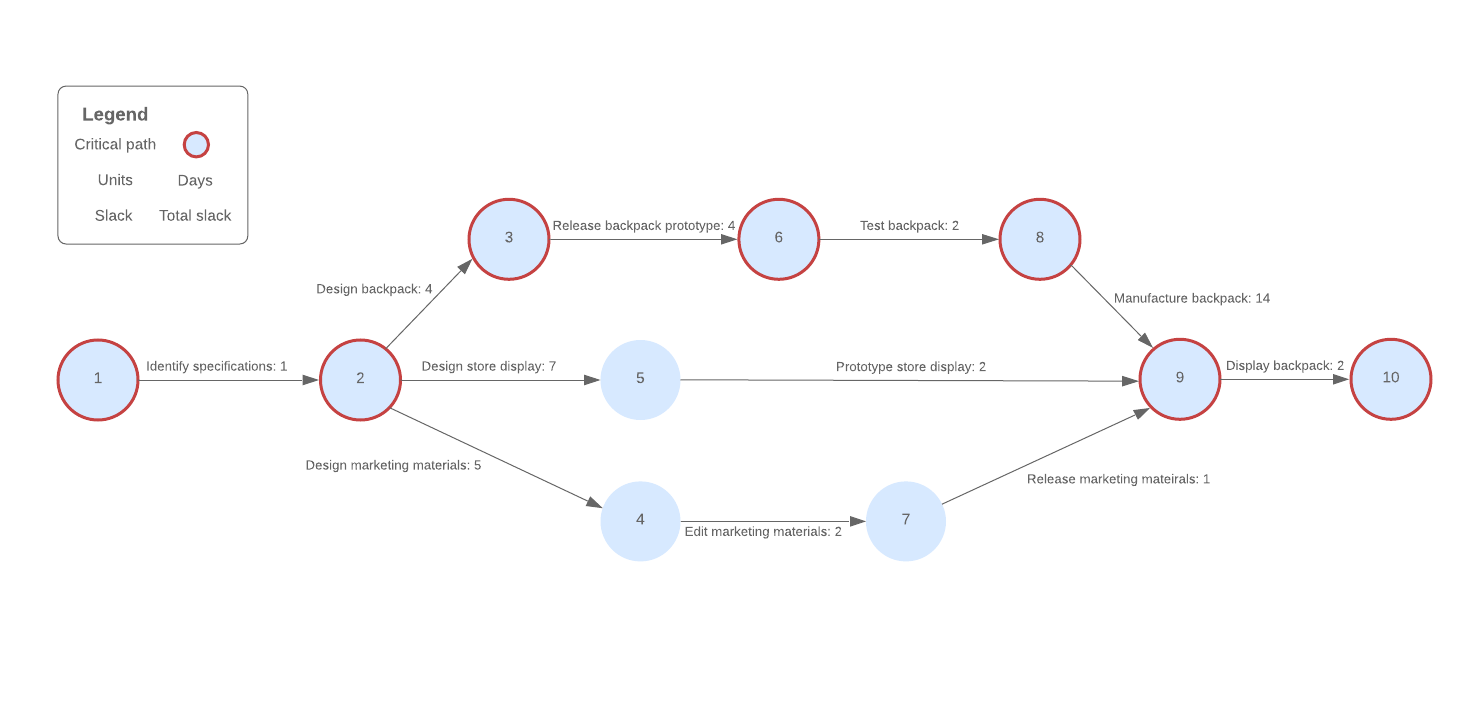
PERT charts
PERT stands for Program Evaluation and Review Technique. It provides for variables the time required to complete each activity in your project scope, which will help you plan for the worst case scenario and still finish the project on time.
Timelines
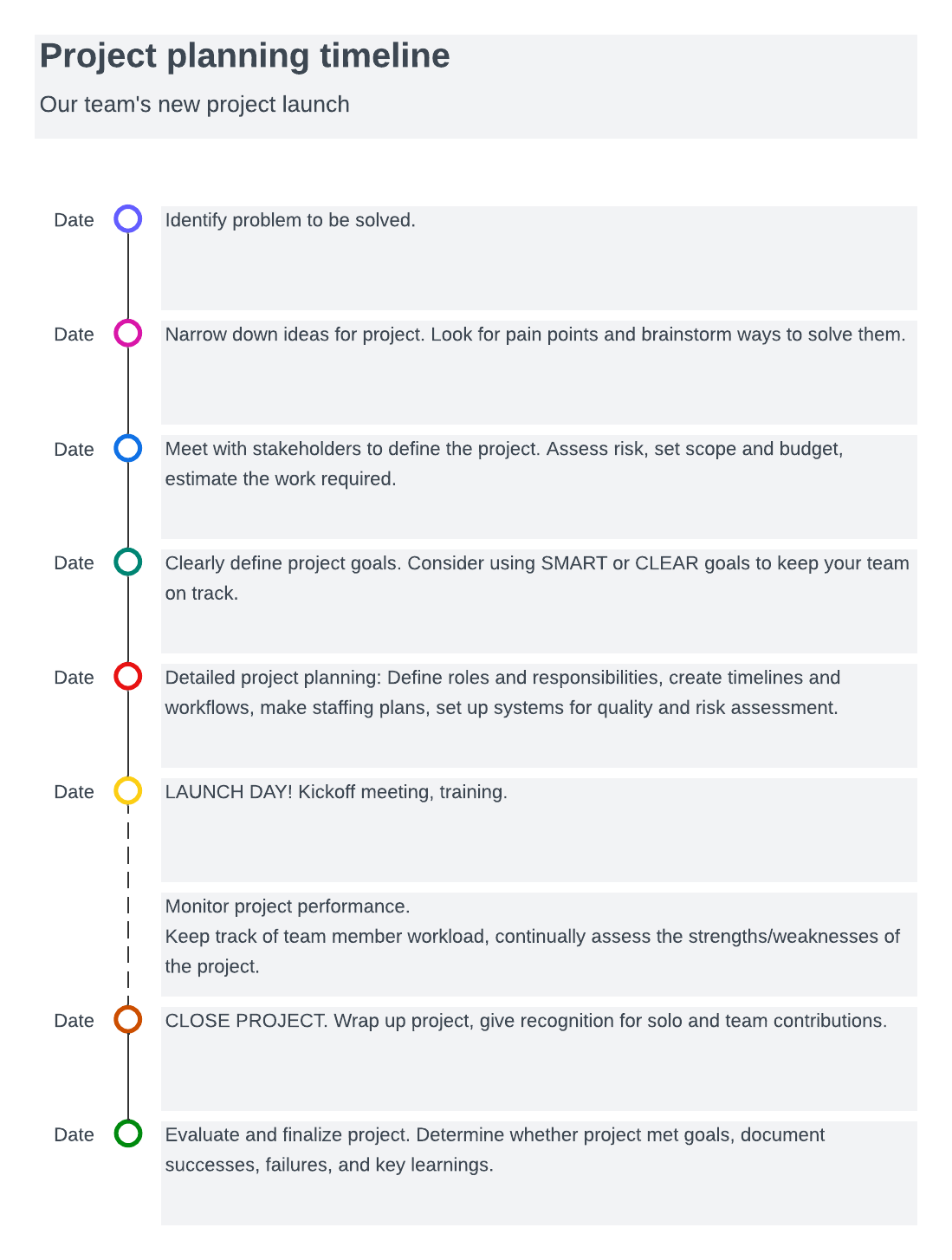
A timeline allows you to map out milestones within a project to their respective deadlines, defining how much time deliverables should take to complete. A good timeline will also help you after the project has started, letting you see, at a glance, which components of the project are in danger of missing their deadlines and which are on track for successful, on-time completion.
4. Create the work breakdown structure
By this point, you have a fairly clear understanding of the project. You know what the parameters are and how the project will be considered a success. You even have deadlines and budget constraints.
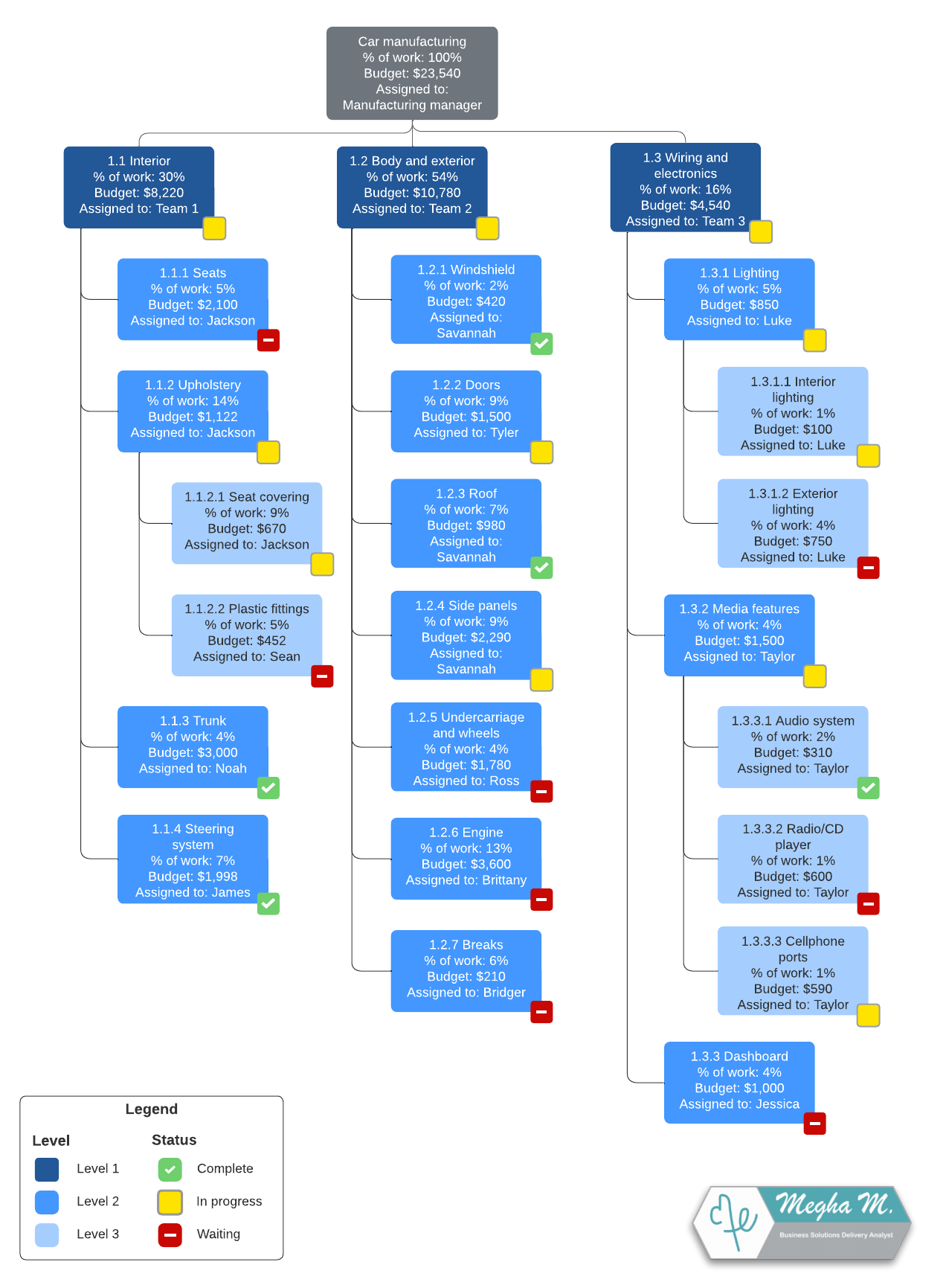
Now, you can take your completed scope template and begin developing a work breakdown structure. Get started with the template below.
First determine the biggest deliverable or product that will be completed at the end of your project. Then, divide those deliverables or products into their component deliverables, and then divide those into their component deliverables or products. The end result is both an overview of the larger project and the smaller deliverables that compose it.
5. Validate scope
Once you have your work breakdown of the project’s deliverables, you’ll need a validated scope process. That’s an established structure of who needs to approve each portion of the project. This ensures that when you complete a deliverable, you already know who needs to sign off on it to keep the project moving forward. You’ll need to define who has the authority to formally approve deliverables before you begin the project.
6. Control scope
We talked about the change control process earlier, and this is when you’ll want to define it. People will constantly want to add or change to your project, so you need to define how people can propose a change, how to determine the impact of the proposed change, and how to decide whether the change is accepted. This process is important for keeping your project in line while still allowing for necessary changes.
Defining the scope of a project is much more involved than just scribbling some project characteristics on a sticky note. With these steps and the templates shown above, it’s much, much easier to work efficiently and systematically as you prepare for projects.

Ready to scope and execute your project? Build a project management timeline in 8 simple steps to keep your team on track.
Learn how