Key takeaways
-
Visualizing enterprise architecture in a way that’s easy to understand and share is key for businesses to align their data infrastructure with business goals.
-
Lucid helps companies around the world visualize data and map complex processes for easier collaboration and transparency.
-
An auto manufacturer, a bank, and a global athletic brand are just a few examples of the types of companies that have used Lucid for their enterprise architecture.
Visualizing and understanding enterprise architecture is essential to ensuring that an organization’s infrastructure aligns with business goals. However, gaining this understanding isn’t always easy, as many organizations have fragmented or complex tool ecosystems, difficulty collaborating, and a lack of visibility into their processes.
By crafting a business blueprint that supports the business from end to end, enterprise architects support overall operations.
Enterprise architects need a way to map complex technical environments, gain stakeholder buy-in, and keep up with digital transformation. Enterprise architecture teams around the world have turned to Lucid as a solution, using data-backed diagramming and robust collaboration capabilities to visualize architecture and accelerate decision-making.
Check out the following ways that enterprise architects have used Lucid to create a single source of truth and increase agility as they save time and money.
Top global athletic brand streamlines brainstorming and decision-making
At this global company, architects develop end-to-end data landscapes and crucial business systems in Lucid to better understand the variety of technical environments that impact their organization. Lucid provides a flexible, intelligent canvas that supports the team’s entire workflow, from the beginning stages of mind mapping to launching precise, color-coded architecture.
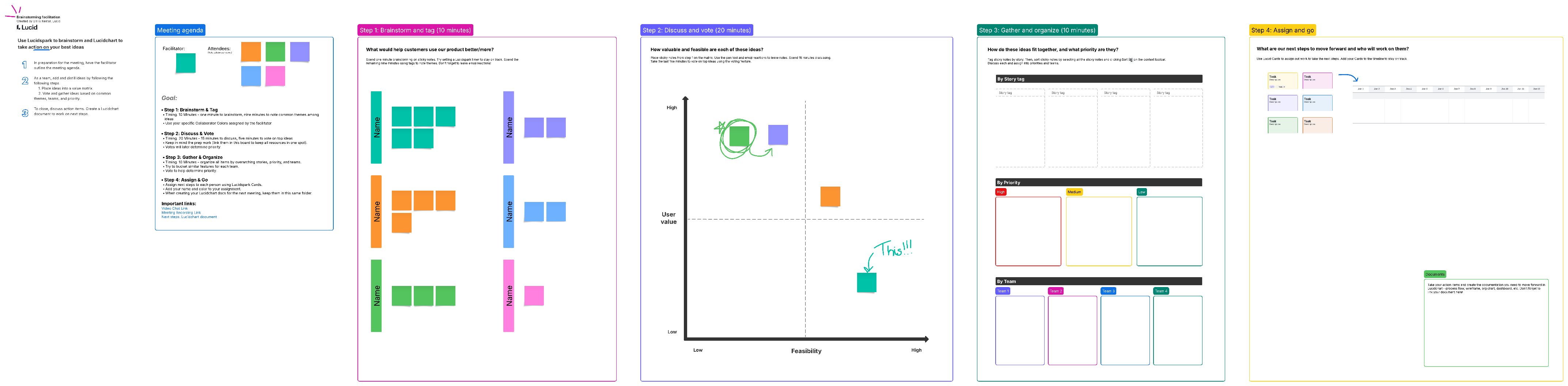
Previously, the data architecture team at this global athletic brand conducted long brainstorming sessions that required the team to do tedious work transposing information after the sessions were complete. Now, the team shares ideas and visualizes solutions in Lucid during shorter, virtual brainstorming meetings where everything’s documented in one place. By using Lucid, the team can quickly get started with brainstorming templates and use Lucid AI to sort and summarize their ideas for enhanced decision-making.
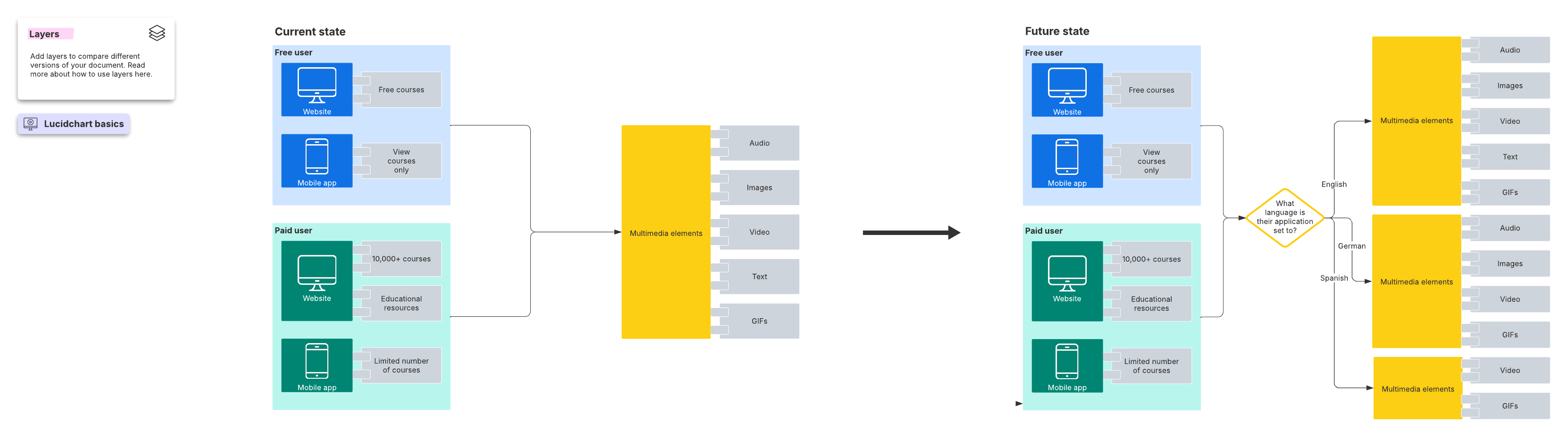
The company’s architects also leverage Lucid’s data linking capabilities to streamline how they update their information architecture. They use the power of pre-formatted, data-backed shapes that they can refresh in a matter of seconds to match their data source.
The impact:
-
By using Lucid, enterprise architects have shortened ERD creation sessions from eight hours to two hours, a 75% reduction in time.
-
Utilizing Lucid’s data linking capabilities to update diagrams allows enterprise architects to reduce time from a full week of work to two minutes—600x faster than before.
Top bank accelerates diagramming with intelligent features
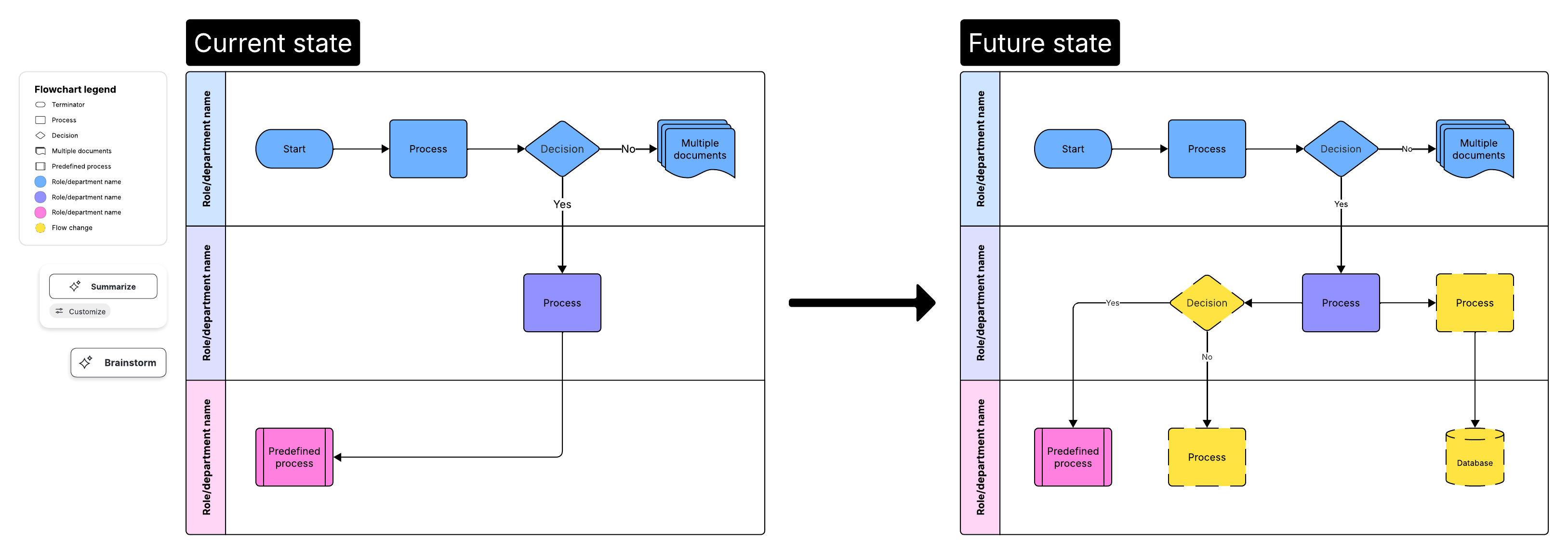
Enterprise architects on the payment team of a top bank leverage Lucid to document their current state, brainstorm new products, and gain consensus on decisions as they deliver new services. By using Lucid, architects can document their existing systems and processes quickly, thanks to intelligent features such as conditional formatting, which helps identify inefficiencies, and Lucid AI to generate diagrams instantly.
Lucid also unlocked the power of asynchronous collaboration for the company, allowing team members to make contributions at different times and saving hours that would have otherwise been spent in long, synchronous meetings.
The impact:
-
Enterprise architects report that they are 10x more efficient in collaboration because of the Lucid Suite.
-
Brainstorming asynchronously has replaced hour-long meetings and saves up to 80 hours of meeting time for teams.
Global auto manufacturer simplifies data entry and approval workflows
Enterprise architects at this global company have switched from Visio to Lucid to create visual documentation of their system architecture. Thanks to Lucid’s advanced collaboration features, architects can share and edit diagrams without any extra steps or considerations. The team created a central repository in Lucid for their design frameworks and templates, bringing everything into one place that’s easier to access for team members.
Additionally, enterprise architects created a custom integration in Lucid, built via an extension API. The integration prompts architects with a custom form and specific questions that allow them to identify the right stakeholder for review and record approval in the diagram. This API extension also speeds up data entry in complex templates and is used widely across the team.
The impact:
-
By switching from Visio to Lucid, enterprise architects reduced the time required to design architecture diagrams from one month to one week.
-
Enterprise architects save 140 hours per project and are 5x more efficient with Lucid.
Financial services company enhances collaboration and transparency
The architecture team at a financial services company leverages Lucid to streamline their infrastructure design process by adopting more efficient collaboration. In Lucid, the team uses features such as breakout boards and Visual Activities to guide discussions and ensure that everyone has a chance to provide input. This alignment has optimized workflows, reduced errors, and improved the pace of decision-making.
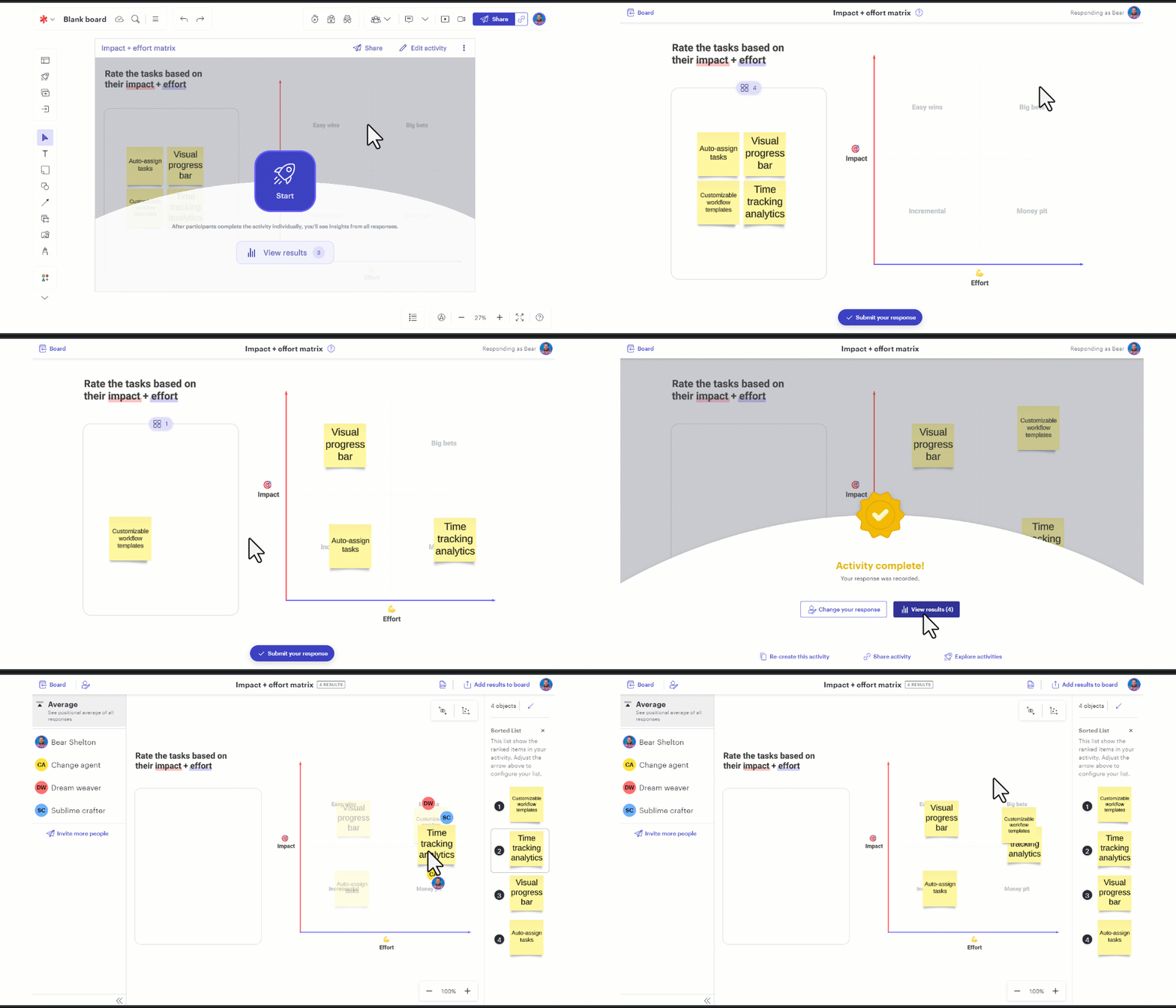
The VP of enterprise architecture at this company has championed the adoption of Lucid within the organization’s platform team. The team uses Lucid to visualize complex processes and enable team members across various locations to collaborate seamlessly. With Lucid’s real-time capabilities, they have removed silos and achieved better understanding, which enables the platform team to work with agility and accelerate the overall design process.
The impact:
-
By leveraging real-time collaboration in Lucid, enterprise architect project teams save six hours every two weeks per team member, which equates to $500,000 per year per team.
-
Standardizing on Lucid across the company saves over $200,000 a year on tech spend.
Devoteam creates a single source of truth for documentation
Before Lucid, the enterprise architecture team at Devoteam didn’t have a common way of working or a central location to host and share knowledge. Enterprise architects used a variety of tools and had multiple versions of documents.
With the introduction of Lucid, the team now has a centralized, visual repository that provides equitable access to knowledge and a consistent way of working. By using Lucid as a single source of truth, the team easily transfers internal knowledge. Additionally, when someone transitions to a new team or leaves the business, information is retained via the central repository in Lucid.
The impact:
-
Diagrams that used to take the enterprise architecture team two days to create now only take 30 minutes to create in Lucid, leading to a 96% time savings.
Use Lucid to visualize and streamline your enterprise architecture
Lucid helps companies around the world visualize enterprise architecture in a clear, easy-to-understand way. With data linking capabilities and templates that are ready-made for diagramming, Lucid makes it easy for architects to better understand technical environments and create repositories of information. And, with the Process Accelerator, Lucid empowers enterprise architects to better manage and maintain documentation to maximize usability. In the Process Accelerator, architects use built-in approval flows to streamline stakeholder feedback and drive consistency.
If you need a way to map technical systems and processes from end to end or centralize documentation, check out Lucid today and get started on redefining how your enterprise architecture is designed and shared.

See how Lucid makes a difference
Boost transparency and understanding across your business with the power of the Lucid Suite.
Contact us