At Ardoq, our mission is simple but ambitious: to help organizations navigate change with confidence. Whether the challenge is rationalizing a complex IT landscape, steering through an M&A, or planning a multi-year cloud migration, transformation always depends on one thing: confident, data-driven decisions.
We believe those decisions should be powered by living, contextualized data—not by static reports that start aging the moment they’re published. But even the best data is only as powerful as the collaboration around it. Real transformation happens when teams can make sense of data together, visually and collaboratively.
Enterprise architecture (EA) helps organizations understand how people, processes, and technology connect to deliver business value, and that’s exactly where Lucid and Ardoq fit. Ardoq provides the living, contextualized data across your enterprise, and Lucid turns it into shared visual understanding so cross-functional teams can align quickly and act with confidence.
Why did Ardoq and Lucid build this integration?
Enterprise architecture is valuable not just for what it documents, but for what it enables. We have learned that communication styles across teams can differ as much as their architectures. Some people think in diagrams, others in workflows or data tables. Ardoq excels at connecting structured knowledge, while Lucid empowers teams to design, visualize, and collaborate in real time.
Our partnership with Lucid was built to bring those worlds together, helping enterprise and solution architects move seamlessly between structured data in Ardoq and visual collaboration in Lucidchart, using the tools and methods they already know and trust.
The Lucid developer platform provided the flexibility and support we needed to make that vision a reality. Through OAuth 2.0, users can securely connect their Lucidchart documents directly from Ardoq. Lucid’s embedding technology also enables users to view and interact with Lucid diagrams natively within Ardoq, removing the need to switch between applications.
In short, our goal was to turn architecture diagrams from static visuals into living, collaborative blueprints for change.

How does the Ardoq + Lucid integration work?
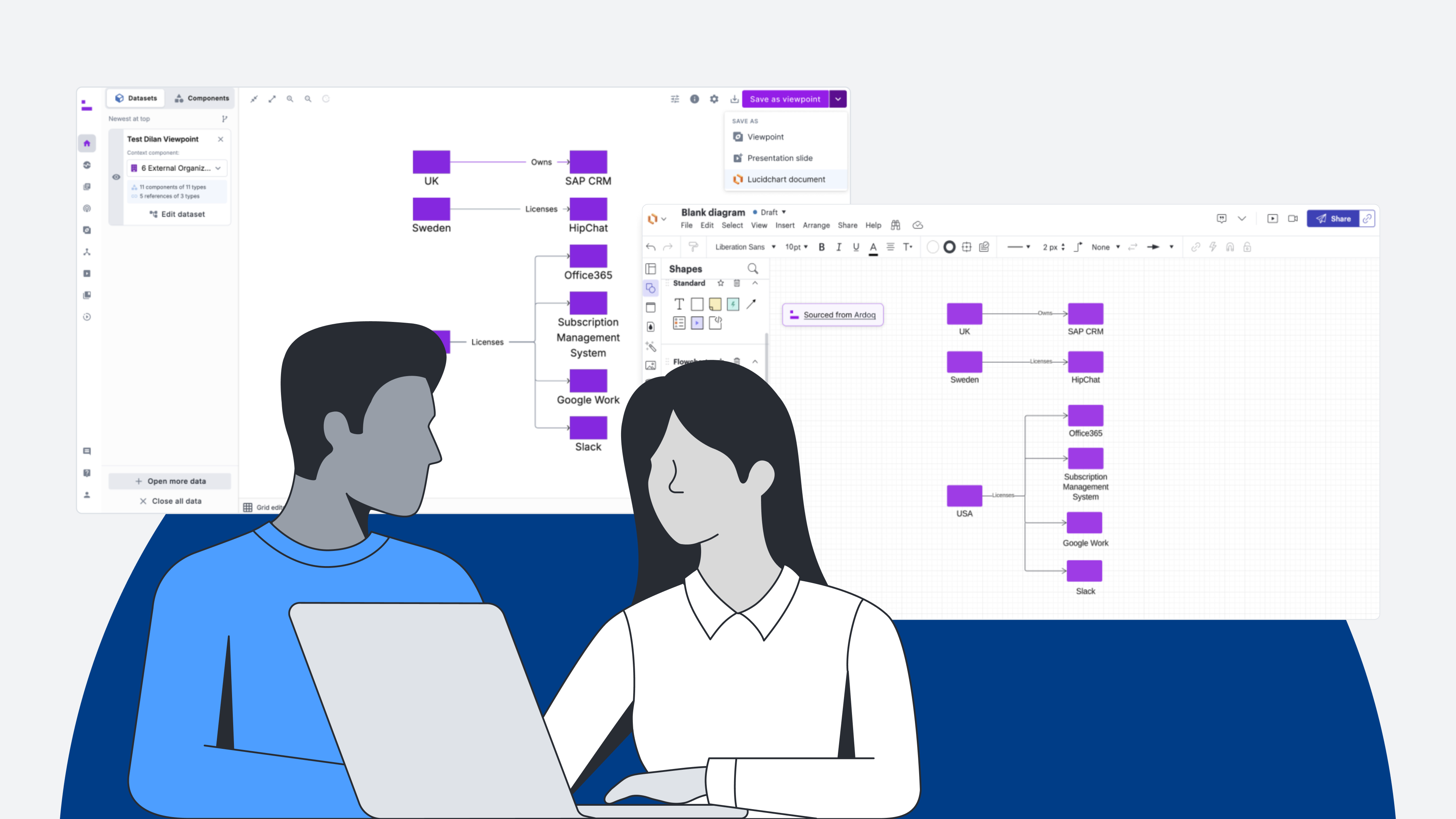
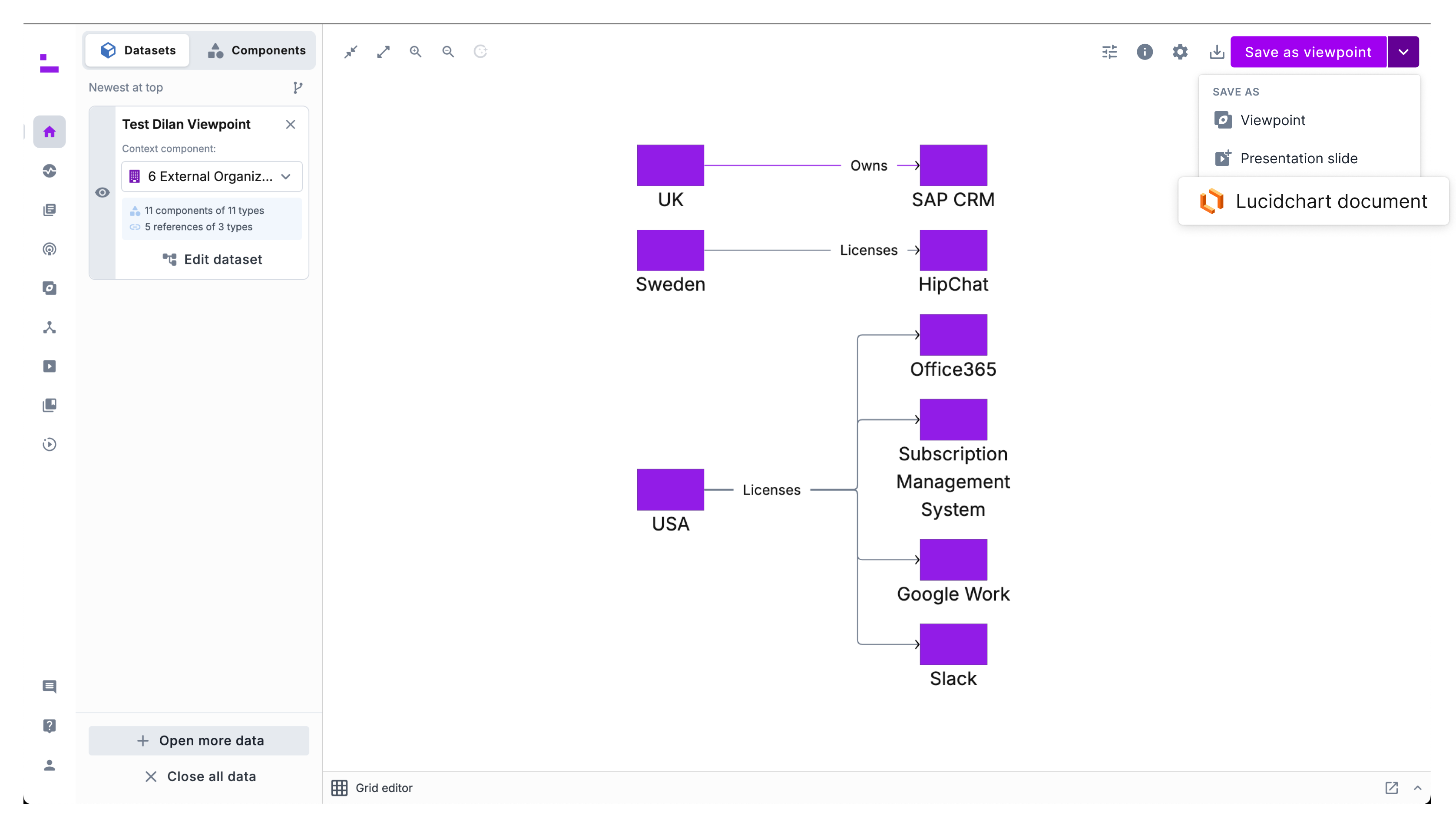
A typical workflow might begin with “as-is” data curated in Ardoq, such as applications, integrations, technologies, and business capabilities. Teams can then export this structured data into Lucidchart, where:
- Shapes represent applications, technologies, capabilities, etc.
- Arrows show connections between the shapes.
- Groups map to domains or capabilities.
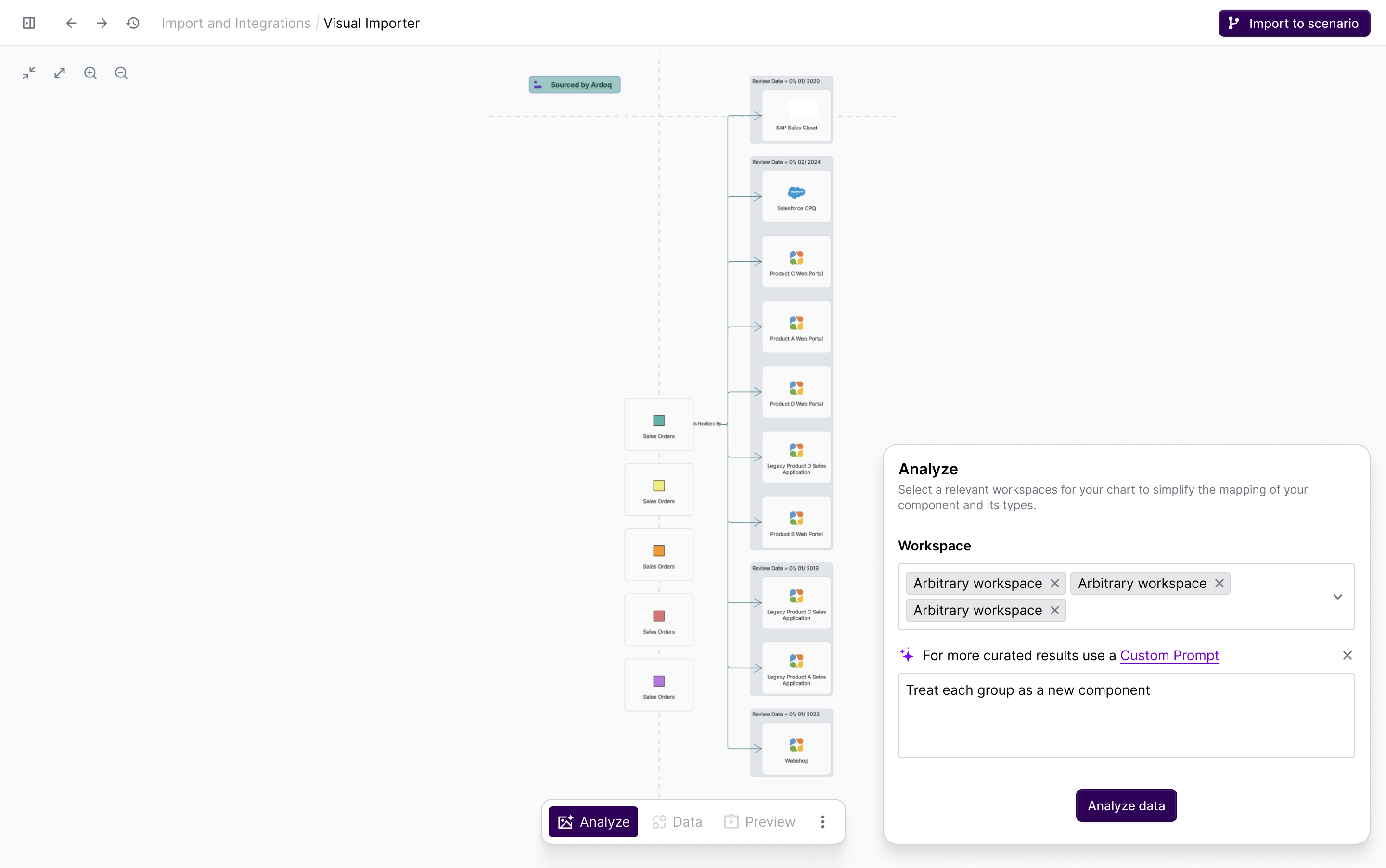
Once the future state is defined, teams can export it back to Ardoq. Using Lucidchart’s API and Ardoq’s AI-assisted analysis, visual data is automatically reconstructed into Ardoq’s structured model. Known components are matched, new ones flagged, and all relationships preserved. This model allows enterprise architects to compare current and future states, visualize changes, and monitor progress in real time.
Together, Lucid and Ardoq create a closed loop between data, design, and delivery, bridging structured enterprise data with collaborative visual planning.
How customers are using the integration today
Our customers are using the integration to speed up cloud migration and application modernization projects, more easily customize visualizations, and share those visuals with the broader team. By importing current-state architecture from Ardoq into Lucidchart, teams can co-create future-state diagrams in workshops, capture decisions visually, and then sync those updates back to Ardoq immediately.
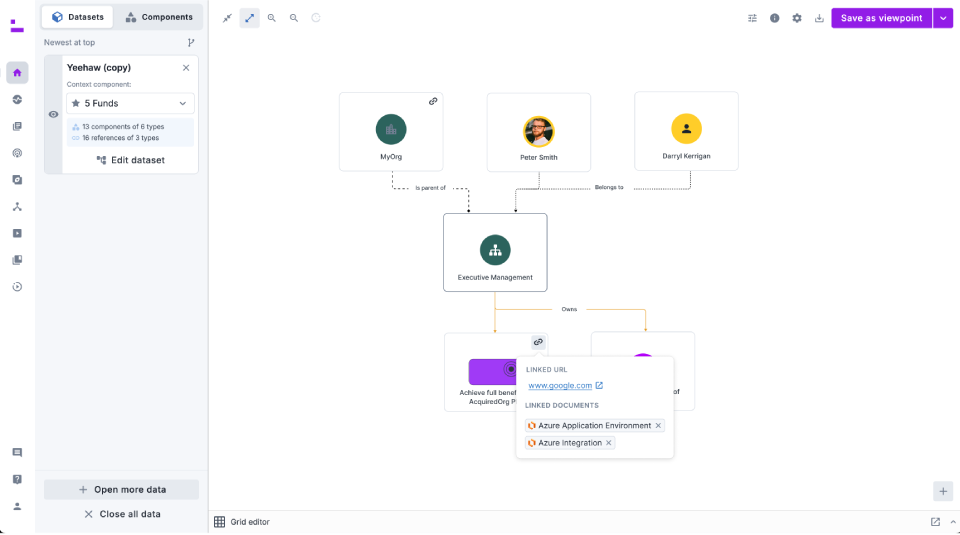
Others are taking advantage of Lucid’s flexibility to attach detailed infrastructure diagrams, created with Lucid’s Cloud Accelerator, directly to Ardoq components. For example, a server node in Ardoq can be linked to a full network diagram that shows gateways, microservices, and authentication layers. This creates a connected experience where diagrams and real-world architecture data coexist seamlessly within the same workspace.
The result is faster alignment, deeper context, and more confident decisions.
"We can take a highly complex technical diagram through Ardoq’s Lucidchart Importer and map it cleanly into our EA model as structured data. What used to take days now takes minutes, and a new stakeholder audience sees the value of Ardoq.”
—Senior Architect, Healthcare, North America
Looking ahead
This integration is only the beginning. Soon, users will be able to power analytics dashboards in Ardoq directly from their Lucid-driven Scenarios, tracking metrics such as project completion, implementation speed, and overall progress at a glance.
At Ardoq, our approach to AI and integration is simple: It should serve real use cases, not trends. The Ardoq + Lucid integration was designed with that in mind, helping organizations turn insight into impact and design into execution, one collaborative diagram at a time.
Together, Ardoq and Lucid are helping enterprise architects transform static architecture documentation into living blueprints for change, where everyone can see, shape, and share the path forward.

Connect Ardoq and Lucidchart now to collaborate on your enterprise architecture insights.
Get startedAbout Ardoq
Ardoq is a leading enterprise architecture platform that helps organizations plan, execute, and navigate digital transformation with confidence. Built for modern, data-driven enterprises, Ardoq connects technology, people, and processes to give leaders a clear, real-time view of their organization.
By turning complex systems into living data models, Ardoq empowers teams to make smarter decisions, manage change proactively, and communicate transformation across every level of the business. From cloud migration and application modernization to strategic portfolio planning, Ardoq provides the insights and flexibility needed to drive lasting impact.