Key takeaways
- Improving the digital employee experience, that is, how employees interact with and use technology for reaching business outcomes, is a strategy for reducing security risk, increasing engagement, and boosting productivity.
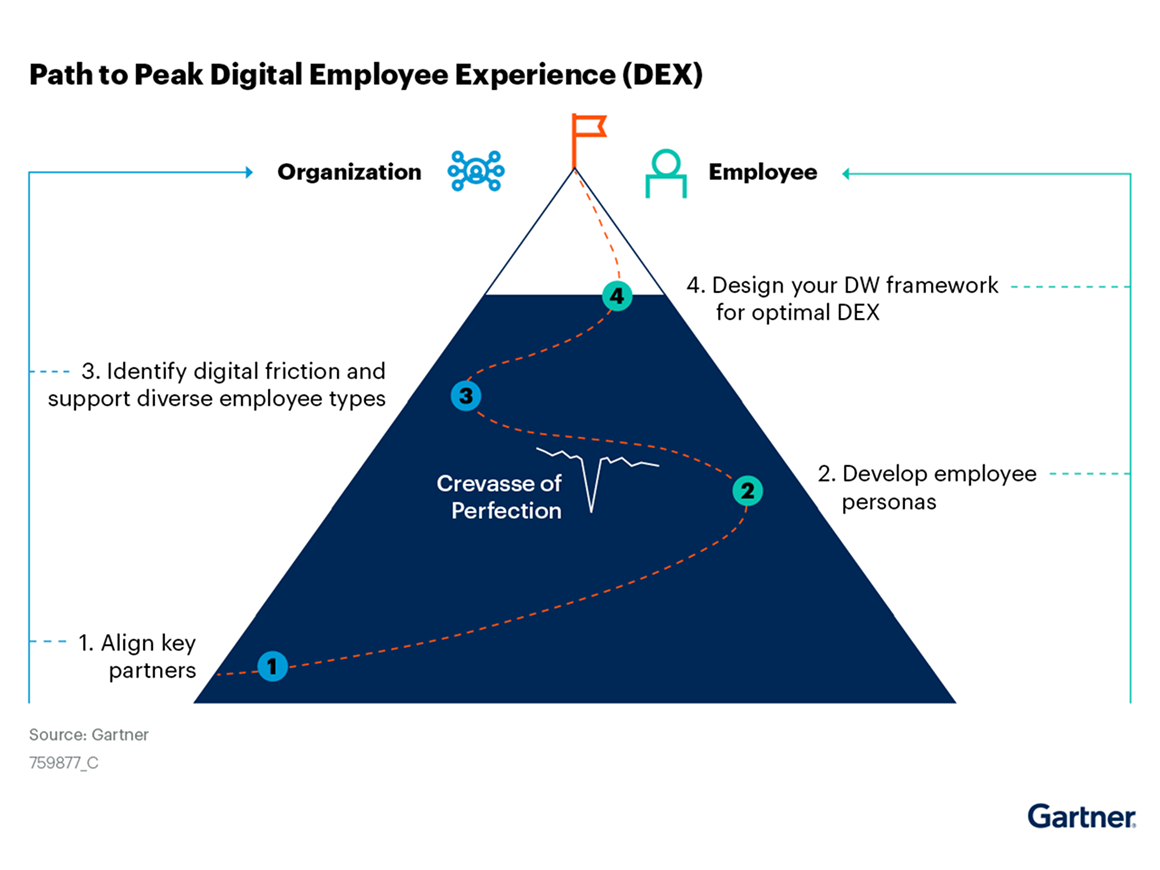
- In a 2023 report, analyst firm Gartner® details four steps for delivering peak digital employee experience excellence.
- Lucid is key to a digital employee experience strategy, with customizable templates and intelligent capabilities for each step, including aligning with stakeholders, building personas and user journey maps, and planning technology rollouts or consolidations.
The workplace has seen its fair share of change over the past few years: the sudden shift to remote work, followed by the evolution to variations of hybrid work, all alongside the introduction of technologies like cloud computing and AI.
Of course, each of these changes came with implications for an organization’s tech stack and, by extension, the employee experience with the tech stack. Unsurprisingly (and unfortunately), for many organizations, the digital employee experience was an afterthought—a coincidental byproduct of a changing tech stack—not an intentionally curated experience.
This lack of intention has led to a subpar digital employee experience today, with less than half (49%) of employees believing their organization supports them with consistent tools and processes to work effectively from any location (Cisco Global Hybrid Work Study 2025).
What’s more troubling is that 89% of employees admit to using personal devices or apps for work simply because they find them easier to use than company-provided tools (Diversified Technology Maturity Survey). In other words, a negative digital employee experience introduces dangerous security risks, hinders productivity and alignment, and leads to disengaged employees.
The solution? Gartner® has identified four steps that digital workplace leaders can take to deliver a peak digital employee experience. In this blog post, we’ll walk through the Gartner recommendations for improving the digital employee experience and provide our own tactical tips and templates for each step.
What is digital employee experience?
According to Gartner, “digital employee experience is a strategy that focuses on the technology experience that companies offer to employees and is a critical contributor to overall employee experience” (“Deliver Peak Digital Employee Experience Excellence in 4 Steps,” June 15, 2023).
Essentially, digital employee experience (DEX) refers to how an employee interacts with the digital tools they use in the workplace, including communication platforms, HR systems, task management tools, and so on. Given the sheer amount of digital tools teams use today, regardless of whether they work remotely or in person, DEX needs to be a key consideration when designing any employee experience strategy.
The benefits of a positive digital employee experience include increased employee engagement, improved recruiting and onboarding outcomes, higher adoption rates of digital workplace applications, less shadow IT, and the acceleration of change and new ways of working.
At Lucid, we believe that digital employee experience is only growing more critical as businesses continue to fine-tune their hybrid work arrangements and adopt new technology, with AI adoption being the greatest focus today. Teams need to be able to effectively use new technology, whether that’s a remote collaboration tool or generative AI, in their day-to-day workflows if organizations wish to maximize the value of these tools. And if teams don’t know how or prefer not to use the tool, then the tool essentially becomes shelfware.
How to improve the digital employee experience (with templates)
The end goal is a friction-free, seamless employee experience, but how do you get there? With the Gartner step-by-step path and Lucid’s tips and templates to steer you in the right direction, you can reach the peak of employee experience.
Step 1: Align key partners in employee experience
The employee experience encompasses far more than technology—it’s also influenced by physical environments, culture, and every interaction from the hiring process onward. Even though all of these factors influence each other, ”employee experience efforts are siloed into disparate business units for HR, IT, and corporate real estate.”
That’s why the first step to delivering a unified DEX is to bridge these silos. Gartner recommends that “the digital workplace leader take a leadership position around employee experience and not just anticipate that other functions have it handled.”
With Lucid, digital workplace leaders can bring teams together across functions on a shared canvas to collaborate, brainstorm, and plan. Here’s how:
- Create a team hub to centralize documentation and updates. With team hubs, you can create a single source of truth for all employee experience documents, including personas, employee journey maps, onboarding processes, and technology implementation plans.
- Use Visual Activities to align on priorities. Share interactive surveys, or Visual Activities, to capture input across the organization on priorities and automatically synthesize the results to see trends. Participants can complete the survey in real time or asynchronously, so you don’t have to wait for a live meeting to align. Use this data to understand concerns and outline the next steps for improving DEX.
- Stay connected with integrations. Lucid connects with your most-used apps, such as Slack or Microsoft Teams, to streamline communication. With these integrations, DEX stakeholders can receive notifications about Lucid documents in the apps they’re already working in.
Step 2: Develop personas that drive a successful digital workplace strategy
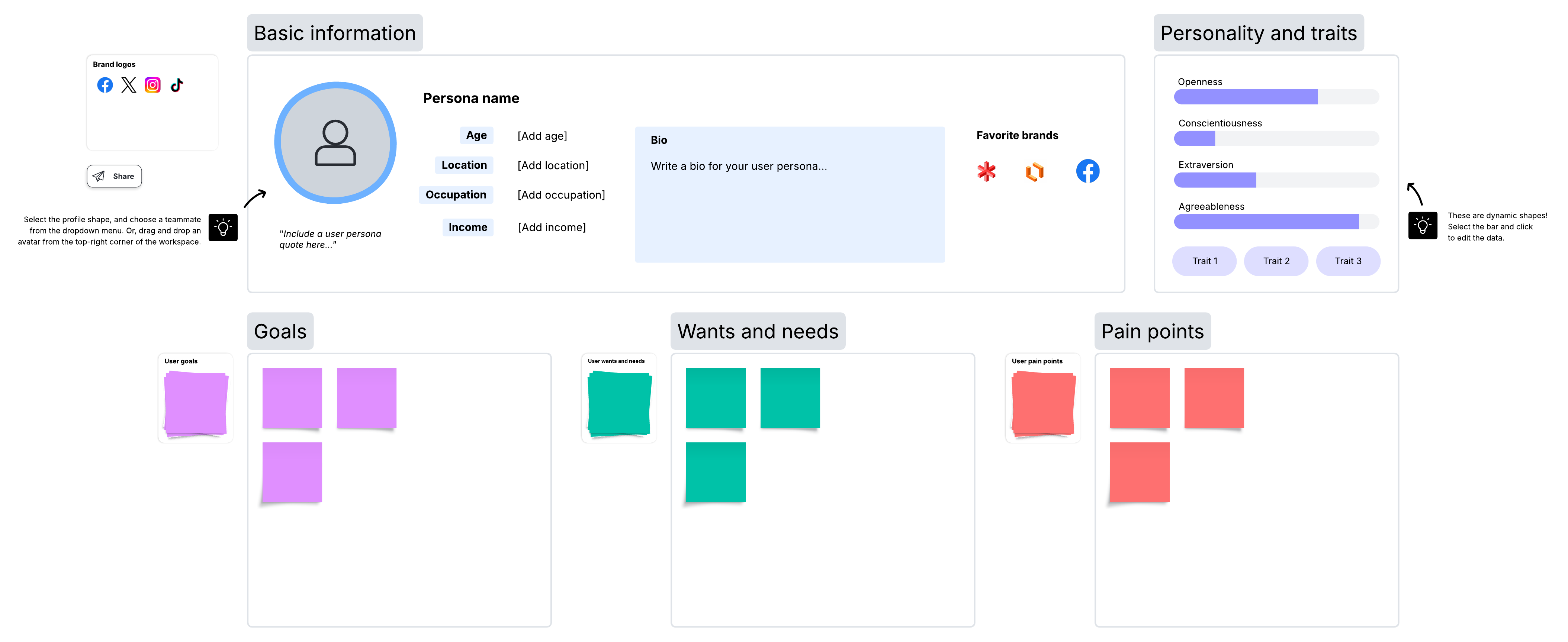
Personas are a well-known and long-revered tool for marketing and product teams looking to better understand their customers. But they’re also useful for digital workplace leaders seeking to better understand their employees’ goals and challenges with the tools they use.
“In order to provide a differentiated digital employee experience, digital workplace leaders must know their employees. And personas are one of the most powerful tools they have to be empathetic and anticipate what employees with similar behaviors and preferences care about.”
—Gartner, “Deliver Peak Digital Employee Experience Excellence in 4 Steps,” June 15, 2023
While personas are a powerful tool for empathizing with employees, Gartner warns that “it’s very easy to get stuck in a persona-building trap in the pursuit of perfection.” There’s no need to create a persona for every employee or to spend too much time gathering demographic data.
In Lucid, you can quickly and collaboratively create employee personas, avoiding the crevasse of perfection. Here’s how:
- Gather data on a shared canvas. Whether you send out surveys or conduct employee interviews to gather data, you can record responses directly in Lucid.
- Use AI in Lucid to spot patterns. Once you’ve gathered data, you can use AI to quickly sort sticky notes or summarize your board, making it easy to find the trends that will inform your personas.
- Using a template to get started. Kick-start your user persona creation with a ready-made template. As you learn more about your employees, you can easily update the persona documents to reflect the latest information.
Step 3: Identify digital friction and support diverse employee types
The next step is to then use your personas to identify ways to improve the digital employee experience and help employees get full value from digital technology. Gartner recommends using the personas to develop digital dexterity, hunt digital friction, support hybrid work, enable business technologists, and master employee onboarding.
Digital dexterity, that is, “an employee’s ambition and ability to use technology for better business outcomes,” is growing more important as organizations implement tools intended to transform the business, such as AI. Personas can provide visibility into what skills employees need to develop in order to maximize the investment.
Digital friction, on the other hand, refers to the “unnecessary effort an employee has to exert to use data or technology for work.” How can you easily identify digital friction? By mapping the employee journey.
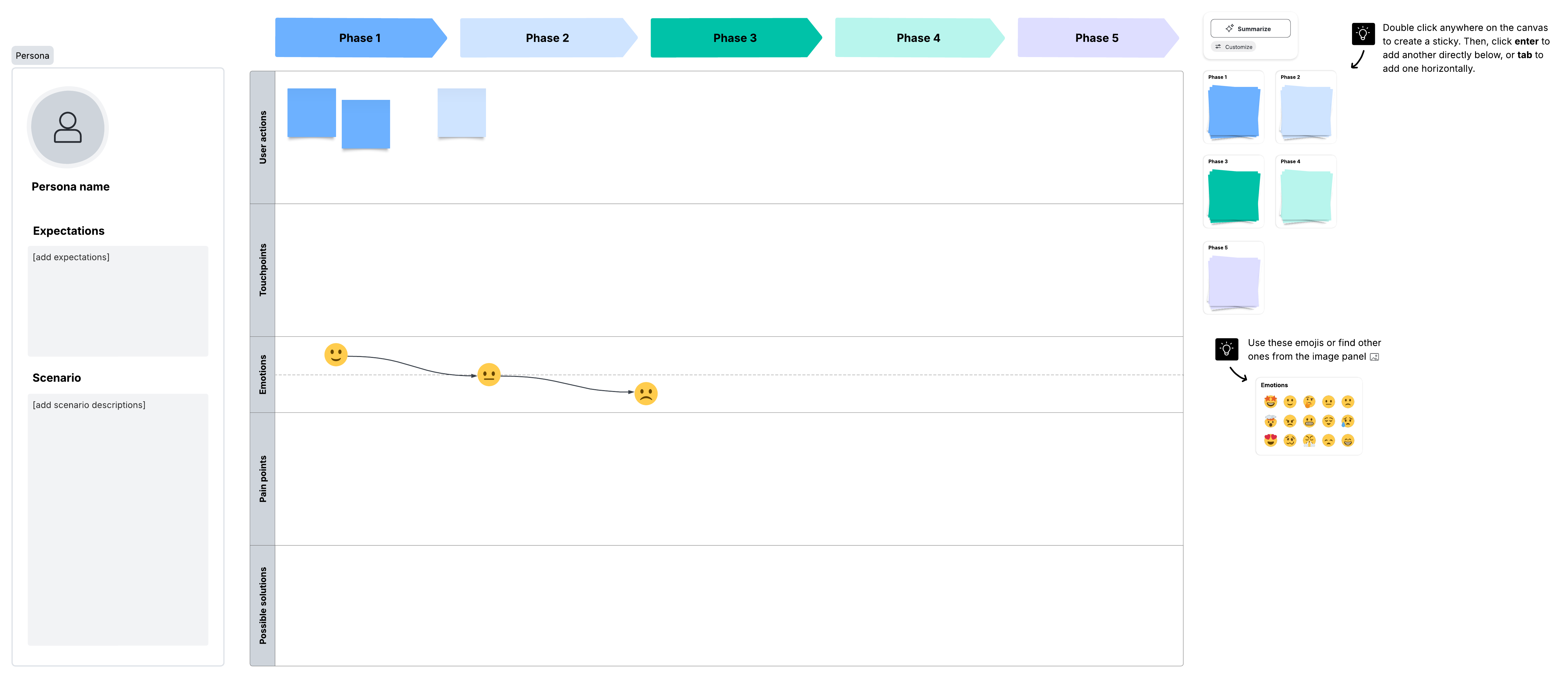
A journey map is a powerful visual tool that helps you understand your employees’ pain points and challenges at different stages of a workflow. For instance, you could map out the steps one of your personas has to take to get a new application approved. Or, you could use an onboarding journey map to understand what friction new employees face with technology.
Personas and journey maps also help you understand how employees collaborate in office and remotely, enabling you to design a hybrid workplace that offers the best DEX for all preferences.
Lucid can help DEX leaders both identify digital friction and support diverse employee preferences and skill sets. Here’s how:
- Accelerate the process of creating employee journey maps. Get started with a customizable template to map out key touchpoints and the employees’ feelings—including frustrations or confusion—at each of these touchpoints. Start by identifying the current state; then, map out the ideal journey and compare the two versions using layers or conditional formatting to identify the most important areas to improve.
- Collect input on different stages of the employee journey. Invite stakeholders to collaborate on the journey maps, leaving sticky notes or comments with feedback. Or, use a visual activity to group touchpoints by how positive or negative they are so you can identify the greatest friction points.
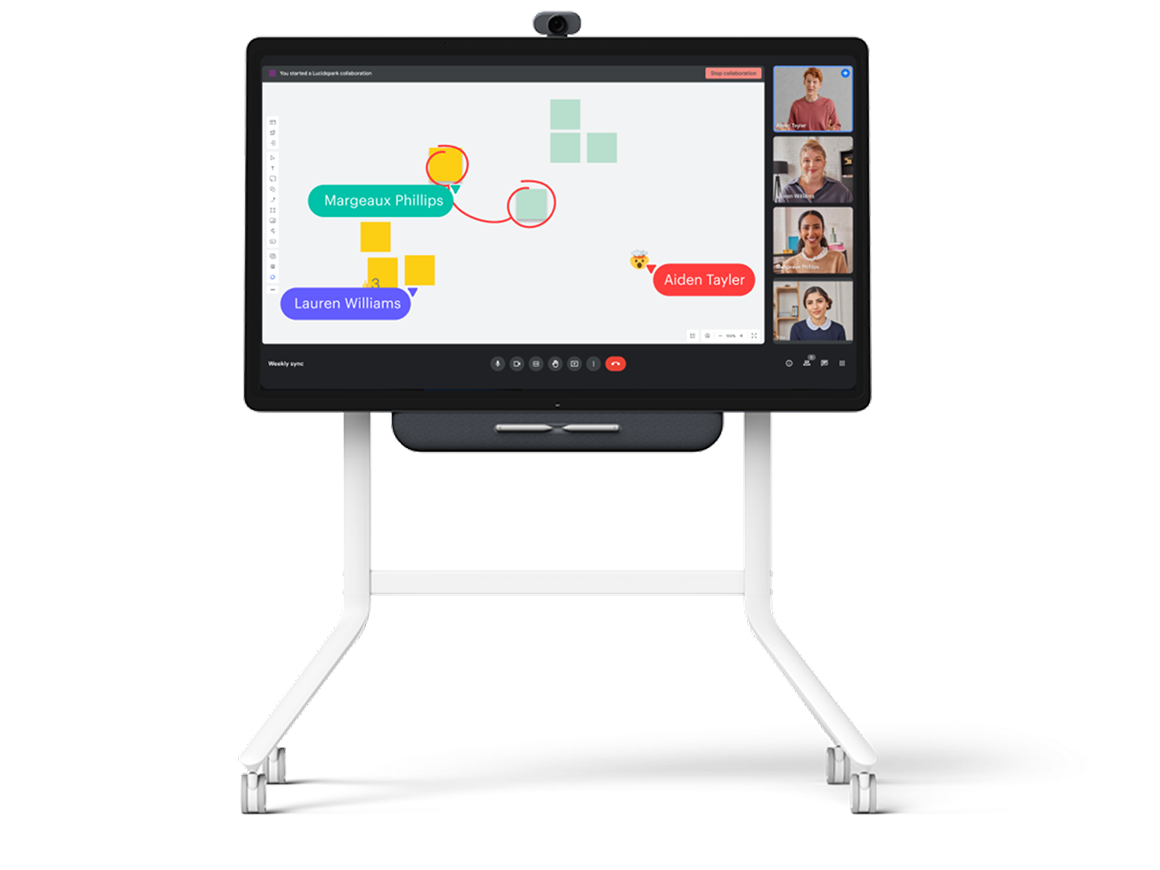
- Integrate Lucid with interactive whiteboards to support hybrid teams. Connect Lucid with interactive whiteboards such as Zoom Rooms, Neat Boards, Cisco Boards, or the Google Board 65 to mimic traditional whiteboard sessions for in-person employees while ensuring remote participants can contribute equitably.
Step 4: Deliver exceptional employee experience through a digital workplace framework
The last step to improving the digital employee experience is to use all you’ve learned in the previous steps to build a digital workplace technology strategy that supports your employees (and therefore, the bottom line).
To guide your strategy, Gartner has developed the digital workplace framework (DWF), an “experience-driven architectural framework” that breaks the digital workplace into distinct hubs for different employee activities.
“Equipped with a more complete and empathetic understanding of employee priorities, needs, and challenges via personas and journeys, digital workplace leaders can use the DWF to segment, coordinate, and focus their DW technology efforts.”
The digital workplace framework includes hubs for everything from employee engagement (e.g., recognition and communication) and employee services (e.g., benefits and professional development) to what Gartner has coined the new work hub—the centerpiece of the DWF that supports core work across roles (e.g., meetings and visual collaboration).
Building a digital workplace strategy is a collaborative effort as different stakeholders are responsible for different hubs. You can use Lucid to bring these stakeholders together and build a unified strategy. Here’s how:
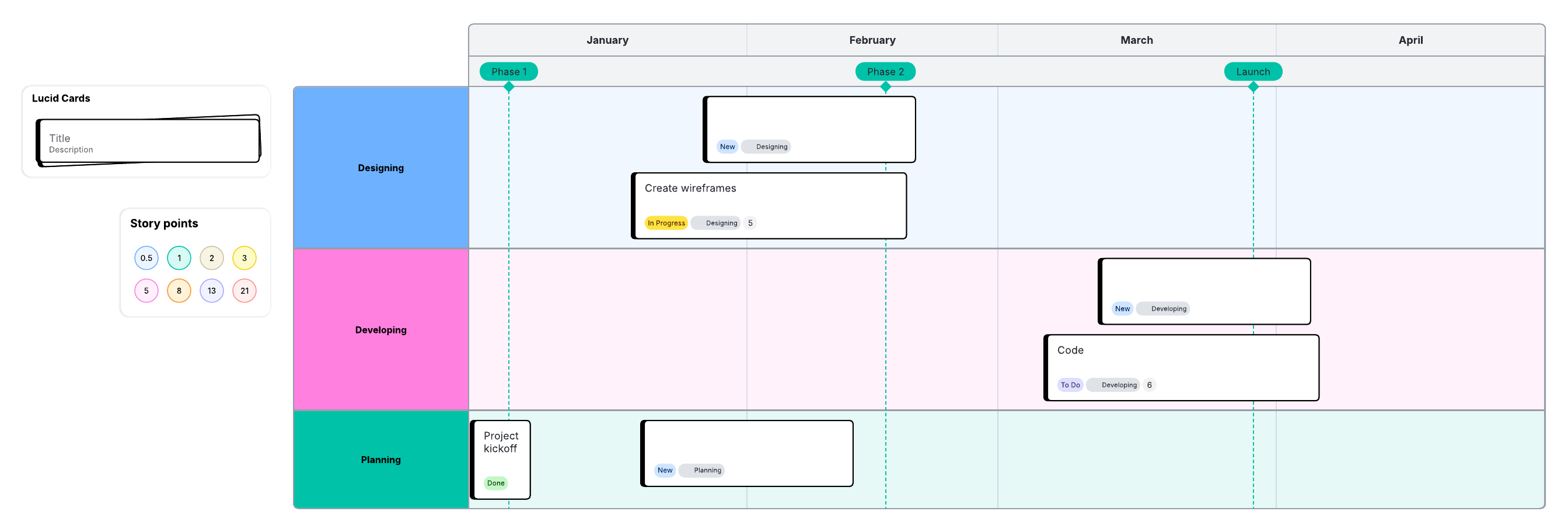
- Plan technology rollouts, consolidation, and communication on timelines. Visualize milestones, dependencies, and potential roadblocks. Then, connect your Lucid plan to your system of record, such as airfocus, Jira, or Azure DevOps, so any updates you make in one system will automatically sync to the other.
- Track outcomes in a visual dashboard. Use ready-made dashboard templates and dynamic shapes to visualize progress toward your goals. Connect your dashboard to a system of record to keep it updated over time.
Store new and approved processes in an official repository. Once you’ve updated key workflows, use Lucid’s Process Accelerator to run the processes through designated approval flows and store them in easily accessible and searchable repositories.
Use Lucid for DEX and hundreds more use cases
The pace of technological change isn’t slowing down anytime soon, leaving organizations with two options: Design a peak digital employee experience as you adopt new technologies, or push this effort off and risk introducing security concerns and workflow inefficiencies from a sub-optimal DEX.
With Lucid, the world’s first work acceleration platform, DEX leaders get access to hundreds of visual templates, collaborative features, data-backed intelligence, and enterprise-grade security for every step of the DEX process. But Lucid isn’t just useful for designing DEX. It’s where all collaborative work gets done, from problem-solving and brainstorming to planning and executing any project.
See a demo
See how to use Lucid for designing peak DEX or any other use case—launching new projects, digital transformation, cloud optimization, and more.
Watch a demoGartner, Deliver Peak Digital Employee Experience Excellence in 4 Steps, Tori Paulman, Lane Severson, Jim Murphy, Jason Wong, Helen Poitevin, Dan Wilson, 15 June 2023
GARTNER is a registered trademark and service mark of Gartner, Inc. and/or its affiliates in the U.S. and internationally and is used herein with permission. All rights reserved.