Key takeaways
- Lucid connects teams by consolidating multiple tools into a single, powerful platform that serves every team, regardless of their industry or technical depth.
-
Improving collaboration with Lucid saves teams significant time and money while drastically boosting productivity.
-
Lucid provides a unified enterprise workspace to power synchronous and asynchronous collaboration, drive cross-functional alignment, and clarify advanced technical workflows.
Today’s organizations don’t just need another app in their tech stack—they need a solution that connects people to their work and their teammates. But how can teams get more connected if all their tools are siloed?
Lucid solves this problem by bridging the gap between high-level brainstorming and technical diagramming. Because Lucid supports every team from a single, unified platform, organizations can finally consolidate their tech stack while lowering costs and boosting productivity.
But don’t just take our word for it: Here is a look at the incredible results Lucid has brought teams across a variety of industries.
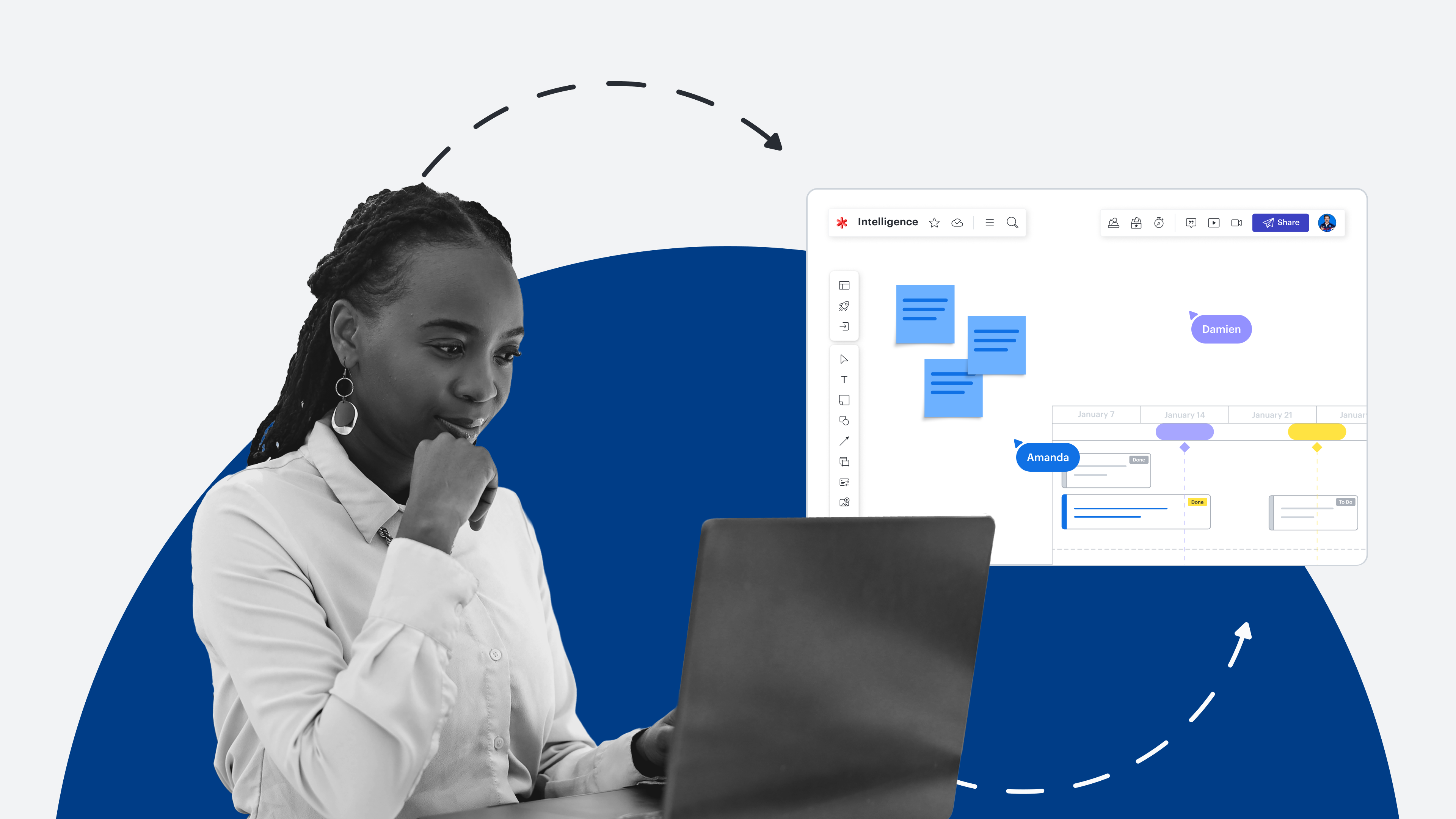
Asynchronous collaboration
If the only constant in life is change, you can count on project documentation becoming obsolete before the proverbial ink is even dry. Traditional documentation simply cannot capture the dynamic nature of an evolving project, and waiting to schedule a live meeting to get everyone on the same page creates frequent, frustrating bottlenecks.
But when project knowledge lives in a flexible, living canvas like Lucid, distributed teams can give feedback, ask questions, and update plans anytime, in any time zone—without needing a calendar invite. As a result, projects move faster, and teams save time for higher-value work.
By shifting from synchronous alignment to continuous, asynchronous collaboration through Lucid, organizations can accelerate projects and get more done. Here are four companies that have done just that:
-
Finance software provider: By replacing traditional meetings with asynchronous collaboration in Lucid, analysts save 10 hours during each product roadmapping exercise.
-
Top Canadian insurance company: By implementing shift-left planning and lean, async workflows, the operations team increased its efficiency by 20%.
-
Top music company: The global technology team prioritized its async workflows, cutting down on internal touchpoints and saving 30+ hours a quarter.
-
National public health agency: Outbreak response teams became 6x faster at reviewing and optimizing critical testing processes when they moved from live review sessions to asynchronous collaboration in Lucid.
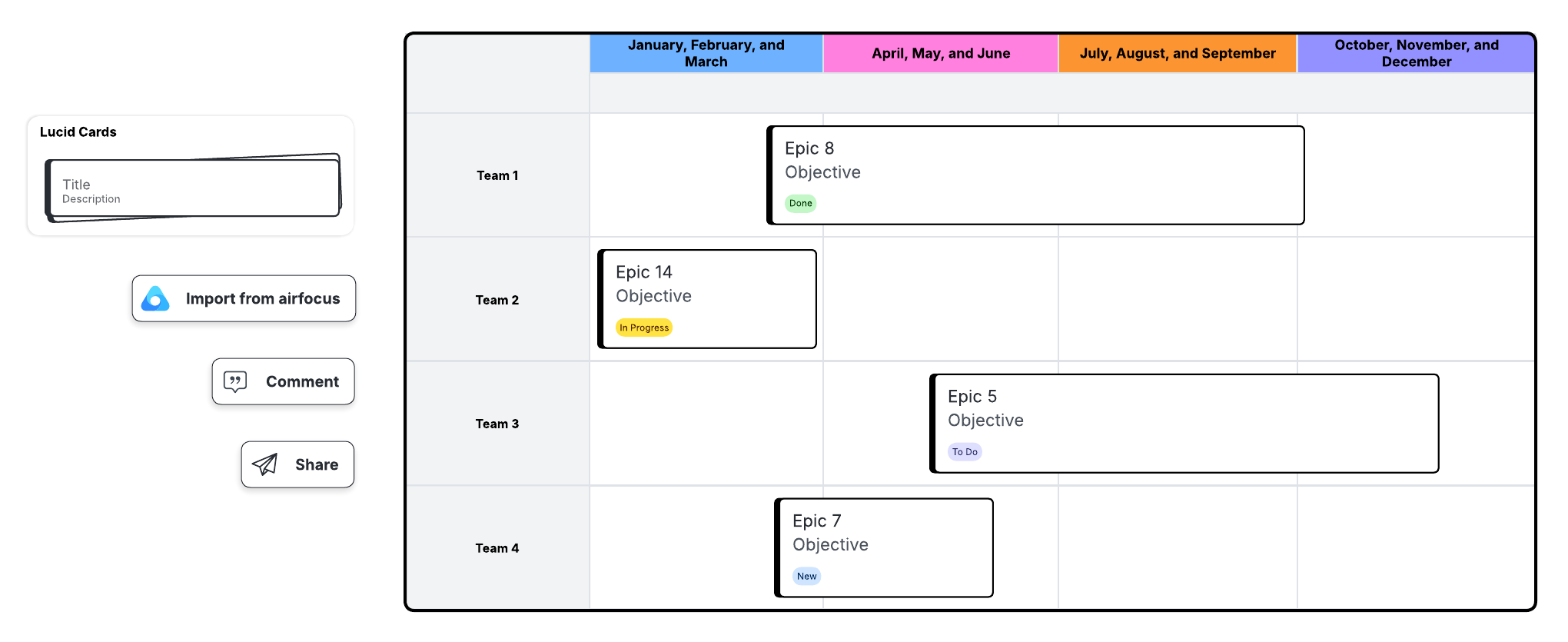
Real-time meetings and workshops
Have you ever sat through a large meeting where two or three outspoken voices dominated the conversation? You’re not alone. Live meetings have their place, but traditional formats simply don’t work for every type of collaborator. While the loudest few may share lots of thoughts, those who are more introverted or tentative tend to withhold valuable comments, often leaving great ideas off the table.
Lucid’s dynamic, interactive features solve this problem for good. With tools like anonymous voting, breakout boards, and Visual Activities, every participant has an equal voice and a way to contribute their best ideas.
Impact/effort visual activity
Here are two examples of companies that have upleveled their meetings with Lucid:
-
Top multinational auto manufacturer: Moving to a hybrid workshop model in Lucid resulted in 30% higher participation from marketing and sales team members, capturing insights that would have otherwise been lost.
-
Leading global manufacturer: Using Lucid, the manufacturer brought 100 participants together to collaborate in real time, ensuring complete alignment on dependencies and timelines.
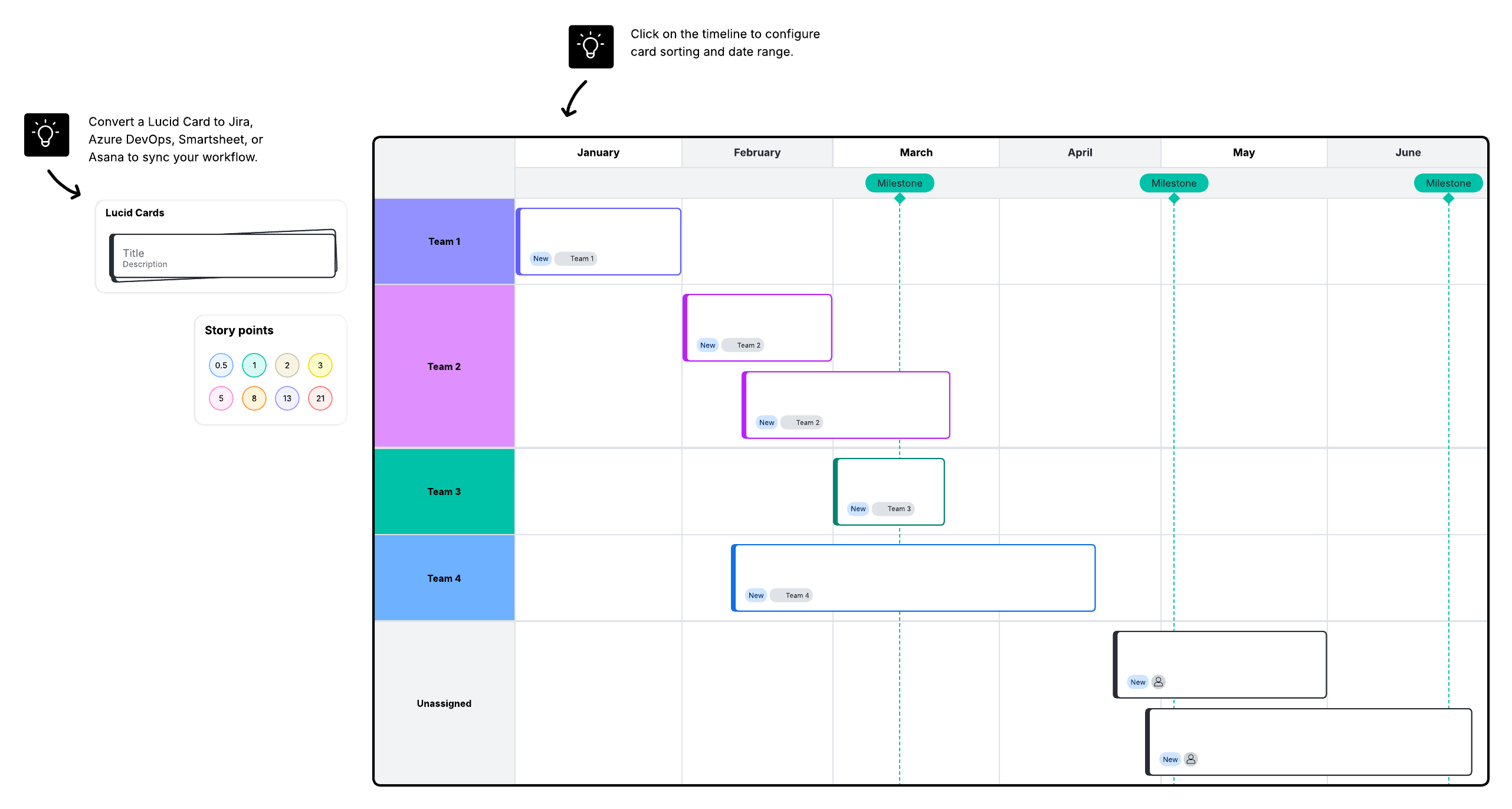
Cross-functional alignment
There’s nothing worse than getting into a great flow on a project, only to get stuck trying to understand what another team has been doing.
When teams rely on different tools, miscommunication and misalignment are inevitable. Important details fall through the cracks, momentum stalls, and valuable time is wasted trying to get on the same page.
Lucid can bridge the gap between cross-functional teams. By combining robust diagramming and visual brainstorming in a single platform, Lucid gives the entire organization a powerful source of truth. Everyone, from engineers to marketers to executives, can share and build ideas together in one place.
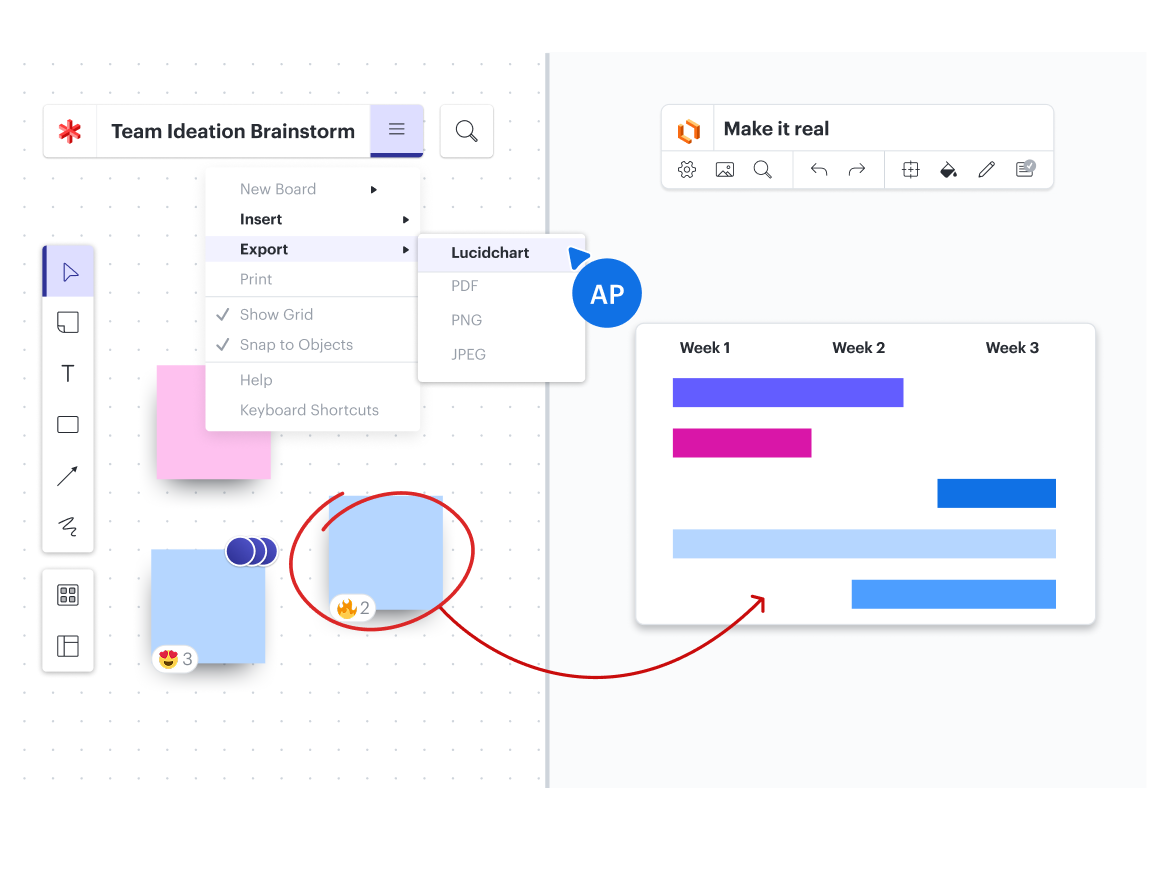
Consider these three teams that turned cross-team alignment into a competitive advantage using Lucid:
-
Top audio entertainment company: Lucid streamlines collaboration for 70+ engineers and 12+ technical program managers by breaking down silos between different teams through facilitated architectural reviews and workshops on a shared platform.
-
Luxury home appliance manufacturer: By enabling seamless collaboration on dependency mapping across teams during remote sessions, the organization reduced risk profiling by 30%-40% compared to previous quarters.
-
Government consulting firm: By optimizing cross-team collaboration and data visualization on a single platform, the firm reduced the delivery time of output documents by more than 25%.
Technical workflows
Real talk? Colorful digital sticky notes and emojis are cute, but they don’t cut it when you’re building complex systems.
When engineering, cloud, and IT teams don’t have the right tools to map out enterprise-grade architectures, documentation becomes outdated quickly. Too often, static diagrams get stuck, leaving teams to build off obsolete context.
Teams who use Lucid spend less time updating documents and more time actually building.
With data-linked visuals and automated diagramming, Lucid turns static diagrams into living documentation. This means that instead of spending time manually updating maps whenever something changes, teams can work confidently, knowing they always have an accurate, real-time source of truth.
Here are two teams that have saved time and built faster using Lucid:
-
Global consulting firm for business and technology: Data and AI consultants can map out technical architectures, data models, and workflows 30-40% faster compared to traditional documentation tools.
-
DocuSign: Engineering teams at DocuSign leverage Lucid to align strategy with real-world execution. By keeping technical designs and cross-functional feedback loops in a shared visual workspace, they ensure everyone stays aligned on the architecture that drives their business forward.
AI diagram
Benefits of high-value collaboration through Lucid
These examples are just a fraction of the organizations transforming how they build, align, and execute with Lucid. Here are some ways that Lucid can positively impact your business:
-
Boost productivity: Teams can do more faster by consolidating meetings into an async workspace and eliminating the friction of getting up to speed or tracking down documentation.
-
Accelerate time-to-market: Organizations can shorten project life cycles by streamlining document delivery, risk profiling, and process reviews for faster deployment overall.
-
Save money: By replacing isolated, single-purpose solutions, teams can consolidate their tech stacks and eliminate redundant software fees.
-
Improve decision-making: Lucid’s interactive platform encourages engagement, making it easier for stakeholders to fully participate in critical strategy discussions so the best ideas aren’t left unsaid.

Ready to see what your team can achieve with Lucid?
Chat with our sales team