Key takeaways
- Safe AI adoption requires balancing rapid employee velocity with enterprise visibility.
- Enterprise security must address embedded vendor AI, shadow extensions, and unreviewed citizen developer apps.
- Teams can safely adopt AI without slowing innovation by mapping processes visually, establishing lightweight vetting protocols, and building transparent guardrails.
Artificial intelligence is more than just another piece of software to learn. It represents a fundamental shift in the way teams work and user capability as a whole. It empowers employees to analyze data, generate code, and automate workflows at a speed that would have been impossible just a few years ago.
This rapid AI adoption has, in some cases, supercharged productivity. However, it has also put security and IT teams in a challenging position between the desire to accelerate efficiency and the need to prevent unvetted workflows that put data at risk.
To safely adopt AI and unlock its full value, security professionals must redefine how they monitor workflows and manage external, third-party data risks to bridge the AI observability gap.
We spoke with Nathan Cooper, Director of Information Security at Lucid, about the risks that security teams should watch out for when adopting AI and how to mitigate them.
Navigating risks
As AI adoption accelerates, a security analyst’s daily role includes continuously auditing evolving security standards and shifting employee behavior. Teams are heavily incentivized to deliver faster, so well-intentioned employees are finding ways to bypass procurement and security vetting in the name of getting more done.
When security friction meets high performance expectations, risks increase across several key fronts. And while these certainly are not the only risks facing modern enterprises, they represent a few of the most urgent operational hurdles today:
Embedded vendor AI: Sometimes existing vendors will add AI capabilities without updating data privacy agreements or even informing system admins. Driven to move quickly, employees often jump on these new features without realizing that their proprietary inputs could end up training third-party models or otherwise breaking their organization’s protocols.
The evolution of shadow AI: Traditional shadow IT involved using unapproved software, but today’s shadow AI increases the scope, threat, and pressure of that risk. To speed up daily output, employees are utilizing AI systems (both approved and not), and those systems are often suggesting unapproved processes and tools that run counter an organization's security standard.
The rise of the citizen developer: Non-technical employees are building their own custom apps, automations, and workflows, eager to remove operational bottlenecks and support organizational goals to adopt AI. This flood of user-built tools potentially skips the design, code, and security reviews typical of standard development lifecycles, leading to operational risks.
The solution: Building a visible AI governance framework
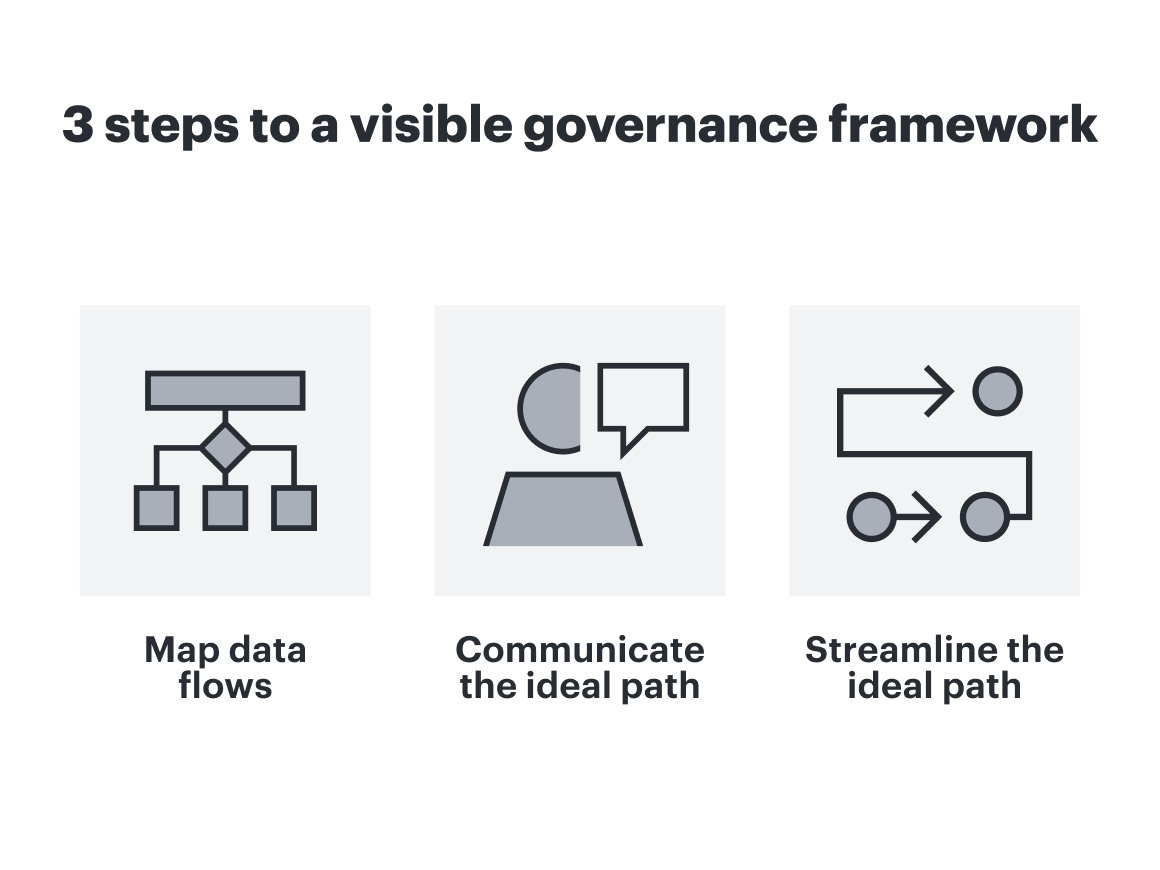
Organizations cannot afford to compromise security, but they also need to continue fostering innovation through artificial intelligence. Cooper suggests a three-part pipeline for security teams to restructure their operations, directly mapping a solution to each core risk outlined above.
1. Map data flows to control third-party data risks
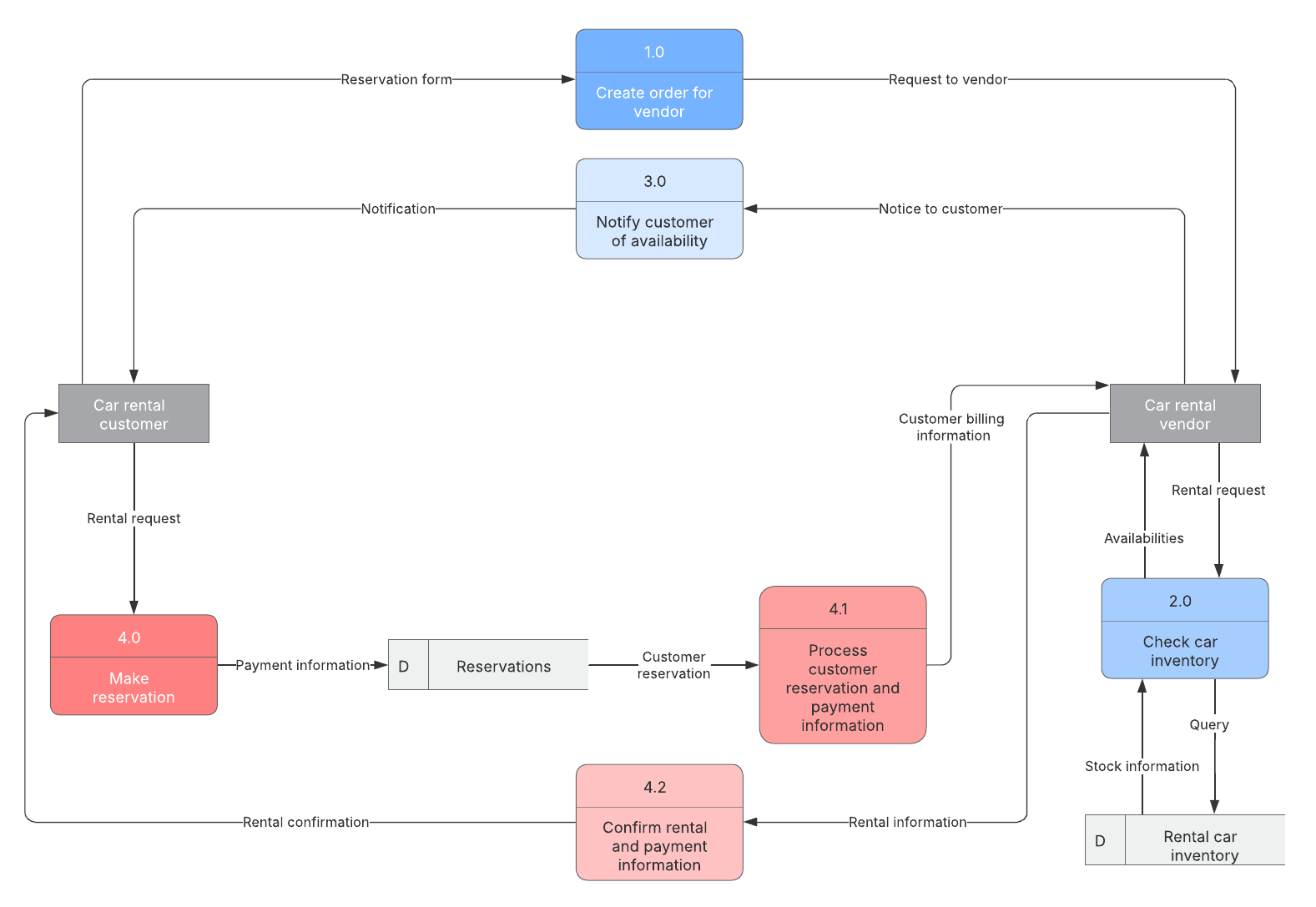
Security teams must track internal and external data flows to protect proprietary IP. Centralizing approved systems and vendor terms in a vendor inventory allows teams to better communicate allowances and limitations on system use.
Cooper explains that when it comes to developing this clarity, nothing beats visualization: “Visualizing these pathways allows you to see exactly how data enters an AI tool, where it’s stored, who can access it, and where the output goes. Having visual clarity makes it possible for security teams to implement effective guardrails that don’t bottleneck productivity.”
2. Clearly communicate the ideal path to reduce shadow AI
Employees genuinely want to follow company guidelines, but dense and confusing policies make compliance difficult. Security teams bridge this gap by converting complex rules into clear, visual workflows. When the approved path is fast, obvious, and easy to understand, well-meaning employees naturally choose it over unapproved alternatives.
3. Streamline the ideal path
To keep employees from bypassing approval workflows, approval processes need to be fast and transparent. This works best when project champions are prepared, and authorization processes are streamlined. For builders, text-to-diagram tools enable quick mapping of proposed workflows so stakeholders can review and approve them asynchronously—cutting red tape without stalling innovation. The same technologies help stakeholders describe and ultimately streamline authorization processes.
Cooper promotes the internal use of Lucid AI for this: “Lucid AI offers diagramming capabilities that make it easy for employees to document their proposed workflows or integrations. Working with an agent can help reduce the learning curve in both document creation and iteration. Security, legal, and IT stakeholders can then review the diagram asynchronously, quickly understanding its compliance and fast-tracking approvals.”
AI diagramming in Lucid
Deploying a continuous safety net
Even with great processes and visibility, mistakes can happen. Well-intentioned employees under performance pressure may occasionally enter sensitive data into the wrong places. Deploying automated guardrails into organizations (such as Enterprise Shield within collaborative spaces in Lucid) provides a continuous background safety net to help detect and remediate those mistakes. As Cooper notes, automated safeguards continuously monitor data hygiene and detect when sensitive information is accidentally introduced into shared boards or workflows, protecting enterprise data without halting active work.
Bridge the gap between security and productivity
The goal of AI governance is not to slow down innovation; it’s to allow teams to move quickly and safely. By adopting visual workflow mapping, streamlined authorization processes, and smart guardrails such as Enterprise Shield, security teams shift from gatekeepers to enablers, giving employees the freedom to safely maximize AI.

Learn about all the ways Lucid can support (and streamline) your organization’s AI transformation.
Go now