
As any project manager knows, projects are fluid, dynamic creatures, each with its own unique challenges and hurdles to wrangle. With any number of process improvement methodologies to integrate into an organization, finding the one that works for you and your team can be a challenge all its own.
The DMAIC process, a subset within the Six Sigma methodology, hails from the manufacturing industry and is most well-known for eliminating inefficiencies within a project. Favored by engineers, the DMAIC process is particularly rigorous, designed to help companies manufacture products nearly 100% defect-free.
What is DMAIC and why is it so successful? It is made up of five phases that can benefit any organization—read about them below or open our free DMAIC template to start process mapping your next project.
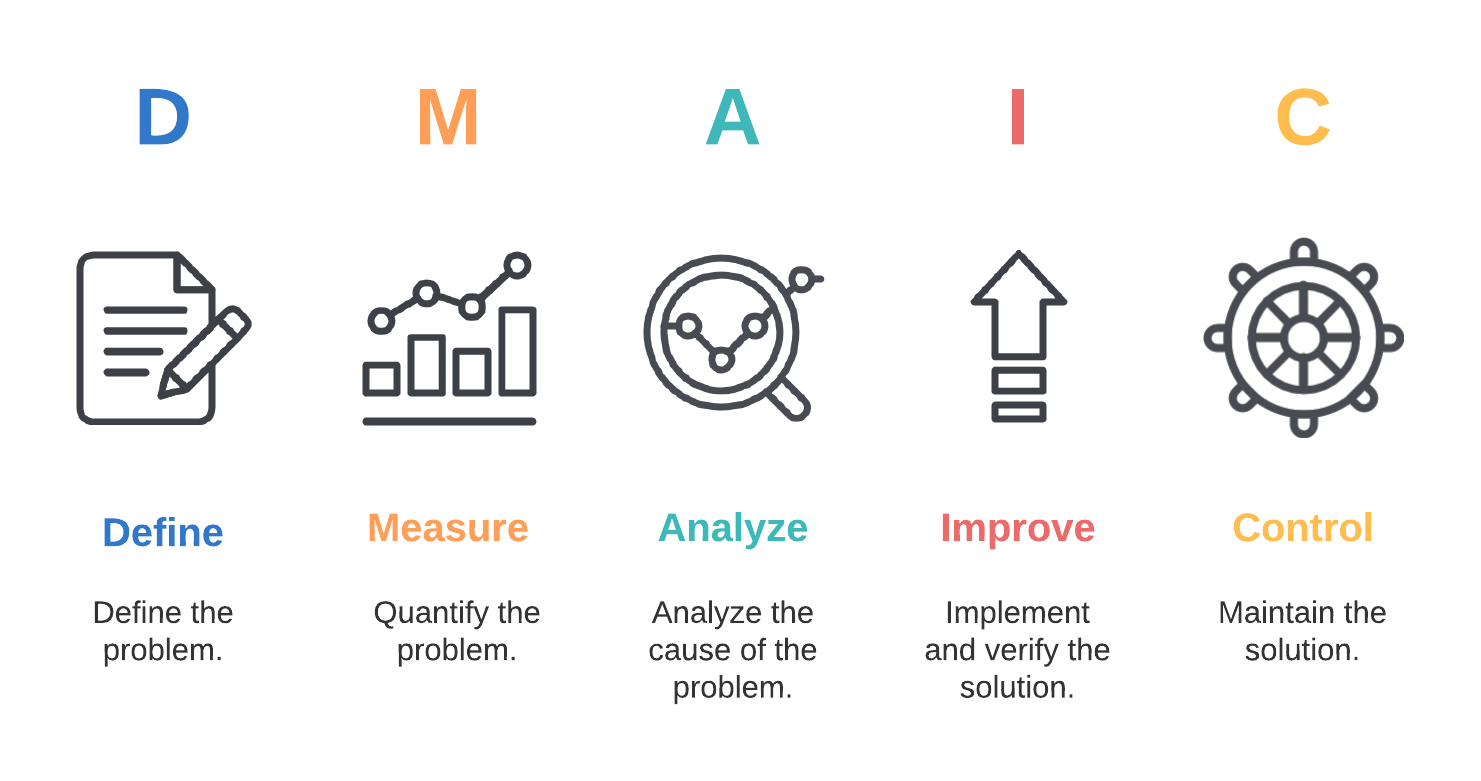
1. Define
Define the problem, project goals, and customer deliverables.
At this stage, you’ll need to decide what process to improve. When selecting a project, look for an obvious problem that is meaningful (i.e., will have a significant impact) but also manageable. Complex problems are harder to tackle all at once, so choosing a narrow focus will lead to better results. Take customer needs and company goals into account, and how you’ll measure success.
Pro tip: Put together a project charter to get approval and buy-in from stakeholders before you make significant changes to a process. Process maps and timelines will then keep you on track to finish your project.
2. Measure
Measure the process to determine current performance and quantify the problem.
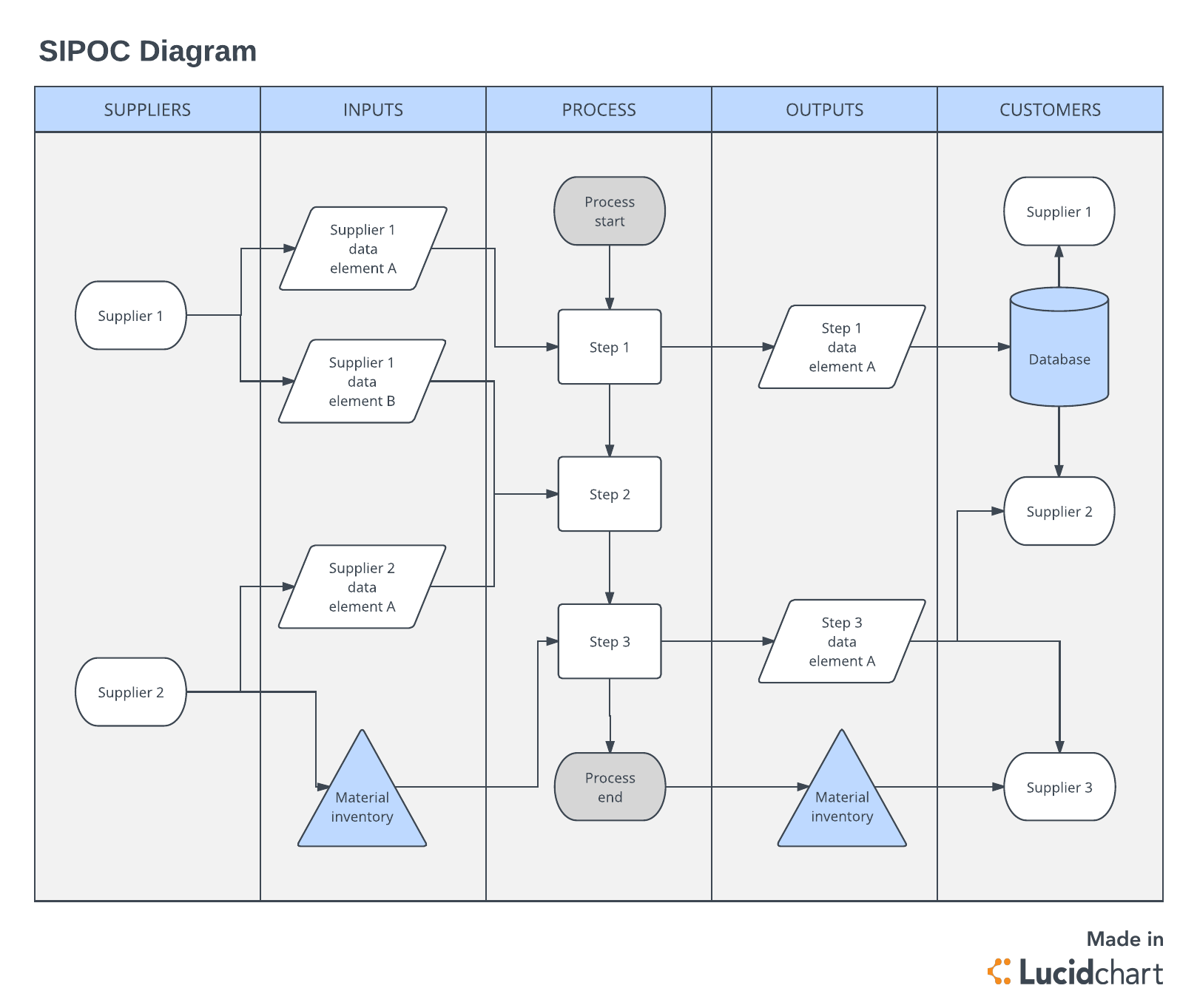
You have to know where you are before you can get to your destination (or, in this case, the goals you defined earlier). Collect data and document the existing process through a basic process flowchart, value stream map, or SIPOC diagram, as shown below. This will help you determine your baseline against which to measure your progress.
3. Analyze
Analyze the process to identify core causes of poor performance.
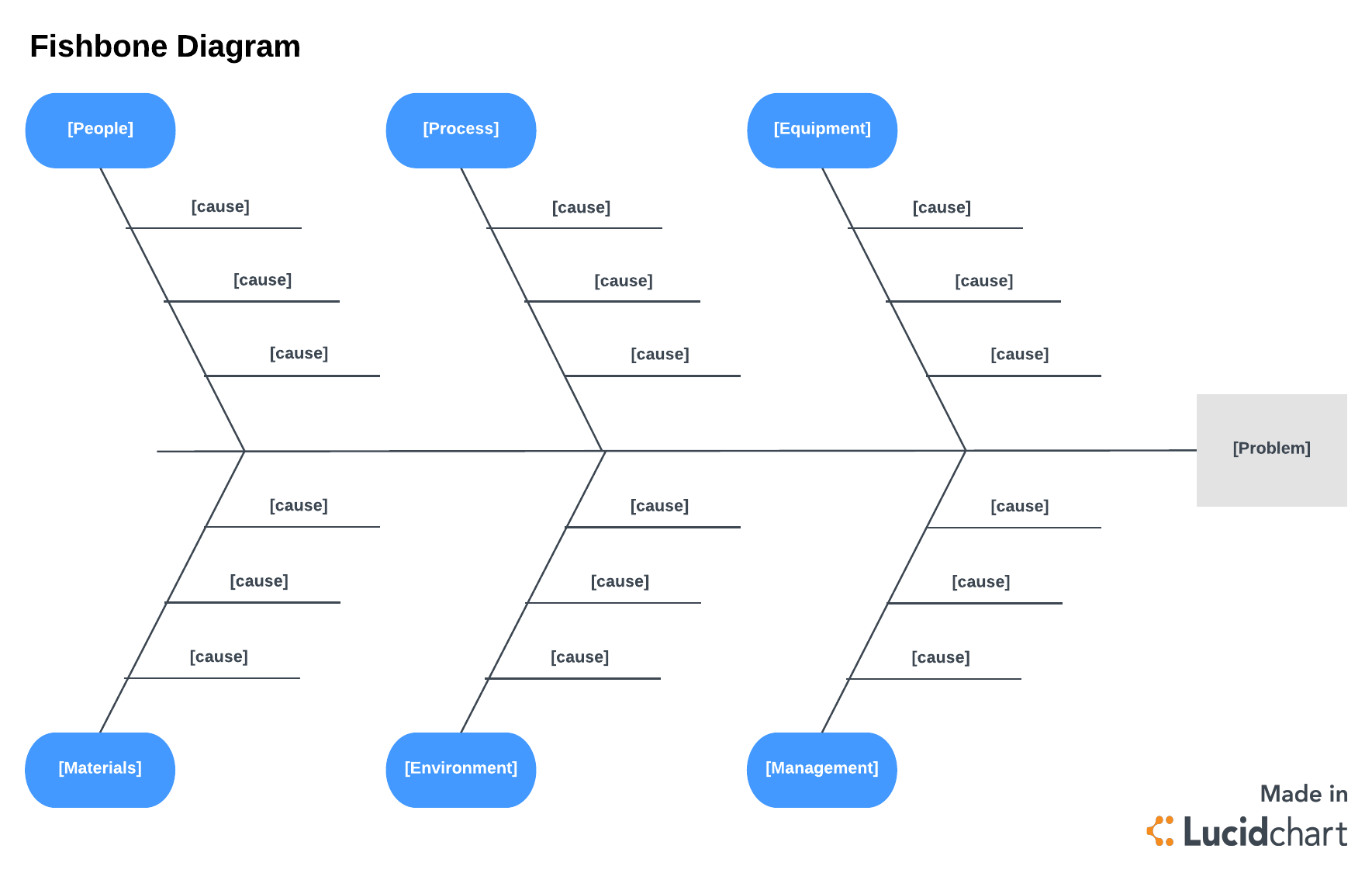
Using all the data you’ve collected, you can determine the root of the issue. Return to the value stream map or other diagrams that you created earlier, or use a fishbone diagram, also known as a cause-and-effect diagram or Ishikawa diagram, to visualize possible causes.
This step is critical as you don’t want to start implementing solutions without being sure they are addressing the actual problems. Use this time to develop and verify hypotheses for potential root causes so your solutions actually improve the process.
4. Improve
Improve performance by implementing a solution.
Now comes the essential piece of this process: finding solutions and making changes to the process to reduce waste and better meet customer needs. Create a revised process map to show the difference between your as-is and to-be processes. In Lucidchart, you can add layers and hotspots to toggle between these two states.
5. Control
Control the improved performance and streamline future performance.
Once you have verified that your solution improved performance, you need to maintain that momentum. Share the process maps you have created so everyone understands and follows the new process.
You can’t always anticipate the problems of each project, but the right process improvement methodology, along the right templates, increases efficiency and project execution.

Try Lucidchart for free to start diagramming today.
Get Lucidchart