Key takeaways
-
Business agility is the organizational capability to respond effectively to market shifts by infusing Agile concepts like flexibility and continuous improvement across all departments.
-
Successful business agility transformation requires leadership to move away from rigid, top-heavy management in favor of a culture that empowers self-organizing, cross-functional teams. The benefits of business agility include faster time to market, increased operational efficiency, and employee empowerment.
-
Lucid’s work acceleration platform accelerates business agility transformation by providing a single source of truth for visualizing complex workflows, helping teams identify friction points and maintain alignment during industry shifts.
In the business world, change is the only constant. And in the age of software—with new products and approaches disrupting the status quo with greater frequency than ever before—companies that don't adapt to the times will become obsolete.
Unfortunately, many companies are still operating on old, outdated organizational models, using rigid, top-heavy management styles in a world that increasingly demands flexible performance. By relying on these old models, companies not only miss out on opportunities to disrupt the market, but also often fail to meet their customers' needs.
To proactively anticipate market shifts, businesses must become agile. In this guide, we’ll explore business agility benefits, provide a roadmap for a successful business agility transformation, and share strategies your organization needs to thrive amid rapid change.
What is agility in business?
Having agility in your business means your organization is capable of responding effectively and efficiently to market, customer, environmental, and other changes. It applies the basic concepts of Agile, opens in a new tab (such as responsiveness, flexibility, iteration, and collaboration, opens in a new tab) to all aspects of a business—the culture, strategy, operations, and leadership.
The goal of business agility transformation is to continuously meet (or exceed) customer needs through ongoing experimentation and adaptation.
Values of business agility
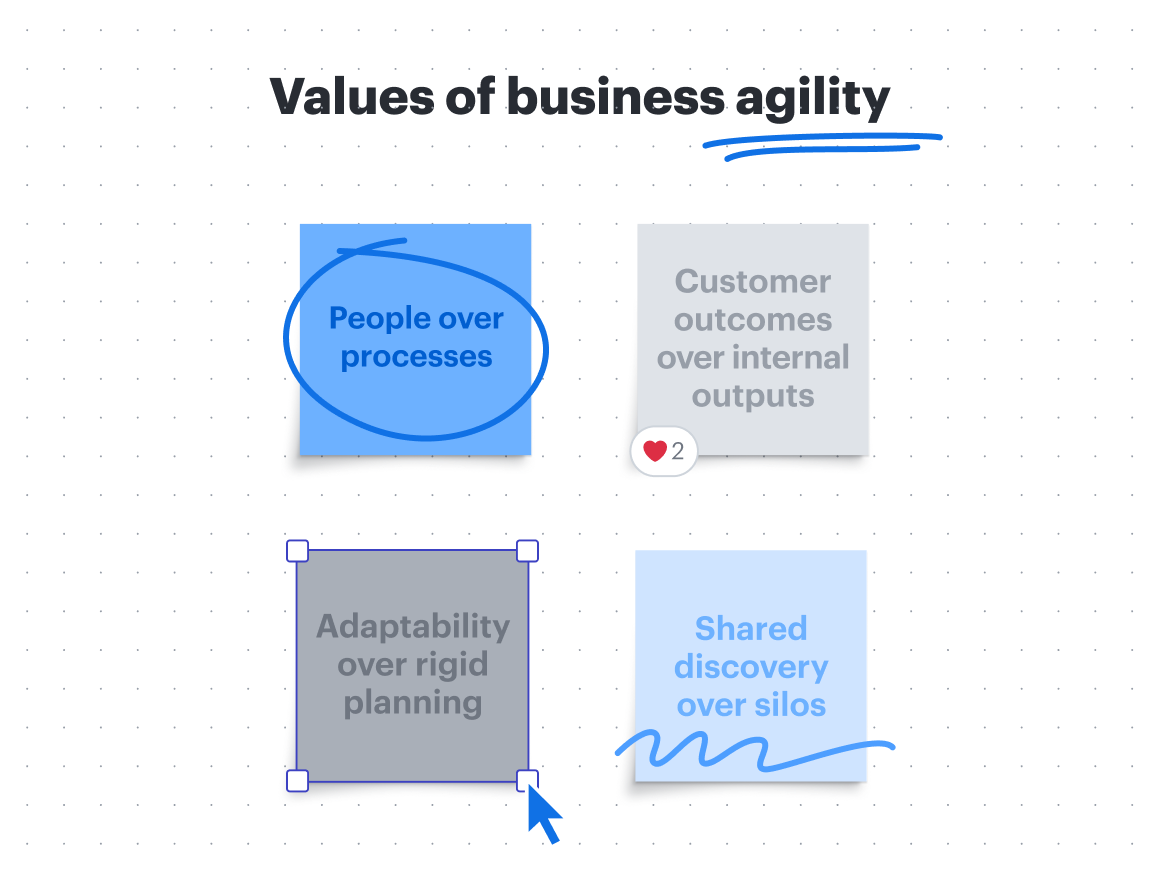
Successfully implementing business agility in your organization requires more than tactical changes. Leadership must embrace and communicate a new mindset based on the following values:
-
People over processes
-
Customer outcomes over internal outputs
-
Adaptability over rigid planning
-
Shared discovery over silos
Business agility benefits
Business agility is the bridge between being overwhelmed by change and leading it. When companies embrace an agile mindset, they begin to build lean, innovative systems that:
- Adapt quickly to market changes: Respond rapidly to disruptions while maintaining the long-term vision and strategy.
- Increase operational efficiency: Reduce waste and cut costs without sacrificing the quality of your deliverables.
- Make empowered decisions: Decentralize decision-making while keeping the customer at the center of every choice.
Business agility enables companies to see disruptions as opportunities rather than threats, helping them better meet customer needs and remain competitive in a changing market.
Measuring business agility
You can’t improve what you don’t measure. Establishing clear benchmarks is important not only for tracking progress but also for proving the value of your transformation and identifying where to pivot. To keep your teams aligned on objectives and maintain leadership buy-in, we recommend prioritizing these high-impact KPIs:
-
Time to market: How quickly do your teams move from the initial discovery to launch?
-
Cycle time: Measure the time it takes to complete specific tasks or workflows.
-
Customer satisfaction: Gauge whether your products and features are truly solving customer pain points.
-
Employee satisfaction: Regularly gather and review employee feedback.
Tips for a successful business agility transformation
Navigating successful business transformation requires strategy. To meet shifting customer needs and outpace market disruption, organizations must move from disconnected silos to fluid, collaborative workflows. Here are tips and examples for accelerating business agility across your organization
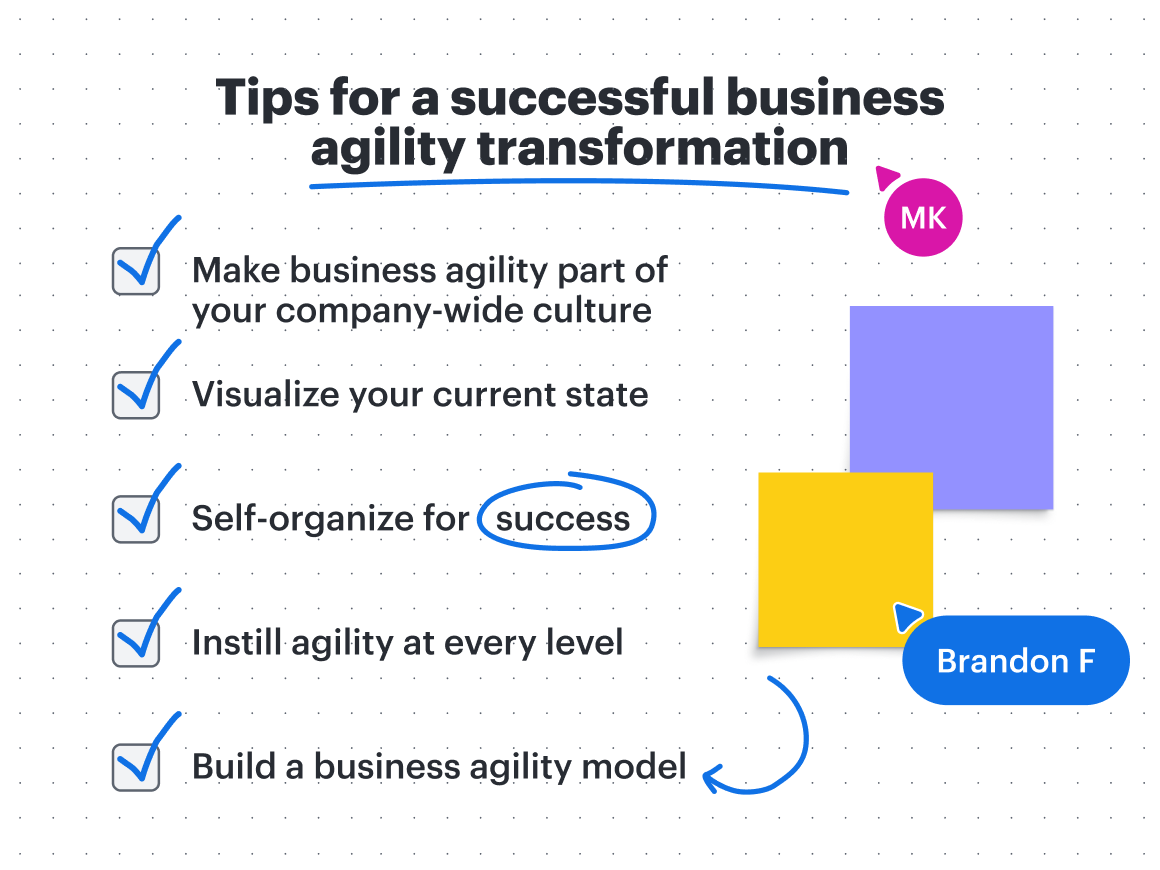
Tip #1: Make business agility part of your company-wide culture
To stay ahead of shifting market challenges and meet modern customer expectations, leadership must foster a culture of innovation and continuous improvement that empowers every team member to identify obstacles and self-organize to solve them.
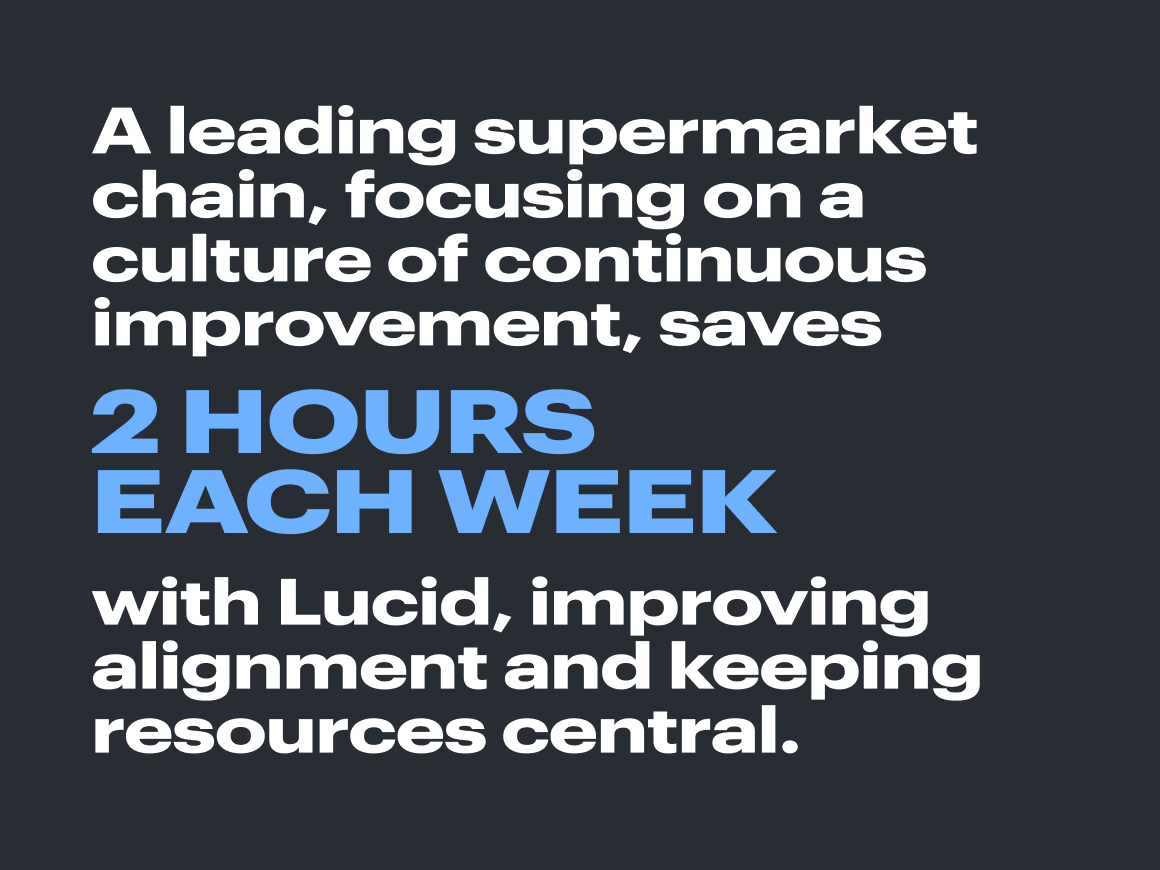
Start by looking at company history, what has worked, and what hasn't. New businesses are often defined by passion, cross-functional collaboration, and loose roles that allow for communication and creativity. As the company grows, it loses some of this spontaneity in favor of replicable, clear, and effective protocols. The good news is that you don't have to sacrifice one for the other. Agility in business will keep the helpful parts of the old system—stability and expertise—while adding the flexibility and innovation of a more entrepreneurial approach.
The most important thing is that the change occurs company-wide, pulling in every player in every department to create a culture of continual learning, growth, and adaptability. Leading by example is essential for this culture shift to succeed, so ask your leaders to model the behavior employees will be expected to emulate.
Tip #2: Visualize your current state
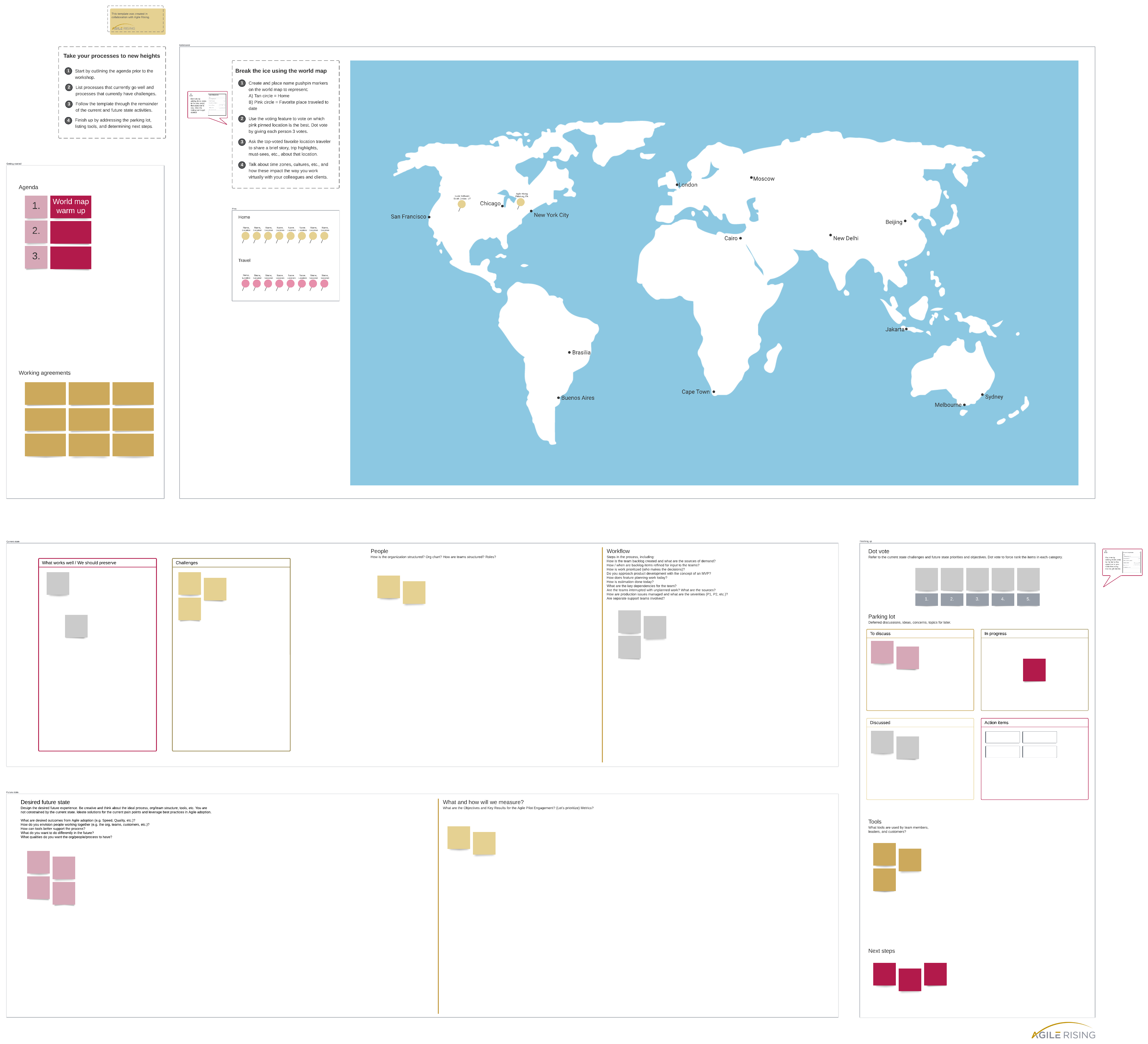
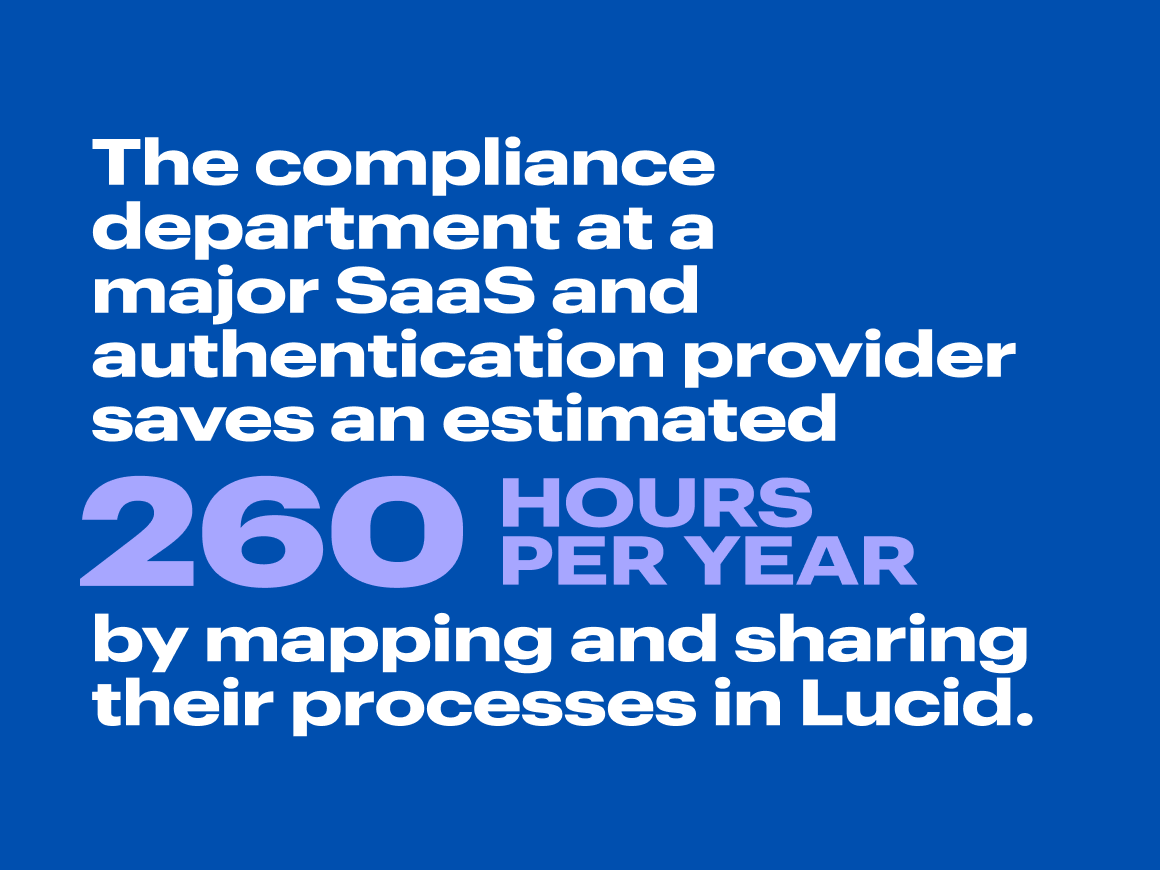
You can’t improve a workflow you can’t see. Using Lucid’s work acceleration platform, teams can map their existing systems and processes to create a single source of truth. Beyond simple diagramming, visualizing your current state:
-
Identifies friction points
-
Surfaces dependencies
-
Enables real-time alignment
-
Builds a single source of truth
Tip #3: Self-organize for success
Agile businesses rely on self-organizing teams of passionate individuals with diverse interests and expertise.
When a challenge arises, anyone in the company—from HR to product development—can form an impromptu team to address it, leveraging a wide range of relevant skill sets.
This enables cross-functional teams to solve challenges quickly and flexibly.
Once the issue is resolved, team members can go back to their departments until the next challenge inspires them—but this time, they are armed with more intra-office contacts, leadership skills, and fresh problem-solving perspectives.
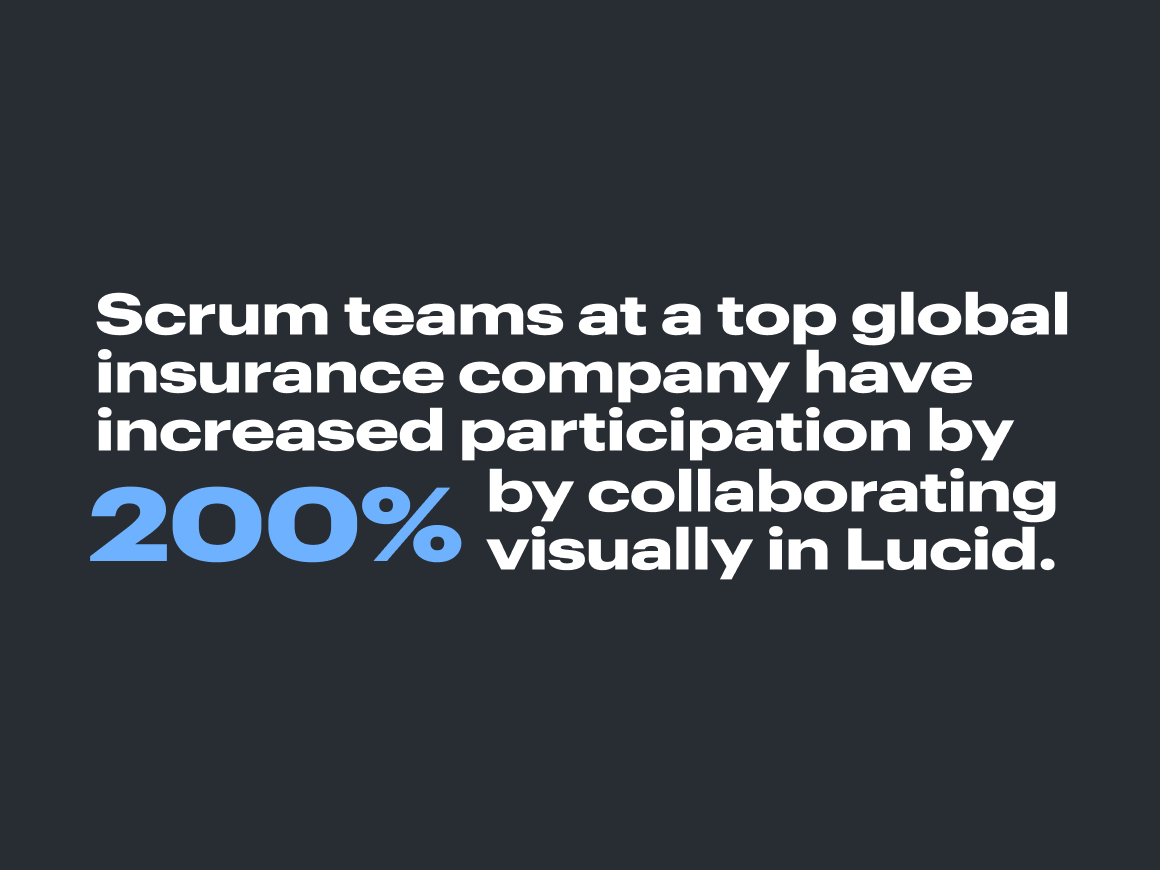
You’ll need a way to bring cross-functional teammates together for this to work. We recommend leveraging a visual collaboration solution. With visual collaboration, teams across the business, no matter where they’re located, can work together on a shared canvas to brainstorm ideas, solve problems, and make strategic decisions.
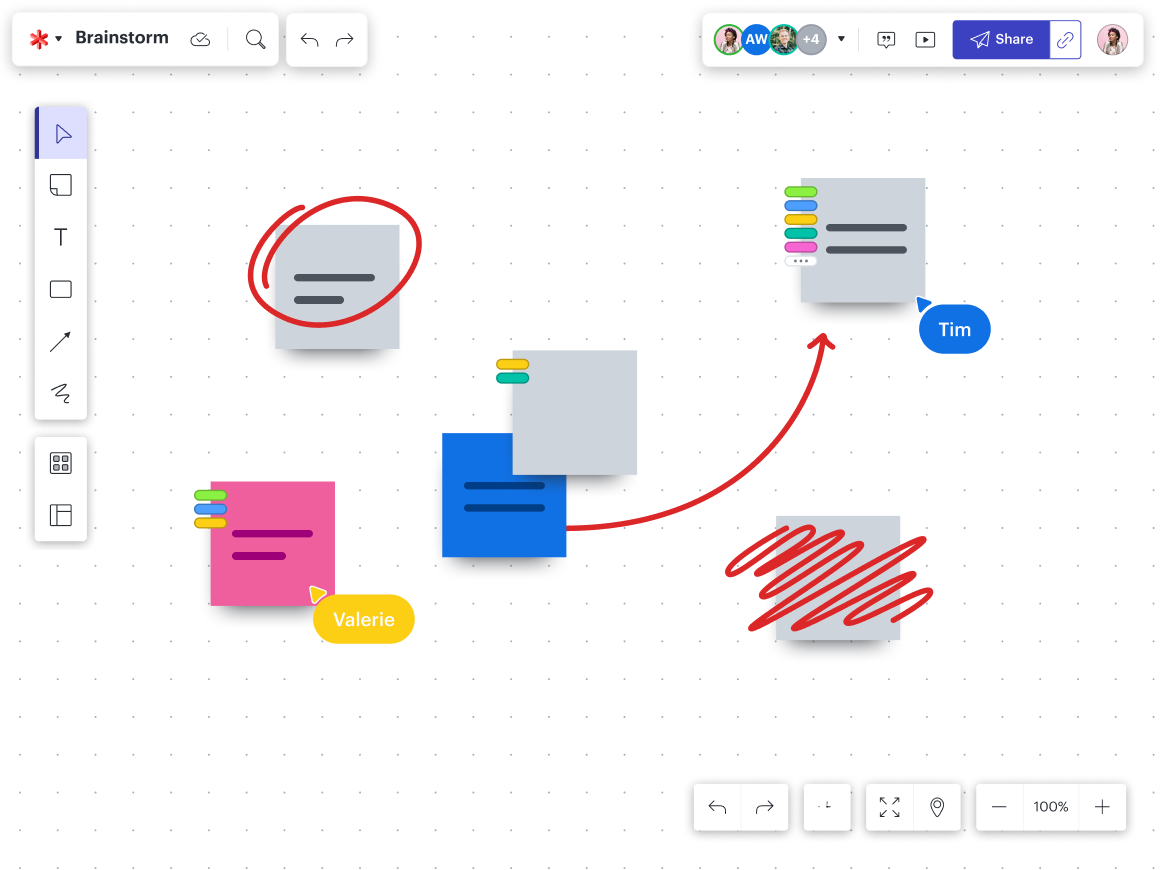
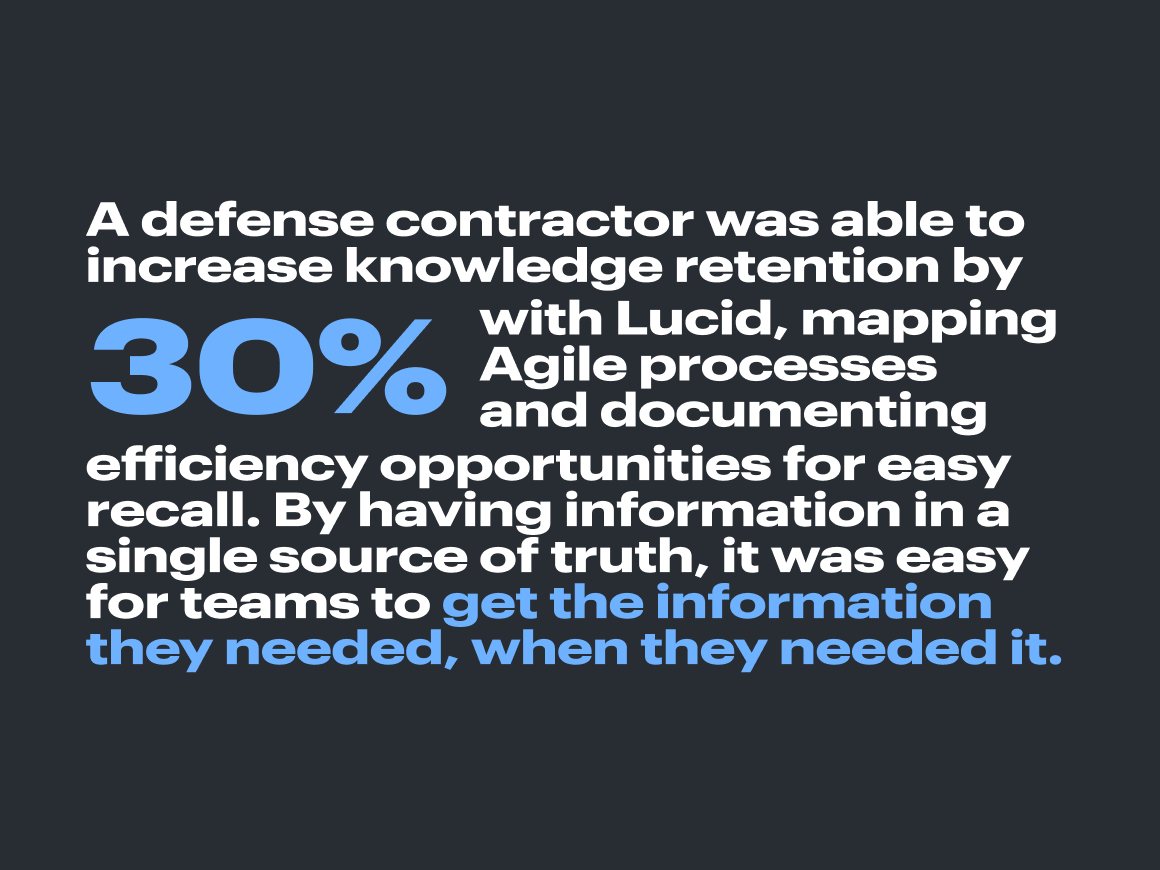
Plus, when teams collaborate visually, they naturally create a system of record. This single source of truth gives teams the context they need to align, avoid past mistakes, and pivot.
Tip #4: Instill agility at every level
To achieve maximum agility, companies need to reimagine their traditional structures and teams at every stage of the product development process, taking their customers' cues all the while.
Agile technical teams of cross-functional employees can develop proactive, fast-acting solutions to market disruptions under more permanent leadership teams that provide them with information, best practices, and general vision and strategy to guide their decisions.
On the product side, agile product delivery enables teams to find novel solutions to customer needs, building continuous delivery pipelines that address them as they arise. Finally, agile strategy and investment ensure that the entire portfolio is focused on what customers need most, and the funding and programs required are secured.
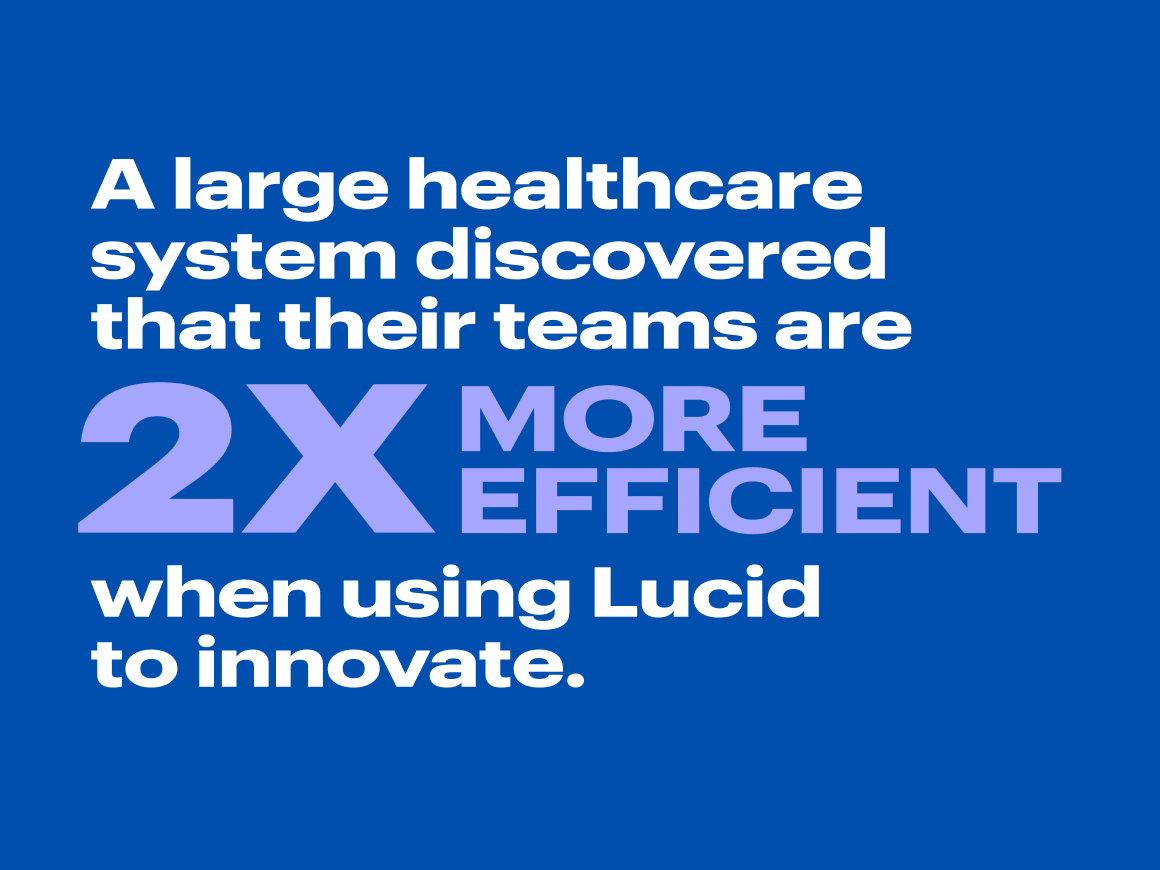
Product managers can play an especially key role in this process, using their hard-earned data to provide all decision-makers with relevant information. And they can use their own experiences of learning through trial and error to revive a culture of experimentation and entrepreneurship that is often lacking in traditional workplaces. Finally, they can help cross-functional teams zero in on their goals and develop feasible plans to execute them, shepherding different departments toward a common, achievable goal.

How to use Agile for every team
Learn how Agile works for non-tech teams so you can instill agility on product teams, finance teams, and more.
Read moreTip #5: Build a business agility model
An agile business plan helps you quickly discover, evaluate, and test assumptions about your business so that you can stay flexible and productive amid unpredictable circumstances. Essentially, a good agile business model gives you a bird’s-eye view of your business’s processes, strengths, gaps, and next steps to drive innovation, agility, and collaboration across your organization.
How do you build a business agility model?
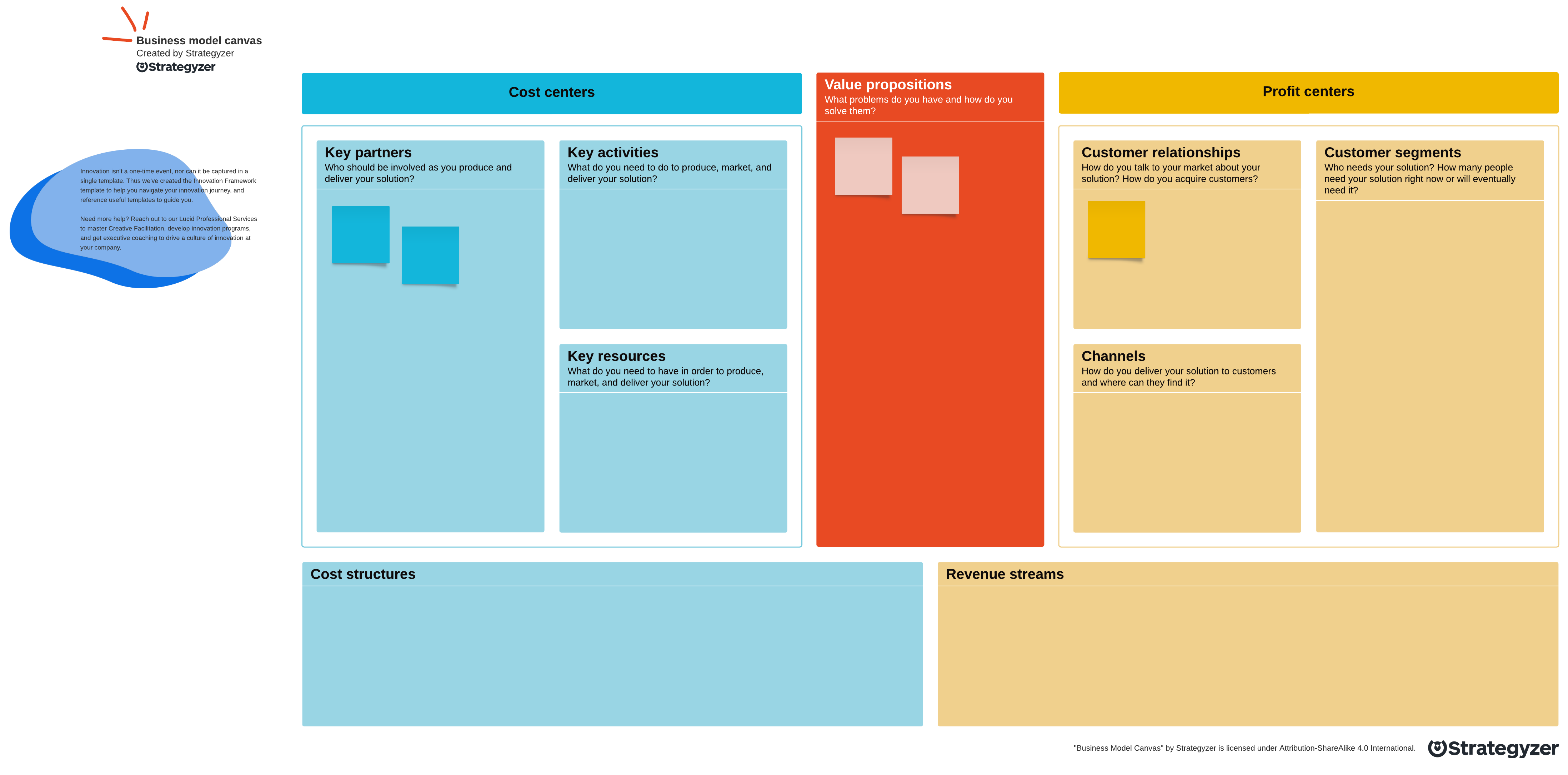
Visualization tools like a business model canvas give you a digestible, one-page overview of how all the pieces in your business come together so you can identify gaps in your processes and opportunities to improve business agility. With this centralized organizational clarity, you can identify which areas of your business are more flexible and where you can implement more agile processes.
While your priorities and investments may shift across this model as needs and situations arise, a business agility model ensures that you remain flexibly rooted and aligned to overall strategic goals even as your business model and processes evolve.
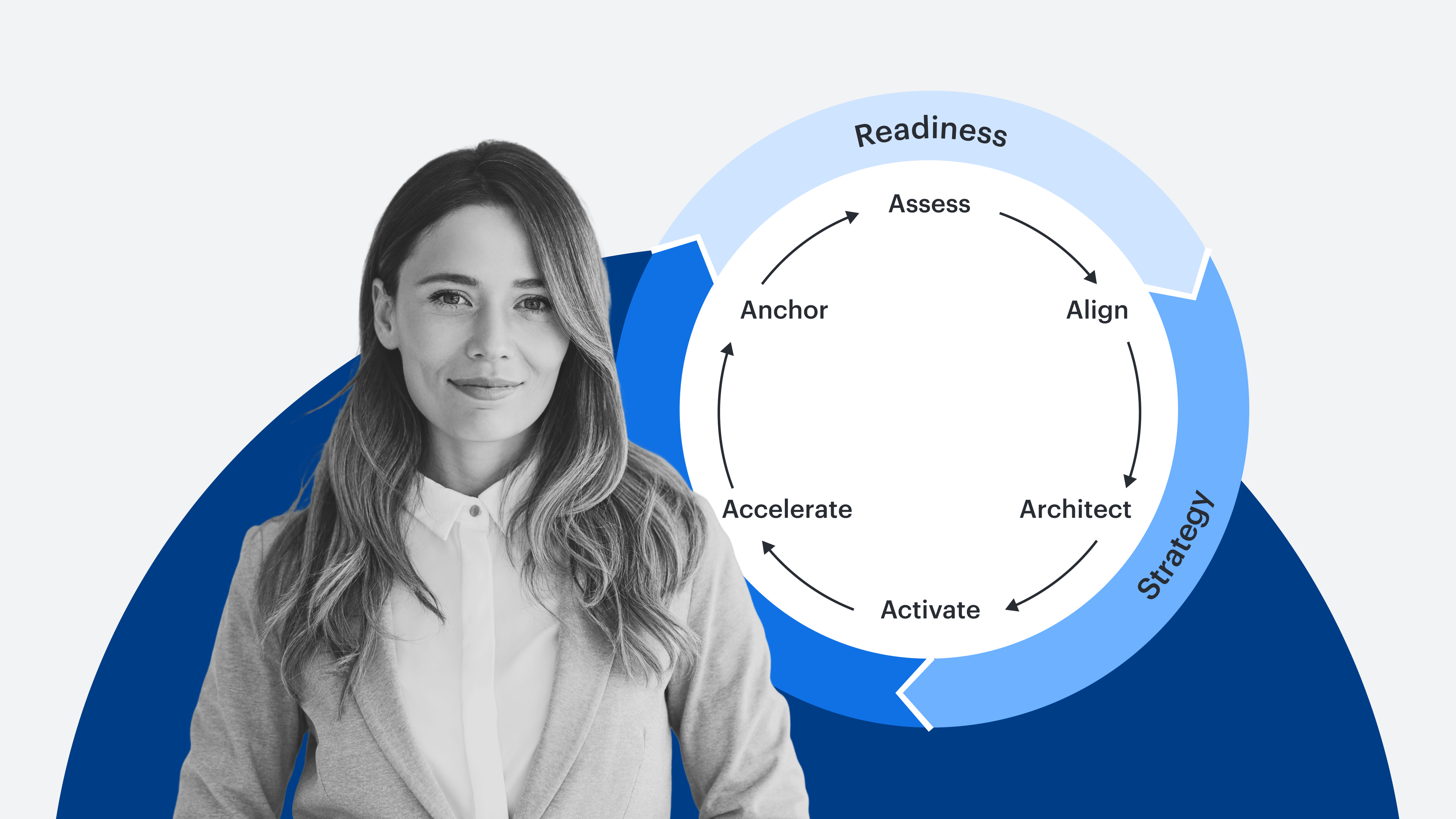
Lucid’s business transformation framework

While there are many business agility frameworks available, Lucid’s model provides a definitive path forward to organization-wide transformation. Our model ensures your teams remain with strategic goals even as your processes evolve. The framework is built on three core principles:
-
Readiness
-
Strategy
-
Execution
By using Lucid to visualize your strategy, your teams gain the clarity and alignment necessary to accelerate transformation and realize business benefits sooner.

Learn more about how to use Lucid's business transformation framework and gain access to free templates.
Read more