Life is full of decisions: Should I take this job or that one? Use this type of diagram or another? As we approach these questions, it’s always helpful to list the pros and cons. We’ve all tried this before because it’s a simple and effective way to make a choice.
When it comes to business decisions, though, a simple pros-and-cons list might not cut it. You’ll want to introduce a few more dimensions to your background research and analysis before settling on any conclusions. Enter: the SWOT analysis.
SWOT analysis has been a staple among business professionals for decades. As you evaluate your business strategy, company goals, or specific initiatives, performing a SWOT analysis can help your team make informed, goal-oriented decisions. And the best part? Using a SWOT analysis is (nearly) as simple as making a pros-and-cons list.
What is a SWOT analysis?
A SWOT analysis is a framework for thinking about your business and then organizing those thoughts.
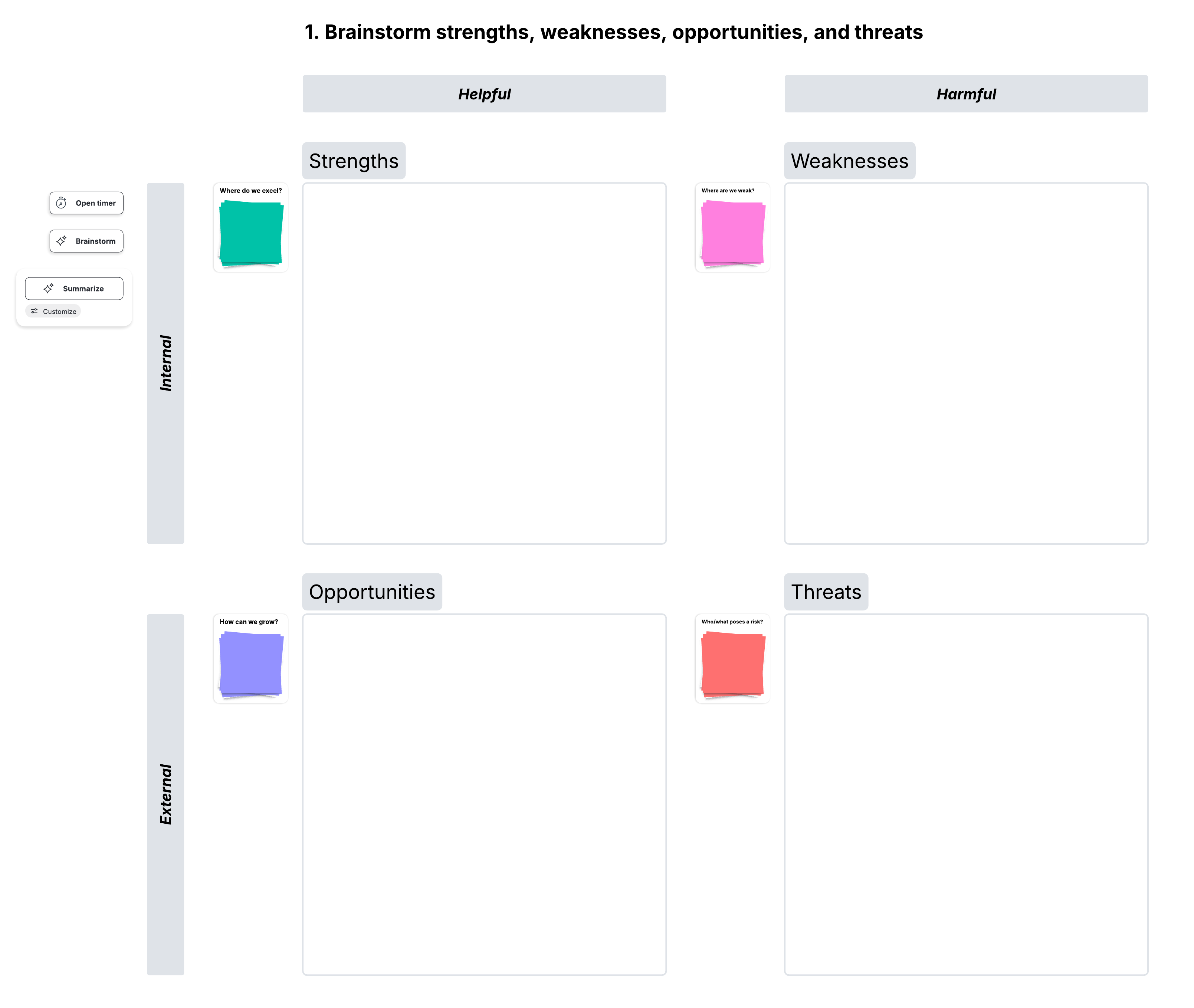
So, how does a SWOT analysis help you approach your business? SWOT is an acronym. Each letter corresponds to one aspect of your business that is analyzed in the SWOT method: strengths and weaknesses (both internal factors), and opportunities and threats (external factors).
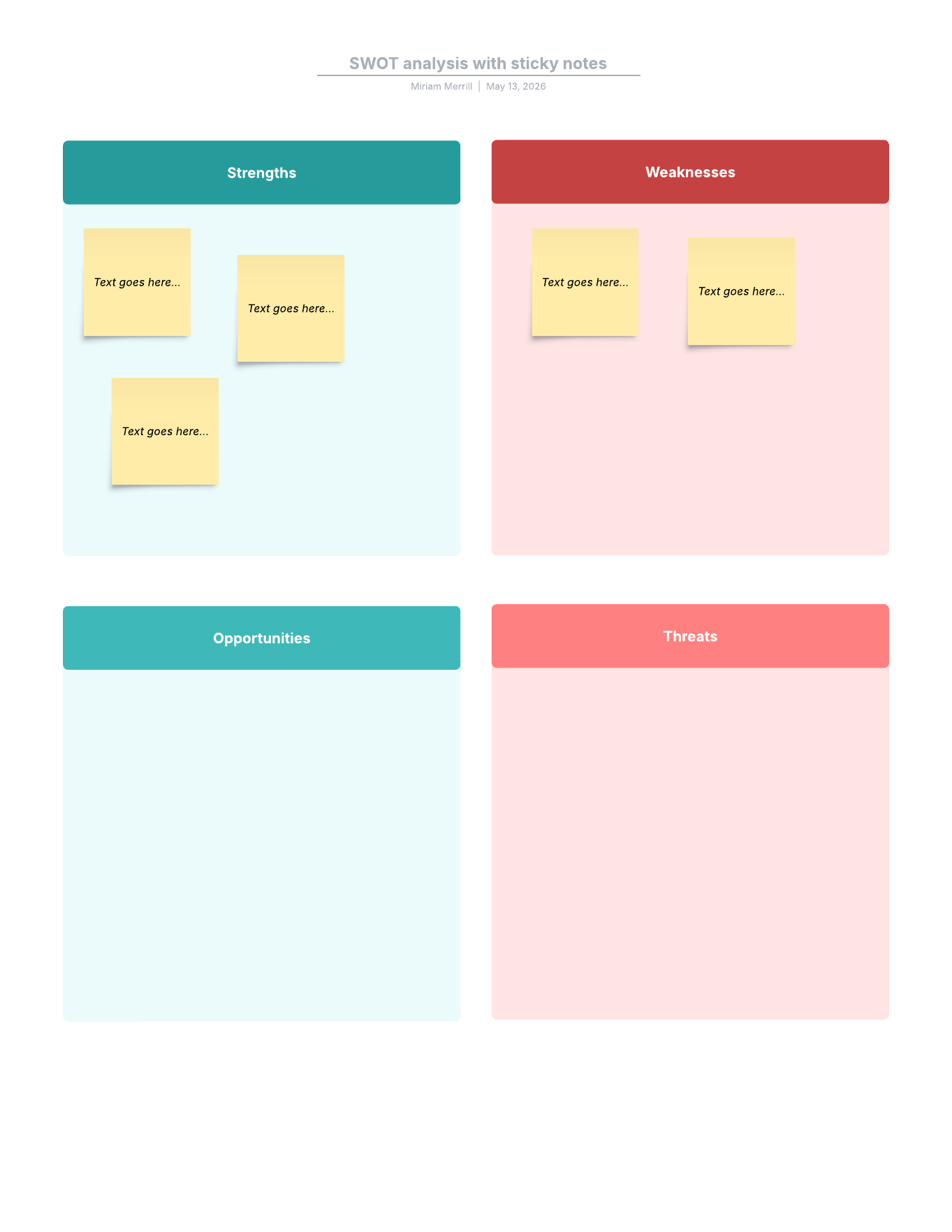
As you perform a SWOT analysis, you consider your business’s performance in each of these four categories. The lists you come up with for each category are placed in a two-by-two grid. Each category gets its own quadrant in the chart: strengths in the upper left, weaknesses in the upper right, and opportunities and threats along the bottom.
The SWOT analysis may seem too simple to be effective, but the beauty of the process is that nearly anyone can perform one. Because the process isn’t overly complex, you can gain great insights easily that will help you make informed strategic decisions.
How to do a SWOT analysis
Like most business analysis practices, you don’t want to perform a SWOT analysis by yourself. Your perspective as an individual within a company is limited, as are your priorities. Before you start, gather a team from various departments and roles. You’ll find that each person brings a different perspective, creating a comprehensive view of your company.
Now that you’ve gathered a group to work with, use a SWOT analysis generator to create a SWOT chart. As a group, address each element of SWOT. Here’s what that will look like in practice:
Strengths
While there’s no particular order to the parts of SWOT, why not start on a positive note? Kick your meeting off by asking the group to list company strengths.
These might include:
-
A viral marketing campaign
-
Money coming in from investors
-
A smart, creative team
-
A killer product
Don’t be afraid to think outside of tangible, quantifiable strengths. You and your coworkers know your company’s strengths better than anyone, so if you think something is worth noting, go ahead and include it.
Weaknesses
Ask the group: What are your company’s weaknesses? These could be financial, organizational, operational, or more. Some things to consider are:
-
Lack of funding
-
High customer churn
-
Lack of communication between teams
-
An out-of-date product
It can be tough, but try to be honest with yourselves. Objectivity will go a long way in helping you turn some of these weaknesses into strengths. After all, you have to acknowledge a problem before you can fix it.
Opportunities
Strengths and weaknesses are both internal factors, but it’s also important to consider factors outside of your company. Opportunities will likely play off of your company’s strengths. Your list might include:
-
A new group of investors
-
Market trends
-
Technological developments
-
Economic trends
If you’re unsure how to find opportunities in your strengths, consider this example: Perhaps your team just hired a new engineer who specializes in cloud-based solutions, something your competitors are lacking in. This presents an opportunity: You can expand your customer base by offering the best cloud-based solution.
Threats
Just like the opportunities you listed, threats are also factors outside of your company. Threats to your company might include:
-
Upcoming legislation
-
Political and economic regulations
-
Negative market trends
-
A competitor making big strides forward
Now that you’ve made it through all four categories, briefly revisit each one. Your group’s conversation about opportunities may have brought new strengths or weaknesses to light.
How to make a SWOT analysis diagram in Lucidspark
Lucidspark is an online whiteboard solution with hundreds of templates for every use case, including SWOT diagrams. Starting with a SWOT analysis template helps you save time and stay organized while you analyze. Follow these steps to get started:
-
Register for a Lucidspark account.
-
Click +New > Create from template.
-
Enter “SWOT” into the top search bar.
-
Review the templates, clicking on individual options to expand their images so you can decide which is best for you. Select Use under the template you choose.
-
Add details to each quadrant as you brainstorm by clicking and dragging sticky notes onto the canvas.
-
To write on a sticky note, click on it and start typing. You’ll also have the option to choose different text formatting.
-
Click the Share button to open options for sharing the chart with your team.
Tips for creating a SWOT analysis
SWOT diagrams tend to be straightforward, but filling them out may not be. To get the most out of your chart, follow these helpful tips:
-
Be realistic about the current state of your organization or problem. If you’re not sure whether something truly fits in its category, consult your team.
-
Remember that SWOT analyses should evaluate the present, not the past or the future. While you can think about possibilities, ground every detail in fact.
-
Maintain the same level of specificity throughout the diagram. Resist the urge to add too much detail.
-
Use a SWOT analysis as a guide, rather than a rulebook.
How to analyze your SWOT chart
While filling out a SWOT chart can be a useful exercise on its own, the real value is in analysis. The chart can tell you a lot—you just need to know what to look for.
SWOT analysis is all about making connections. You’ve listed strengths and weaknesses alongside threats and opportunities. Are there any correlations you see between the two sides? You might notice, for instance, that certain threats loom larger in light of certain weaknesses. By addressing the specific weaknesses in your company, you can alleviate threats and maybe even convert them into opportunities.
Remember: You have the most control over internal factors, your strengths and weaknesses. As you discuss changes you should make as a company, start by addressing the weaknesses. For example, if you discover you have a communication problem, you might need to purchase a new software solution to help facilitate collaboration between teams.
How to use SWOT for strategic planning
Done right, SWOT analysis can play a big part in your strategic planning. Think about the insights you and your team gained during the last step: Can any of those be turned into actionable steps to improve your business strategy? Write down those actionable steps, sort them by priority, and set goals for when you’d like to accomplish them, while consulting the company calendar.
For example, maybe you want to hire a new software team lead by the end of the month or roll out a marketing campaign by the end of the quarter. You might even have long-term goals, such as developing and releasing a new product by the end of next year. Whatever your goals are, set realistic milestones and communicate with key stakeholders so you’re all on the same page.
As you adjust your strategy, you might need to perform another SWOT analysis a few weeks down the road. And that’s no problem—just gather a team and get to it!

Everything you need to whiteboard online
Get the ultimate online whiteboard for teams. Brainstorm, plan projects, and collaborate virtually on Lucidspark’s infinite canvas.
Sign up free