Key takeaways
-
Companies are better able to respond to market shifts by addressing common planning challenges, such as poor adaptability, alignment, and visibility.
-
Overcome organizational barriers by using Lucid as a system of action to align teams, drive planning efficiency, and connect high-level strategy to daily activities.
-
Use Lucid to create a pivot-ready culture that transforms vision into actionable plans with data-backed solutions and a single source of truth.
Picture how you typically handle quarterly planning. You’ve taken days (or even weeks) to gather input from stakeholders, you’ve put together the perfect slide deck, and you’re ready to implement your meticulously crafted plan. Teams understand what’s being asked of them, and they’re ready to go.
Then, right as the new quarter starts, a competitor makes an announcement: They’ve released a new feature that changes everything. What can you do? You need to pivot—but do your careful plans account for change?
It’s easy to treat your initial plans as the finish line, but to be agile and adaptable, plans should be treated as living documents that mark just the beginning of the race. In a true pivot-ready culture, planning is about more than estimating tasks and deadlines for teams; it’s about ensuring company-wide alignment and responsiveness.
You need a way to create a unified program vision, maintain momentum, and shift strategy without losing speed. In this blog post, we’ll break down the strategies to overcome common planning challenges and show how you can use Lucid to level up your planning and create a flexible, pivot-ready culture.
Common planning challenges that businesses face
Despite the best intentions to respond well to change, many organizations find it difficult to overcome ingrained habits that stall momentum. Understanding the specific barriers that keep businesses “stuck” is the first step toward building a more responsive culture.
These are three common challenges companies often face during planning sessions.
Adaptability
Changing market conditions, customer feedback, and technical debt don’t wait for the next planning cycle. However, many companies treat quarterly planning as a fixed destination and record their plans in a static document such as a slide deck. This approach locks teams into projects, and as the original plan becomes obsolete, people lose the ability to pivot without causing confusion.
Alignment
Cross-functional blind spots are a major barrier to organizational alignment. When teams work in silos, success is limited to individual departments, especially when each team has its own way of tracking and measuring progress. Without a shared visual language or a single source of truth, teams often end up working toward different versions of company goals. This disconnect makes a truly synchronized strategy impossible.
Visibility
There’s often a massive separation between high-level strategic goals and the granular work that teams deliver. When this split occurs, people aren’t sure whether daily tasks support larger goals, and teams lose confidence in their ability to execute within expected timelines. If companies struggle to close the gap between strategy and execution, contributors lose sight of the “why” behind their tasks, and leaders lack clarity on the progression of work.
Strategies to overcome these challenges and level up your planning
Establishing a culture that’s truly change-ready requires a shift in mindset. You need more than a system of record like Jira, Azure DevOps, or Smartsheet. You also need a system of action where actual thinking and planning occur alongside documentation of work to be done.
A system of action provides a space to collaborate, problem-solve, visualize possibilities, facilitate conversations, and reach a shared understanding. When you turn your planning space into a system of action, you can anticipate the need to react and better prepare for change.
We’ll break down key strategies you can use to implement Lucid as your system of action, connecting strategy to reality as you maintain a flexible culture.
Align teams with a unified strategic vision
Bring teams into your quarterly planning sessions and share documentation with them to ensure everyone is working under a unified vision. By using templates in a visual collaboration solution, you can move beyond static documentation to bring everyone together on a canvas that can be updated to reflect the most recent information. Empower teams to work independently while remaining linked to broader program goals.
Lucid provides the tools you need to visualize and organize multiple teams or workflows. Whether you conduct quarterly planning, big room planning, or PI planning, Lucid’s customizable templates help teams establish clear objectives and visualize work that supports the broader vision.
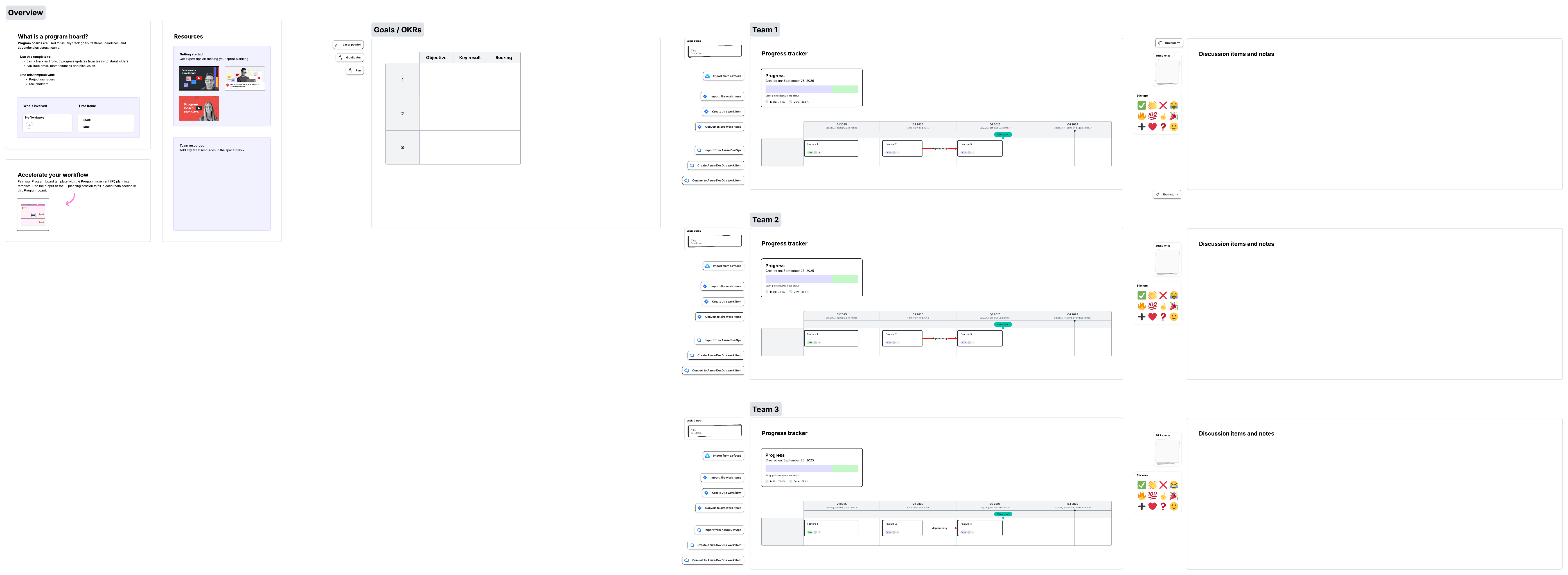
To organize your planning board, use timelines to portray when work will be completed. Organize sticky notes, shapes, or cards with Dynamic Tables. By adding Lucid Cards, you can visualize tasks or initiatives with important information such as assignee and status. Use embedded links to include the resources you need, all in one place.
Lucid’s templates elevate your planning even further with built-in collaborative features. With breakout boards, you can break your large session into smaller groups for faster decision-making, then bring everyone back together to continue planning. You can also use Visual Activities to gather qualitative feedback and gain consensus on what should be prioritized.
Drive efficiency in planning at every level
With dozens of features to drive planning efficiency and alignment, teams can leverage Lucid as a data-backed solution as they plan and prioritize work.
Thanks to Lucid’s integrations with Jira, airfocus, and Azure DevOps, any change you make in your Lucid planning boards will sync with your existing system of record. As you conduct quarterly planning meetings, you can have confidence that any decisions or changes made in Lucid will reflect back in your project management tool without the need to make manual updates.
With Lucid’s enhanced planning features, you can conduct capacity planning and scenario planning to manage team workloads and visualize potential scenarios. Lucid allows selective sync, so you can pause your two-way sync with your existing system of record as you test out new possibilities in draft mode. Then you can return to syncing and continue planning once you’ve identified your ideal situation.
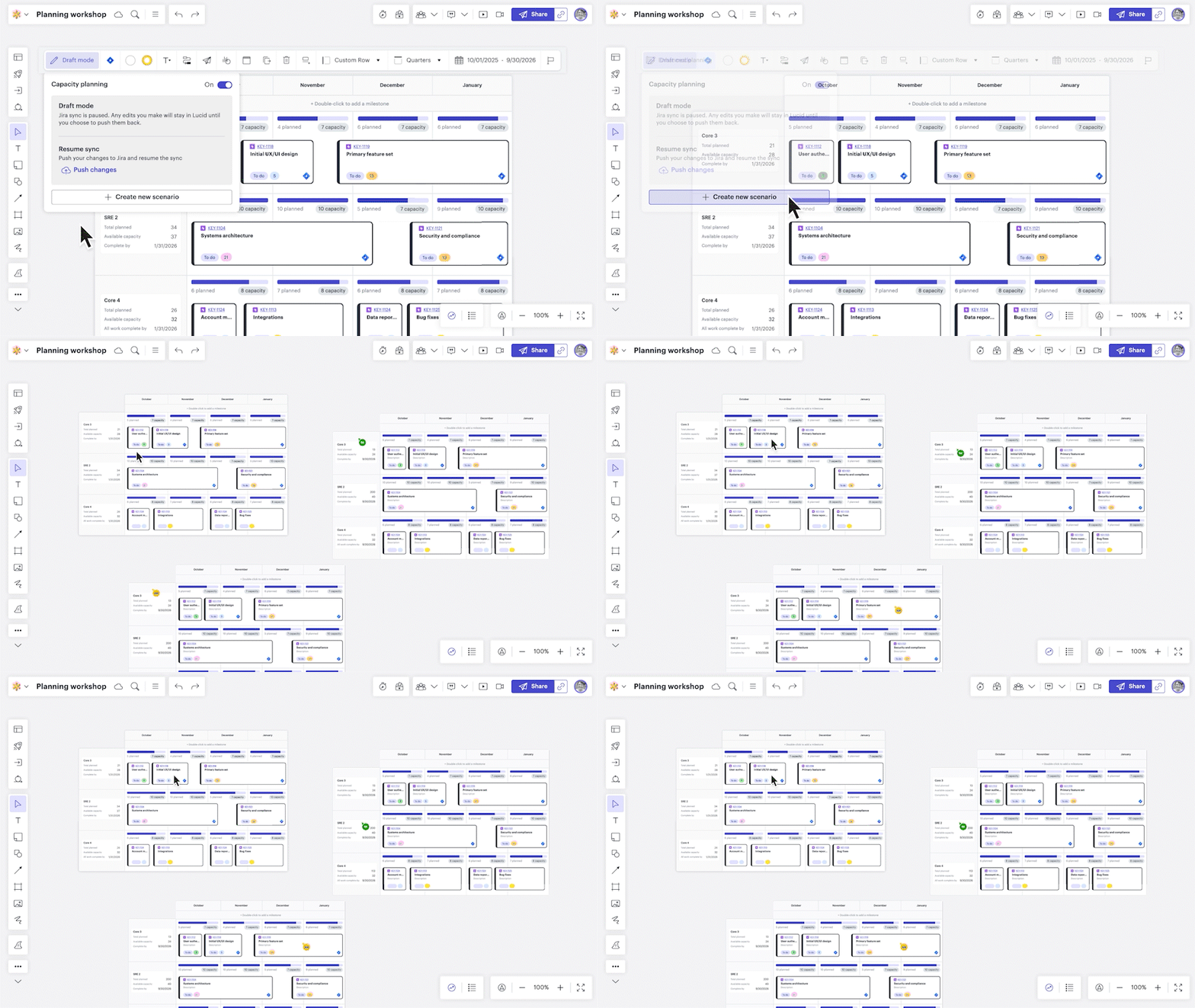
Concerned about potential dependencies and bottlenecks? In Lucid, you can conduct dependency mapping, too. During your planning sessions, visualize the relationship between work tasks and eliminate or mitigate dependencies so that addressing potential hold-ups is an active part of your planning.
An example of dependency mapping in Lucid with lines drawn between tasks that are related to one another.
Connect high-level strategy to daily activities
To truly level up your planning, connect strategy to execution by elevating team rituals and events. Lucid provides a centralized hub for team planning and the tools to optimize recurring team events. Use team hubs in Lucid to enhance transparency, streamline documentation, and maintain alignment. By centralizing all of your team’s resources, people can find the information they need even as priorities shift.
You can also host activities like sprint planning and daily check-ins in Lucid, leveraging purpose-built templates and facilitation features to enhance engagement. Each of Lucid’s Agile development templates comes with Facilitator Tools like laser pointers and timers to hold attention and enhance decision-making. When you’re hosting retrospectives, turn on private mode to support psychological safety and ensure people feel comfortable leaving honest feedback.
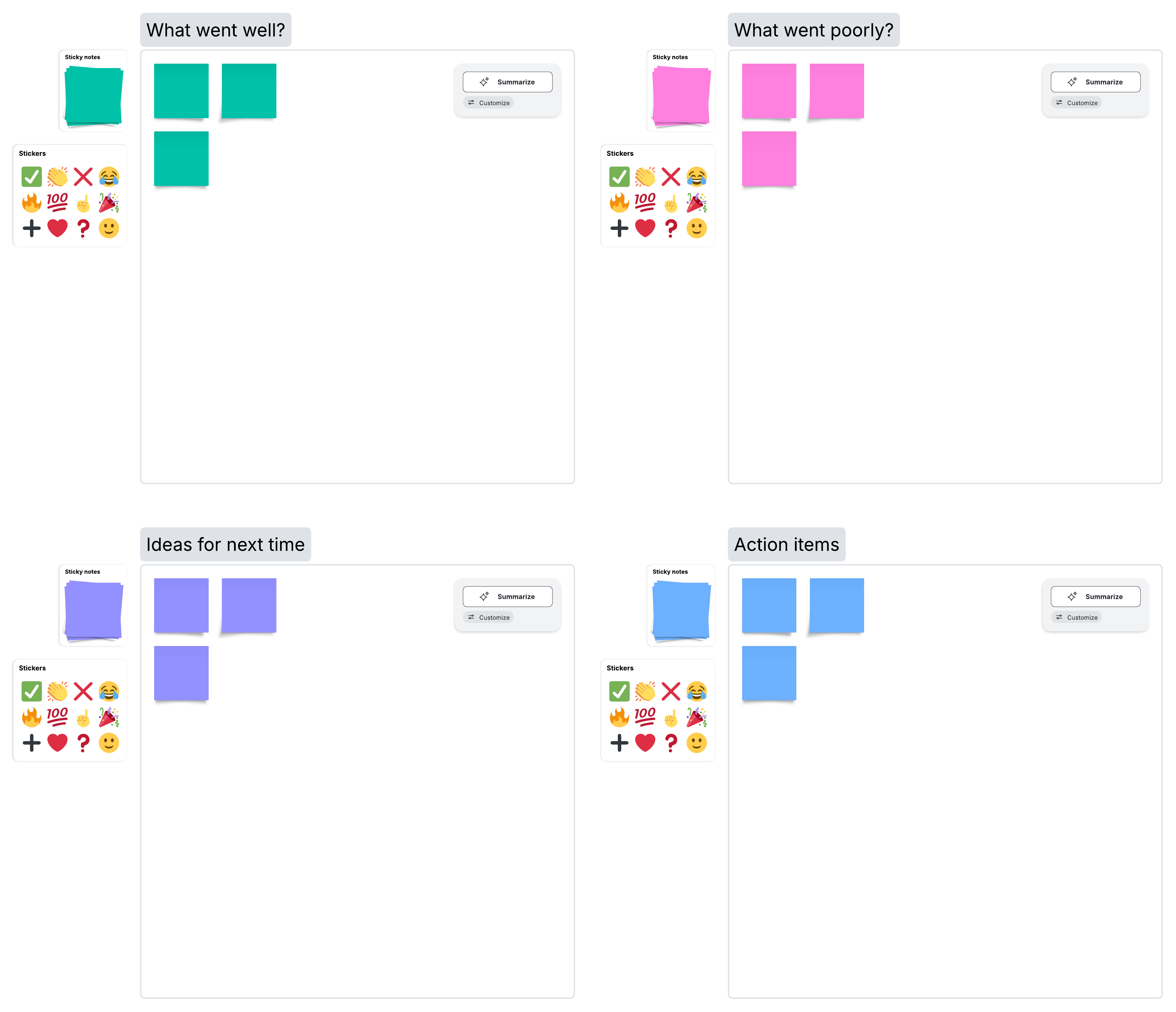
With Lucid AI, you can sort and summarize your boards for easy alignment or collect insights to move forward quickly with decisions.
When it comes to planning how your team will execute on your company’s strategic vision, Lucid makes it easy to incorporate Agile estimation techniques to determine team capacity and commit to realistic deadlines. Add reporting shapes to your boards, such as a progress bar or workload tracker, so you can visualize progress and share up-to-date information with stakeholders as you make headway on supporting high-level strategies.
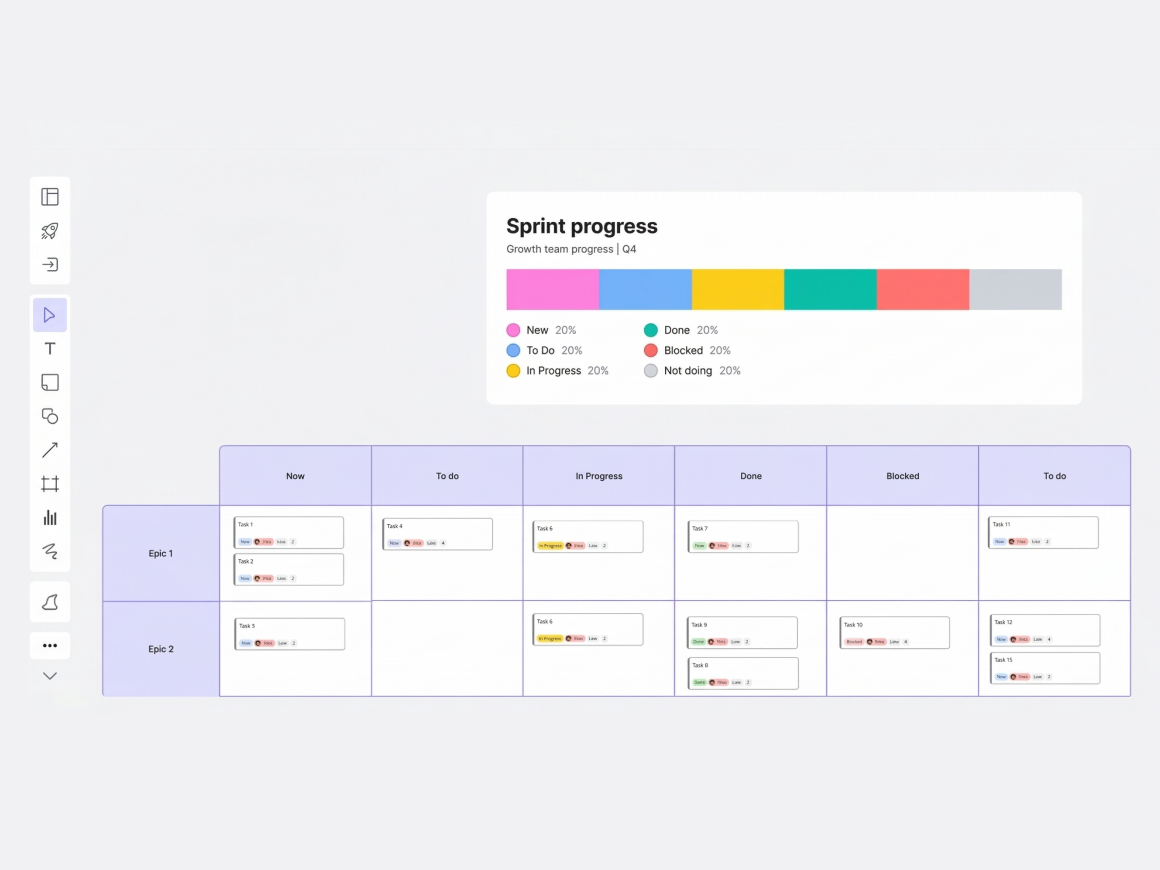
Turn your product vision into an actionable plan
To be truly pivot-ready, planning requires a continuous single source of truth. Together, airfocus and Lucid provide a strategic advantage, allowing you to translate your product vision into actionable team planning.
With roadmaps in airfocus, you eliminate the “what ifs” and instead have a concrete “what’s next” for teams, so you can maintain momentum. Ensure that all of the work planned will contribute to the product vision using airfocus’ feedback management tools and scoring frameworks to prioritize what’s most valuable. AI tools in airfocus even help you process large amounts of input to ensure that all of your product decisions are empowered by insight.
With Lucid Cards for airfocus, you can bring feedback items from airfocus into Lucid to strengthen your single source of truth for even more flexible, collaborative visibility as teams make progress on their work.
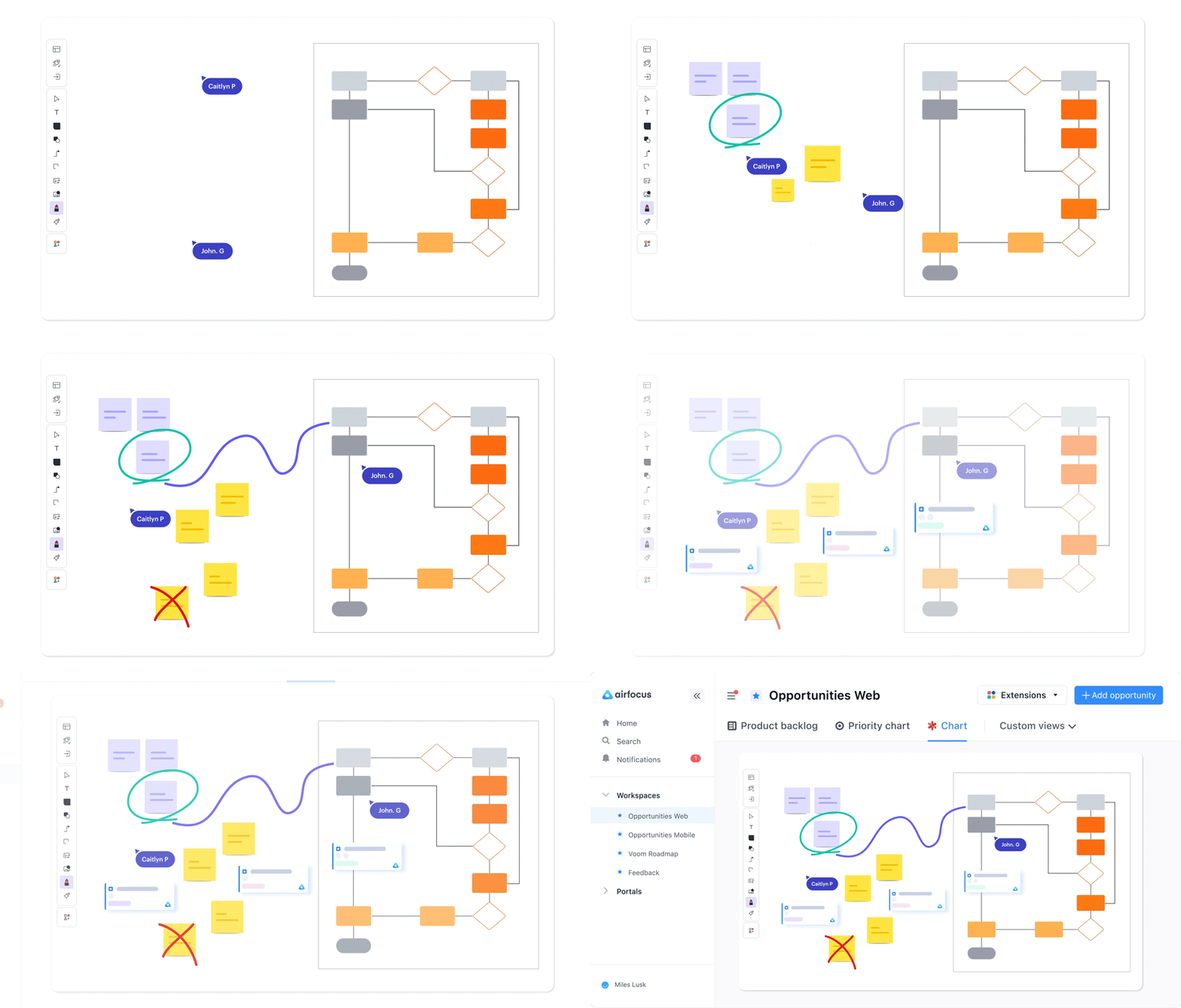
Together, Lucid and airfocus provide a line of sight that ensures organizational strategy is always connected to team-level tasks, so you not only visualize your workload but also your ability to carry it out.
Create a planning culture that’s ready for anything
Remember, quarterly planning isn’t the finish line. Ultimately, you don’t have to be locked into your plans—and you shouldn’t be. Establishing a change-ready culture is key to enhancing adaptability, alignment, and visibility among your teams.
Create a flexible planning culture with Lucid as your system of action. Lucid unites your organization with purpose-built tools and capabilities that establish a shared visual language. Don’t wait for your next quarterly planning session to strengthen alignment. Invest today in a solution that connects strategy to execution and helps you accelerate your work to meet whatever change brings.

Interested in some of the features we’ve mentioned?
Try them out for yourself and see how Lucid boosts flexibility and alignment so you’re ready for change.
Contact us